



World & Culture Encyclopedia No.026
Oni's Kanabō (Iron Club)
JapanTool in folktales and picturesProverb "Oni ni kanabō"
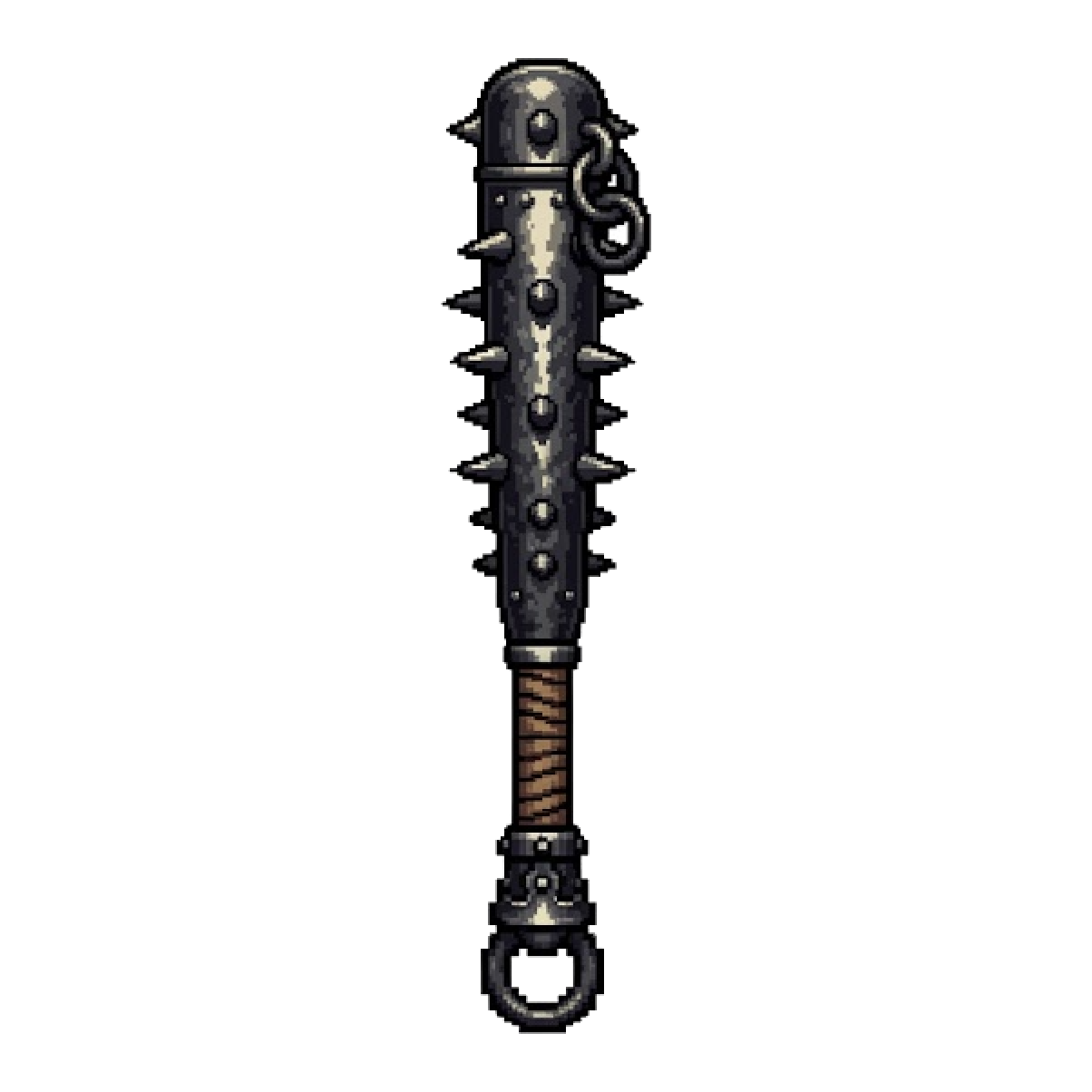
It is a thick iron club covered with spikes (bumps). It is the tool behind the proverb "Oni ni kanabō" ("an oni with an iron club"), and it is a sign of great strength.
Key facts
| Type | A club-shaped striking tool (a kon-bō, meaning a thick, hard stick). In pictures and folktales, it is known as something an oni carries |
|---|---|
| Place | Japan. The kanasaibō, a war tool (a tool used in battle), is explained as having been used in old Japan |
| Meaning of the name | "Kana" means metal (such as iron), and "bō" means a long stick. It is also called "kanasaibō" |
| Shape | A thick stick with many spikes or studs (nails with big heads) near the tip. Some are said to be made of iron, and some of wood |
| Old records | The word "kanasaibō" is sometimes explained as appearing in records from the late Heian period (around the 11th to 12th centuries). Sources explain this in different ways, so accounts differ |
| Proverb | "Oni ni kanabō." It means that something already strong gains even more strength |
| How the saying changed | Long ago it was also said "Oni ni kanasaibō," but by the Edo period it is explained as having mostly become "Oni ni kanabō" |
| Usual look in pictures | An oni is often drawn wearing a loincloth with a tiger-skin pattern and holding a kanabō |
What is it?
A kanabō is a thick club made of metal such as iron. It has many bumpy spikes near the tip.
Oni in folktales and picture books carry this club on their shoulders or hold it in their hands. So many people in Japan think of a kanabō when they think of an oni.
But the kanabō is not only for oni. It was first the name of a tool that people used.
The kanasaibō as a war tool
The kanasaibō was a striking tool in old Japan. Some were large and held with both hands, and the surface of the stick had spikes or studs. Some were made of iron, and some are said to have been made of wood.
Some explanations call an iron stick without studs a "tetsubō" (iron stick) to tell it apart.
The name is sometimes explained as first appearing in records from around the late Heian period. But it is not clear when it began (accounts differ).
Why oni and the kanabō went together
The picture of an oni holding a kanabō seems to have spread slowly through old pictures and stories. People may have felt that a heavy, sturdy iron club suited an oni, which is strong and has a frightening power.
But in this research, we found no old source that clearly says why oni came to hold a kanabō. The explanation "to show strength" is one way of thinking (accounts differ).
Also, the look of oni changes with the region, the time and the story. Some oni do not carry a kanabō.
The proverb "Oni ni kanabō"
"Oni ni kanabō" comes from the idea of giving an iron club to an oni that is already strong. It means that something strong gains even more strength. Japanese dictionaries explain that it is also said "Oni ni tetsujō."
For example, you can use it when a fast runner gets very good equipment.
Long ago there was also the saying "Oni ni kanasaibō." By the Edo period, it is said to have become almost the same as today's "Oni ni kanabō."
Good to know about the culture
Oni were thought to come from the northeast direction, called ushitora. Ushi is the ox and tora is the tiger. So an oni is often explained as being drawn with ox-like horns and a loincloth with a tiger-skin pattern.
This picture is the oni image we know well. The kanabō is an important part of that look.
In Setsubun (a day marking the change of seasons) events, oni are also often drawn holding a kanabō. When you look at folktale pictures, masks and dolls, pay attention to the shape of the kanabō too.
About this illustration
This is a pixel-art illustration (a picture made by lining up small squares) of a spiky kanabō held by an oni. It shows the key features: a thick stick with many spikes. The colors, the pixel-art touch, and the number and placement of spikes are this illustration's own style, and they differ from the real tool and from any rules of folklore.
Fun facts
- The "kana" in "kanabō" does not mean money. It means metal, such as iron.
- The spikes at the tip of a kanabō are also called "ibo" (warts or bumps).
- "Oni ni kanabō" is explained as once being said "Oni ni kanasaibō."
Quick quiz
Q. What does the proverb "Oni ni kanabō" mean?
"Oni ni kanabō" comes from the idea of giving an iron club to an already strong oni. It means that something strong gains even more strength.
References
- Digital Daijisen (Shogakukan): the meaning of "Oni ni kanabō" and the saying "Oni ni tetsujō"
- Koji Zokushin Kotowaza Daijiten (Shogakukan): how the saying changed from "Oni ni kanasaibō" to "Oni ni kanabō"
- Nihon Kokugo Daijiten (Shogakukan): the meaning of the words "kanabō" and "kanasaibō"
- Kōjien (Iwanami Shoten): the entries for "kanabō" and "Oni ni kanabō"
- Nihon Daihyakka Zensho (Nipponica) (Shogakukan): the entry on "oni" (the look of oni, and the ideas of ushitora and the demon gate)
- Home Kotoba Daijiten (the proverb "Oni ni kanabō"): explanation of its meaning and use
Accounts may differ between sources and regions, and facts or figures can change with new research or rules. This page was translated from the Japanese original.
Download the pixel art
- Free
- No registration
- Commercial use OK
- Edits OK
- Credit optional
- No usage report needed
Please read the terms of use before using it.