



World & Culture Encyclopedia No.027
Bat
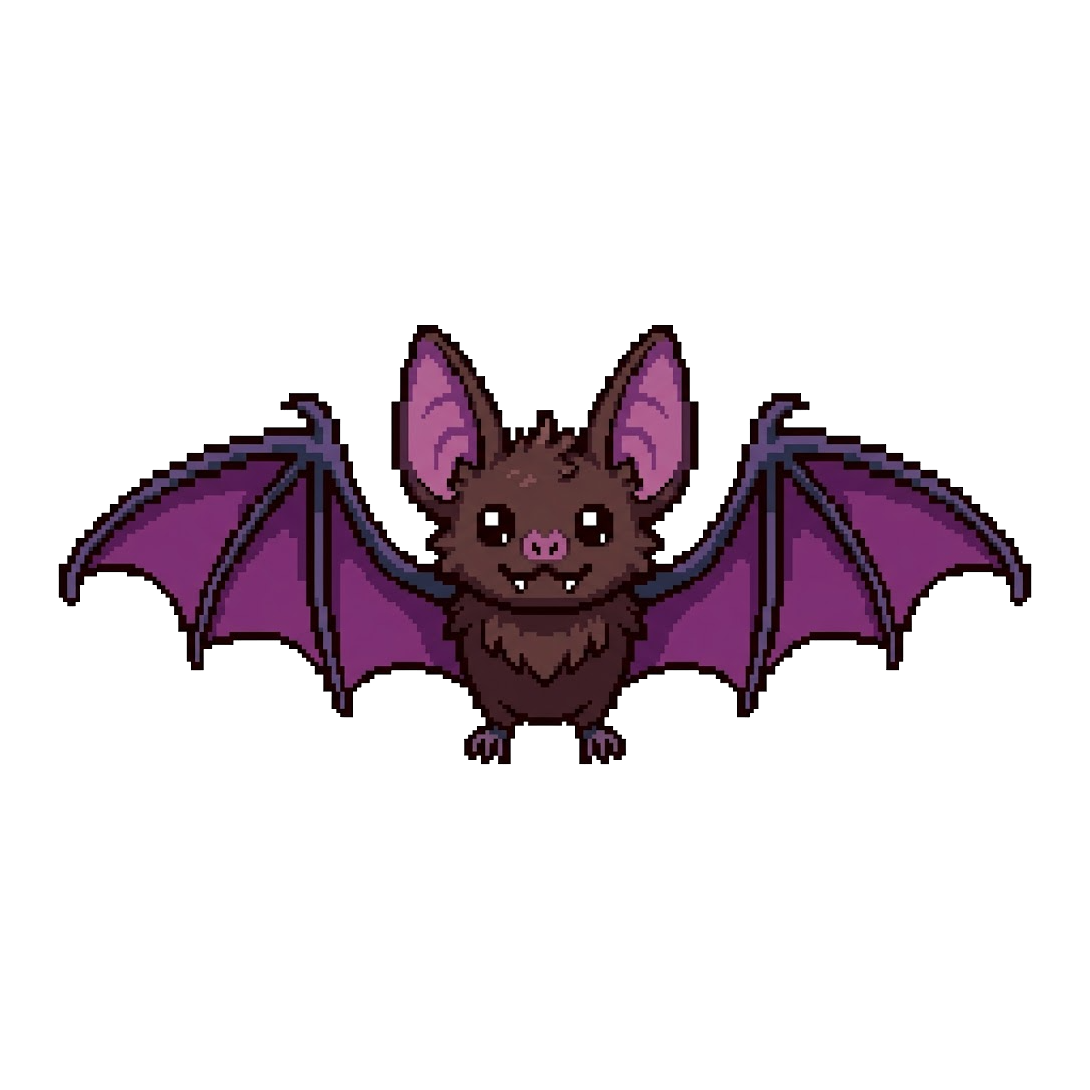
World and JapanLiving things (mammals)Also a Halloween decoration
Bats are not birds. They are mammals, which are animals that feed their babies milk. Bats are the only mammals that can fly by flapping their wings.
Key facts
| Group | Mammal (order Chiroptera, called "shuyoku-moku" in Japanese). It is the only group of mammals that can keep flying by flapping their wings, like birds. |
|---|---|
| Where they live | Many places around the world, except places such as Antarctica. Bats live in Japan too. |
| Number of species | More than 1,000 species in the world. Sources differ: about 925, over 1,400, or over 1,500 (because of different ways of counting and different years). |
| Species in Japan | About 34 to 37 species are known (this differs by source and year). |
| Wing shape | A thin sheet of skin stretches between the front legs (the arm and the long fingers). |
| Size | The smallest species is about 3 centimeters long and weighs about 2 grams. Some large flying foxes (big fruit bats) have wings that spread to about 1.6 to 1.7 meters. |
| Food | Most eat insects. Some species eat fruit or flower nectar, and some eat fish or frogs. |
| A common bat in Japan | The Japanese house bat (also called the "house bat"). It lives in places like gaps in house roofs, and from evening it eats small insects such as mosquitoes. |
What kind of animal is it?
Bats are small animals that fly in the night sky. They look a little like birds, but they have no feathers. Their bodies are covered with fur. They are mammals, which means they feed their babies milk.
Bats are the only mammals that can keep flying by flapping their wings. Flying squirrels (musasabi and momonga) seem to "glide" from tree to tree. This is called gliding, which means sliding through the air on the wind. It is different from flapping flight.
The secret of the wings
A bat's wing is a hand that has changed a lot. A thin sheet of skin is stretched between the long finger bones.
Thanks to this shape, bats can turn in small, quick ways in the air. In the daytime, they often rest in caves, tree hollows (holes in trees), or gaps in buildings. Many people know that some bats rest hanging upside down.
How they find food in the dark
Many small bats make high sounds (ultrasound) that are hard for people to hear. They listen to the sound bouncing back from things. This tells them what is around them and where their prey (such as insects) is. This is called echolocation.
But not all bats use this way. Large flying foxes are said to use their eyes mainly. Some of them are also said to use sound.
Bats in the world and in Japan
Bats are the group with the most species among mammals after rodents (the rat and mouse group, called "gesshi-moku" in Japanese). They are said to make up about one fifth of all mammals. The number of species differs from about 1,000 to over 1,500, depending on the source. This is because new species are found and the ways of sorting them change.
About 34 to 37 species are said to live in Japan. The bat you can most easily see in towns is the Japanese house bat. It lives in buildings made by people, so it is also called the "house bat." On the Ogasawara Islands and the Nansei Islands, flying foxes that eat fruit live. Many Japanese bats are decreasing in number and are said to need protection.
Bats and culture
Bats are active at night, so they often appear in Halloween decorations and ghost pictures. But that is how they look in stories and decorations. Real bats are useful in nature. They eat insects and carry pollen and seeds.
Ideas and sayings about bats are different from place to place. In Japan, bats have long been written with the characters for "kōmori," and the word has been used in the names of patterns, it is said. The details of where this comes from differ by source, so try looking it up.
If you find a wild bat, do not touch it. Watch quietly from a distance. It is important not to touch wild animals without a good reason.
About this illustration
A pixel-art picture (a picture made of tiny squares) of a bat with purple wings spread out. It is a cute picture that can be used for Halloween decorations. The purple wings and the Halloween mood are the artist's style and are different from the real animal. Many real bats are brown, gray, or blackish.
Fun facts
- A small bat called the Brandt's bat has been recorded living at least 41 years (a band was put on its leg in 1964, and it was reported around 2005). For their small size, bats are a group that lives a very long time.
- The smallest species (the bumblebee bat, also called Kitti's hog-nosed bat) weighs about 2 grams. That is about as light as two 1-yen coins.
- Among land mammals in Japan, bats are said to be the group with the most species.
Quick quiz
Q. Which of these is a mammal that can fly by flapping its wings?
Bats are the only mammals that can keep flying by flapping their wings. Giant flying squirrels and flying squirrels glide, which means they slide through the air.
References
- Animal Diversity Web (University of Michigan) "Chiroptera": supports bat classification, how they fly, and number of species
- National Institute for Land and Infrastructure Management (Ministry of Land, Infrastructure, Transport and Tourism), material "道路事業とコウモリ類" (Road projects and bats): supports the number of bat species and their ways of life in Japan
- Material from the Kanagawa Prefectural Museum of Natural History (explanation by Yoshimori Yamaguchi): supports the number of bat species in Japan and the Japanese house bat
- New World Encyclopedia "Bat": supports how bats fly and echolocation
Accounts may differ between sources and regions, and facts or figures can change with new research or rules. This page was translated from the Japanese original.
Download the pixel art
- Free
- No registration
- Commercial use OK
- Edits OK
- Credit optional
- No usage report needed
Please read the terms of use before using it.