



World & Culture Encyclopedia No.013
Witch's Broomstick
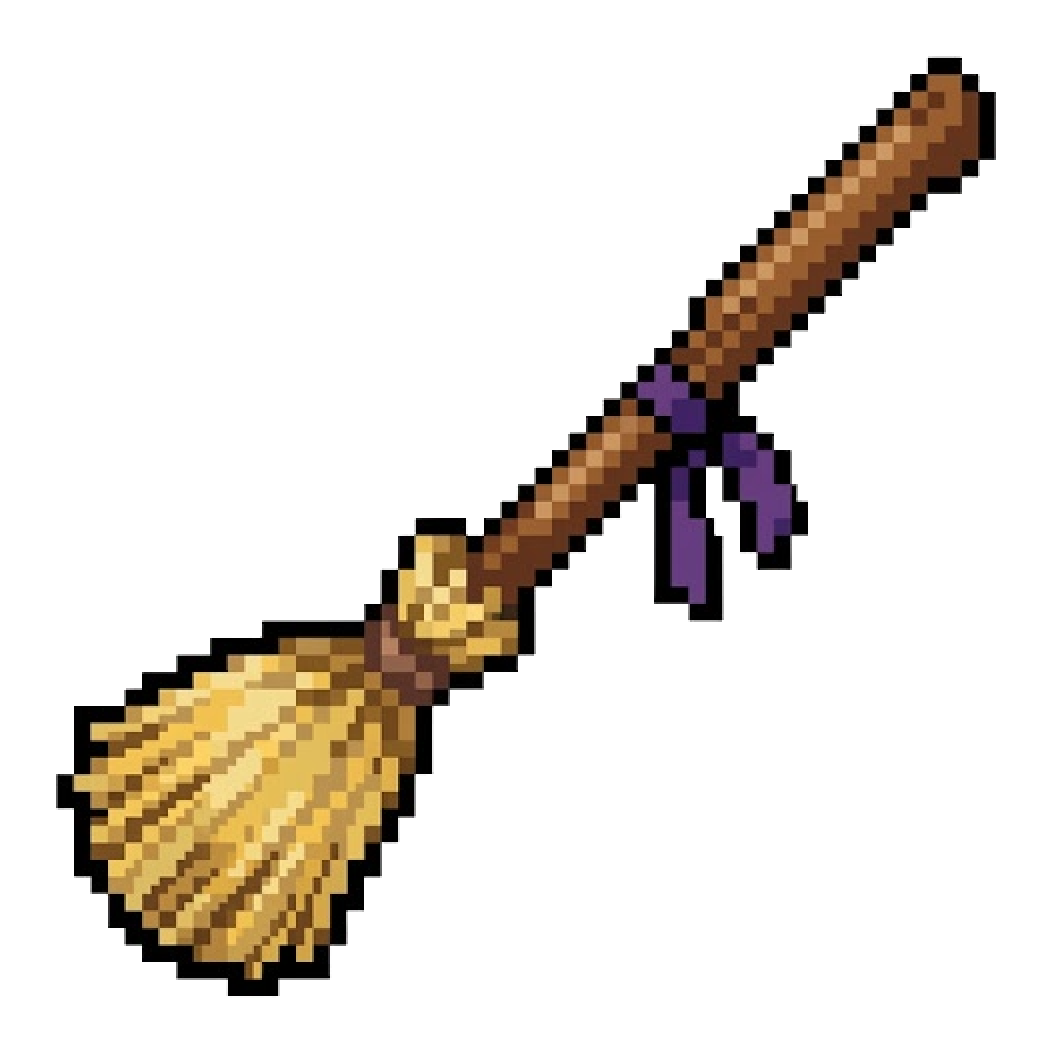
European folkloreA Halloween favoriteImage of a flying tool
The broomstick is said to be what witches ride to fly through the sky. It started as an everyday cleaning tool used in the house and garden. Around the 1400s, people in Europe began to link it with witches in their stories.
Key facts
| Category | A witch's tool (the broom) that appears in folklore and stories |
|---|---|
| Region | It spread from European folk tales. Today it is seen at Halloween around the world. |
| The original tool | A cleaning broom made of bundled twigs or straw. In English it is also called a "besom." |
| Oldest picture of a flying witch | Said to be an illustration in a manuscript (a book copied by hand) from about 1451. The manuscript holds a work by the French poet Martin Le Franc. |
| When it began to appear in writing | Theologians (people who study religion) and others are said to have started writing about witches flying in the early 1400s (the 15th century). |
| Why it spread | The broom was a household tool that everyone used. It is explained that pictures and stories spread the idea. |
| Cultural meaning | A favorite in Halloween costumes and decorations. It is loved as a sign of a witch. |
| Note | Witches did not look the same in every period or place. The details differ by folklore and by source (accounts differ). |
What is it?
The witch's broomstick is known as the tool a witch rides to fly through the night sky. In picture books and costumes, it is often drawn with a long handle and a bundle of straw or twigs at the end.
At first, it was just an ordinary broom for sweeping the house and garden. Then, in stories and folklore, it became a "witch's ride." Around Halloween, you often see brooms as decorations and costume props.
History and origins
The idea of witches is very old. But the picture of a witch flying on a broom is not that old. According to historians, theologians (people who study religion) and officials began writing about witches flying in the early 1400s.
The oldest known picture of a flying witch is an illustration in a manuscript from about 1451. It is in a copy of a work by the French poet Martin Le Franc, called "The Champion of Ladies."
At that time in Europe, people believed that witches gathered at night for meetings. The story of flying was told as the way witches got to those meetings. But even long ago, some people doubted the flying stories. Le Franc himself wrote that it was foolish to believe witches could fly.
Why a broom?
The reason most often given is that the broom was a familiar tool. Brooms were used for housework, which was linked mainly with women's work. It is thought that this everyday tool became connected with the image of a witch with strange powers.
There is also an idea that it is related to old farm customs, in which farmers straddled brooms and other sticks and hopped or danced. But the exact reason has not been settled, and accounts differ.
How a broom is made
A traditional broom is a wooden handle with twigs or straw bundled and tied on. The English word "besom" is said to come from an old English word meaning a bundle of twigs.
Twigs and straw were good materials for sweeping gardens and dirt floors (the bare earth floor inside a house). A witch's broom is drawn based on this shape. As in the illustration, adding a ribbon makes it fun to use as a decoration, too.
Good to know about the culture
Today's image of a witch has been shaped not only by old folklore, but also by books, pictures, plays and films. For example, it is explained that in the original children's book "The Wonderful Wizard of Oz," published in 1900, there is no scene of a witch flying on a broom. It is said that the 1939 film made the picture of a witch on a broom widely known.
Halloween is said to have its roots in an autumn festival of the ancient Celts called Samhain. A witch costume with a broom is now a popular favorite for both children and adults.
Stories about witches differ by country and by time. Enjoy them as stories, and also learn how people long ago thought. That shows how interesting culture can be.
About this illustration
A pixel-art picture (drawn with tiny squares) of a witch's broom with a straw tip. A purple ribbon is tied near the end of the handle. The purple ribbon is not something fixed by real brooms or folklore. It is part of the illustration and differs from the real thing.
Fun facts
- The oldest picture of a flying witch is said to be an illustration in a manuscript from about 1451.
- The English word "besom" for a broom is said to come from an old English word meaning a bundle of twigs. Later, the word "broom" came into use.
- It is explained that in the original children's book "The Wonderful Wizard of Oz," published in 1900, there is no scene of a witch flying on a broom.
Quick quiz
Q. What kind of tool was a witch's broom at first?
The broom was first an ordinary cleaning tool used for housework. It is explained that because it was so familiar, it became linked with the image of a witch.
References
- The Conversation "Can witches fly? A historian unpacks the medieval invention and skepticism of the witch on a broomstick" (2024): supports the 15th-century writings about flying witches, the 1451 manuscript illustration, and Le Franc's views
- Guinness World Records "Oldest depiction of a witch on a broomstick": supports the oldest picture, from about 1451
- History.com "Why Do Witches Ride Brooms?" (by Sarah Pruitt): supports the link between brooms, housework and women, the fact that accounts differ, and the word besom
- Aberystwyth University (UK) news "Black hats, cauldrons and broomsticks: the historic origins of witch iconography" (2025): supports research on the origins of witches' items
- An article from the Oz Museum (USA): supports the differences between the 1900 original book and the 1939 film
Accounts may differ between sources and regions, and facts or figures can change with new research or rules. This page was translated from the Japanese original.
Download the pixel art
- Free
- No registration
- Commercial use OK
- Edits OK
- Credit optional
- No usage report needed
Please read the terms of use before using it.