



Monster Encyclopedia No.008
Troll
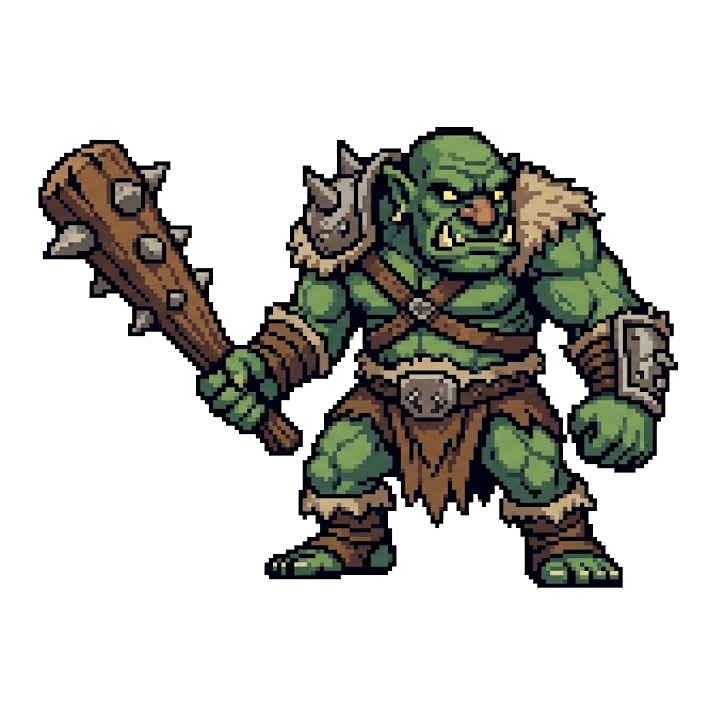
Northern Europe (Scandinavia)A monster of Nordic folkloreA giant of mountains and forests
A troll is a strong monster from Nordic folklore (stories told for generations). It is said to be very old. A well-known tale says it turns to stone in sunlight, and this tale is used to explain some rocks.
Key facts
| Type | A monster of Nordic folklore (related to giants and demons) |
|---|---|
| Where the stories are told | Scandinavia, such as Norway and Sweden |
| Old sources with the name | Old Norse (the old language of the North) troll and trǫll. They were used in a wide sense, such as "demon," "giant" and "someone who uses magic." |
| Looks | Often told to be very old, strong, slow and not very clever. The look differs from story to story. |
| Said weakness | Sunlight. The best-known tale says it turns to stone when the light hits it. (In later tales, it can burst instead.) |
| Origin of the name | Not clear. Researchers disagree (accounts differ). |
| Famous folktale | "The Three Billy Goats Gruff," a Norwegian tale collected by Asbjørnsen and Moe. The original title is "The Three Billy Goats Bruse." It is in the folktale collection that began around 1841. |
What kind of monster is it?
A troll is a monster in Nordic folktales and legends. It is often said to be very old and very strong, but slow and poor at thinking.
But the troll's look is not fixed. Sometimes it is told as a huge giant. Sometimes it is about the size of a person. It changes a lot by place and time. Trolls are said to live far from where people live, such as among mountains and rocks, or in caves.
Troll as a word
The word "troll" comes from the Old Norse (the language used in the North long ago) words troll and trǫll. In the past, it was used in a wide sense for a demon, a giant, or someone who uses magic.
Old Norse also has a word (trylla) meaning things like "to cast a spell" or "to turn into a troll." But the first meaning and origin of the word "troll" is not clear, even to researchers (accounts differ).
Myth and folklore 1: Turning to stone in sunlight
The most famous legend about trolls is that they turn to stone in sunlight. A troll goes out in the night. Then the morning sun hits it, it cannot move, and it becomes a rock.
Because of this, some rocks and mountains in Scandinavia are explained as trolls that turned to stone. But in old tales, turning to stone is the common form. In later tales, bursting in sunlight also appears. Stories that explain the shape of the land through trolls were still told in the 1900s.
Myth and folklore 2: "The Three Billy Goats Gruff"
The Norwegian scholars Asbjørnsen and Moe collected folktales from all over the country and made them into a book. One of them is "The Three Billy Goats Gruff."
Three goats want to go up the mountain to eat grass. They have to pass the troll who lives under a bridge. The small goat and the middle-sized goat cross first. Each says, "A bigger goat is coming," and makes the troll wait. The last, biggest goat drives the troll off the bridge, and the three goats can eat grass on the mountain. In this tale, the troll does not turn to stone in sunlight.
How trolls are usually shown in games and stories
Trolls are also popular in games and stories. They often appear as enemies with big bodies and great strength. They are often drawn with green skin. But green skin was not a look fixed in old Nordic legends. It is a way of drawing that spread later.
In Nordic picture books, trolls are sometimes drawn as in the real folktales: strange big men or small fairy-like beings that live in forests and mountains.
About this illustration
This is a pixel-art picture (a picture made of tiny squares) of a big troll with green skin. It looks like an enemy character in a game. Green skin was not a color fixed in old Nordic legends. It is the artist's own way of showing the troll.
Fun facts
- The word "troll" was once used in a wide sense for dangerous beings that are not human.
- In Scandinavia, people still tell about rocks that are explained as trolls turned to stone.
- The Japanese picture book version of "The Three Billy Goats Gruff" was translated by Teiji Seta. The goats' name in Japanese, "Gara-gara-don," is said to have been chosen by Seta, who imagined a loud, rough voice. (The original Norwegian name is "Bruse.")
Quick quiz
Q. In Nordic legends, what is a troll said to do when sunlight hits it?
In Nordic legends, a troll is said to turn to stone in sunlight. That is why some rocks and mountains are explained as trolls turned to stone. In later tales, it can burst instead.
References
- John Lindow, Trolls: An Unnatural History (a study of troll folklore, 2014)
- Asbjørnsen and Moe, Norske Folkeeventyr (the Norwegian folktale collection that the story of the three goats comes from)
- Online Etymology Dictionary, "troll" (an English word-origin dictionary; explains where the word comes from)
- Orel, Vladimir, A Handbook of Germanic Etymology (a dictionary of Germanic word origins; supports theories on the origin of Old Norse troll)
Accounts may differ between sources and regions, and facts or figures can change with new research or rules. This page was translated from the Japanese original.
Download the pixel art
- Free
- No registration
- Commercial use OK
- Edits OK
- Credit optional
- No usage report needed
Please read the terms of use before using it.