



Monster Encyclopedia No.014
Goblin
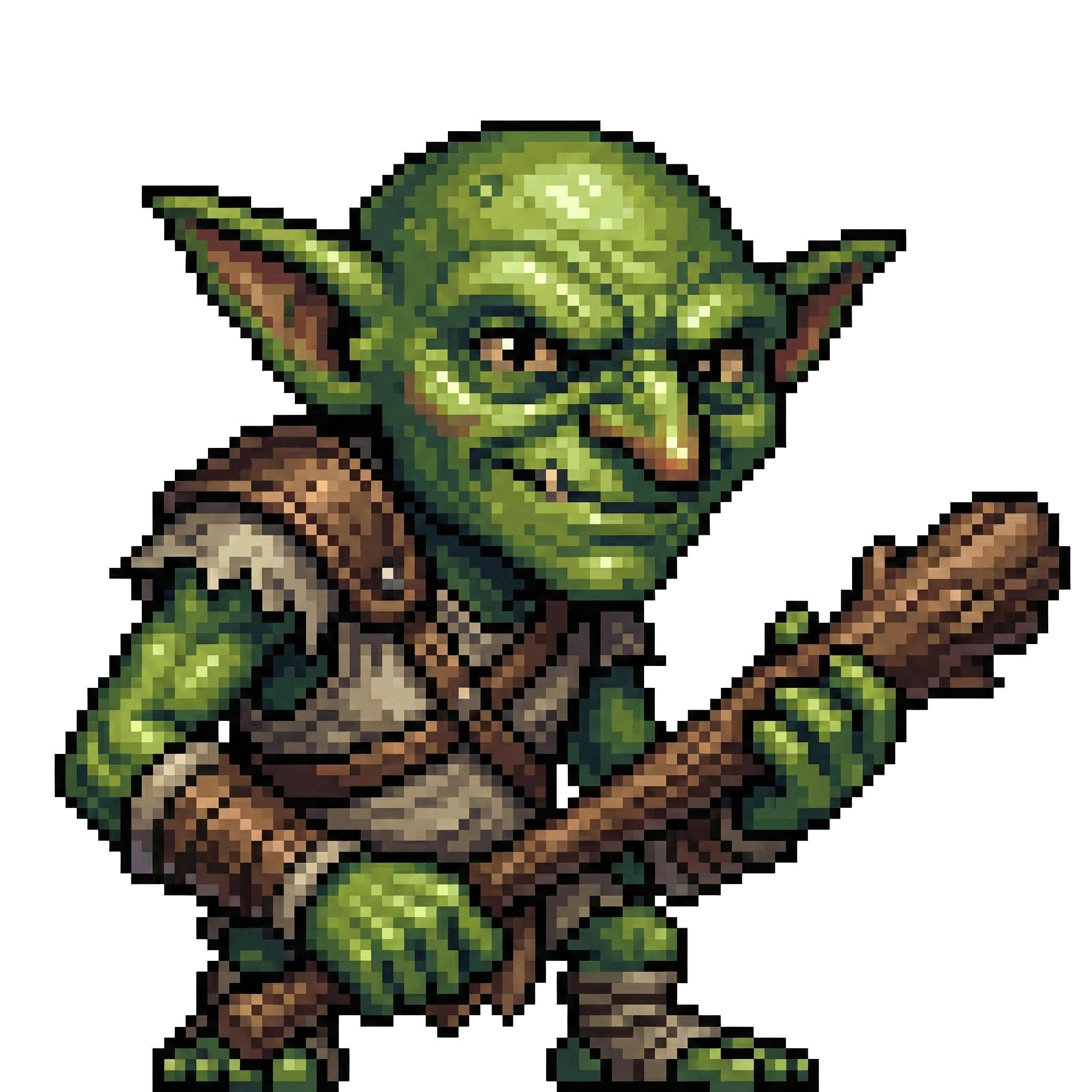
Europe and BritainA trickster fairy of folk tales
A small, mischievous fairy from European folk tales. Where its name comes from is not clear. Later, stories also spread the goblin as a villain race.
Key facts
| Type | A fairy or small imp of folk tales (a small, mischievous being) |
|---|---|
| Where the tales are told | Europe, starting with Britain. The English word goblin has been recorded since around the 14th century. |
| First records | A demon with a very similar name, "Gobelinus," appears in the Ecclesiastical History by Orderic Vitalis, around 1140. But experts disagree on whether this is the direct ancestor of the English word goblin. |
| Family and links | Thought to be close to the house fairy "hob" (the hobgoblin). Some say it is linked to the German kobold (a house spirit) or the Greek word kobalos, but this is not certain. |
| Appearance | In tales, it is often small, sly and mischievous. The fine details of its looks differ by place and time. |
| Origin of the name | Not clear (accounts differ). Ideas include the Greek kobalos (a rascal who plays tricks) and the German kobold. |
What kind of being is it?
A goblin is a small fairy or imp from European folk tales (stories passed down among people). It has been told of as a sly being that plays tricks on people and bothers them.
But there was never a fixed rule for what it looks like. The image changed a little by place and time.
The secret of the name (word origin)
The English word goblin has been recorded since around the 14th century. It is thought to have come from a related French word (Norman French gobelin).
Earlier, around 1140, Orderic Vitalis, a monk (a person who lives serving God) from Normandy (now northwest France), wrote about a demon called "Gobelinus" in his Ecclesiastical History. It was said to have appeared near the town of Évreux. Some think this name was the source of goblin, but others disagree, and the question is not settled.
Going back even further, there are ideas such as the Greek kobalos and the German kobold. None is certain, and dictionaries describe it in different ways.
Myths and tales 1: The hobgoblin
In Britain, there are tales of the "hob," a fairy who lives by the fireplace of a house. "Hobgoblin" is a word joining hob and goblin, and it is said to be recorded from around the 1520s.
In his 1584 book The Discoverie of Witchcraft, the English writer Reginald Scot wrote that people of old were afraid of the "hobgoblin," and that they left milk as thanks for its work. The hobgoblin was seen as a fairy that helped around the house but also played tricks.
Myths and tales 2: Shakespeare's play
The English playwright William Shakespeare, in his comedy A Midsummer Night's Dream (around 1595), has a line saying that the fairy Puck is also called a "hobgoblin." This shows that the picture of a mischievous fairy was well known to people at that time.
Also, the 19th-century English poet Christina Rossetti described goblins who sell fruit in her 1862 poem Goblin Market. In this way, goblins also appeared in literature as small, strange beings.
How they are usually shown in stories and games
In today's fantasy works, goblins often appear as fairly weak enemies with green or similar skin, carrying a club (a thick wooden stick) or a short blade. They are also often seen moving in groups.
This look is a modern image that spread in 20th-century stories and games. It did not necessarily come from old folk tales.
About this illustration
A pixel-art picture (a picture drawn with small squares) of a green-skinned goblin standing with a club. The green skin and the club are a modern image that spread through stories and games. They were not fixed in old tales. This is the artist's own idea and differs from the real thing and from the tales.
Fun facts
- "Hobgoblin," a word close to goblin, was once also used for a house fairy that helps people. Later it also came to mean "something scary."
- Because the word origin is not clear, each dictionary introduces ideas like the "Greek theory" and the "German theory" in a different way.
- The fairy Puck in A Midsummer Night's Dream is also called a "hobgoblin" in the play.
Quick quiz
Q. In British folk tales, which house fairy is said to be close to the goblin?
The fairy "hob," who lives by the fireplace of a house, is also called the "hobgoblin." It has been told of as being close to the goblin. It is said to help out and also to play tricks.
References
- Oxford University Press (OUP) blog, Anatoly Liberman, on the origin of "goblin" (2013): supports the different ideas about the word's origin
- Online Etymology Dictionary (a dictionary of word origins), entries "goblin" and "hobgoblin": supports when the words first appear in English and their origins
- Orderic Vitalis, Ecclesiastical History (around 1140): supports the account of the demon "Gobelinus"
- Reginald Scot, The Discoverie of Witchcraft (1584): supports the account of leaving milk as thanks for the hobgoblin
- William Shakespeare, A Midsummer Night's Dream (around 1595): supports the line calling Puck a "hobgoblin"
Accounts may differ between sources and regions, and facts or figures can change with new research or rules. This page was translated from the Japanese original.
Download the pixel art
- Free
- No registration
- Commercial use OK
- Edits OK
- Credit optional
- No usage report needed
Please read the terms of use before using it.