



World & Culture Encyclopedia No.024
Kyusu (Teapot) and Yunomi (Teacup)
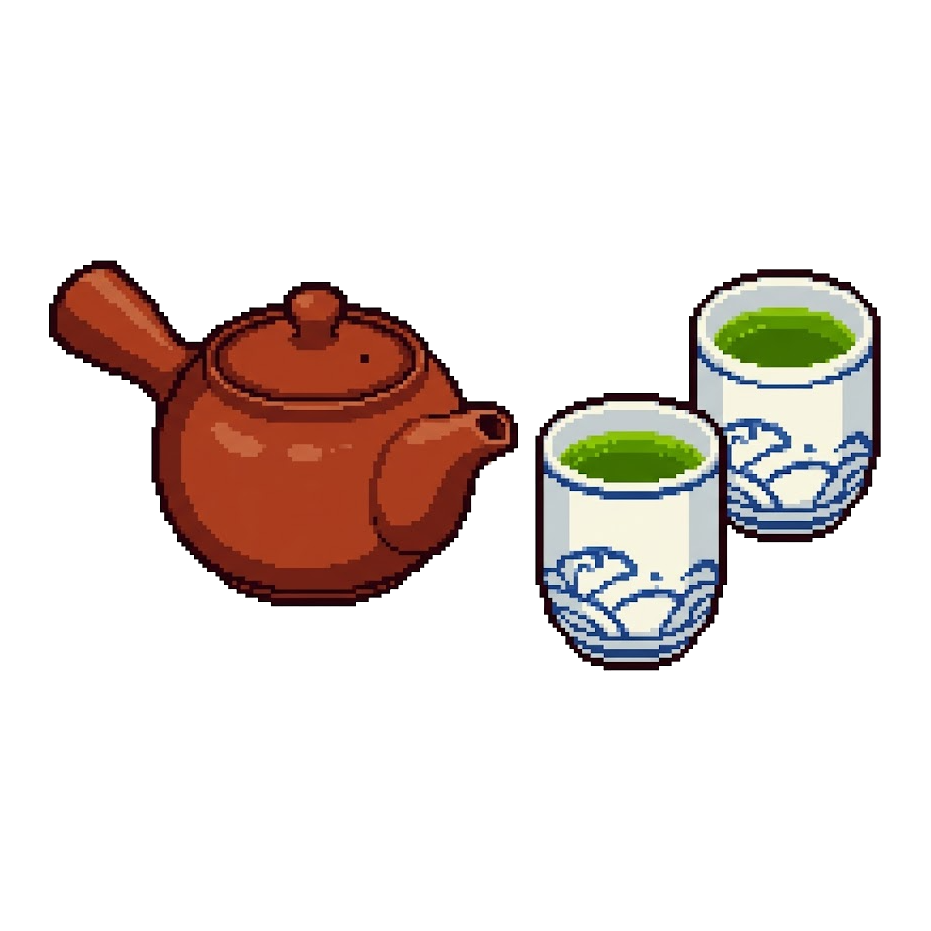
JapanTea toolsEveryday tools
A kyusu is a small teapot with a handle. You pour hot water over tea leaves in it to make tea. A yunomi is a cup without a handle for drinking that tea. They have supported tea time in Japan.
Key facts
| Type | A tool for making tea (the kyusu) and a cup for drinking tea (the yunomi) |
|---|---|
| Where | Homes in Japan, shops that serve tea, and more |
| When they spread | It is explained that the habit of making tea in a kyusu spread in the Edo period, when sencha (green tea in which the leaves' goodness is drawn out with hot water) became popular. |
| Shape of the kyusu | The "yokode" kyusu, with the handle on the side, is said to have spread in the late Edo period (accounts differ). |
| Features of the yunomi | A fairly tall ceramic cup with no handle. It is used for drinking tea in everyday settings. |
| Materials | Mostly pottery and porcelain (made by firing clay or stone powder). |
| An example of a famous production area | Tokoname ware from Aichi Prefecture. It was designated a Traditional Craft of Japan by the national government in 1976 (Showa 51). |
| Cultural meaning | Tools that show the spirit of welcome when serving tea to guests. |
What are they?
A kyusu is a tool for putting in tea leaves, pouring in hot water, and drawing out the goodness of the tea. It has a spout, a handle and a lid.
A yunomi is a cup for drinking the finished tea. It has no handle, so you can hold it by wrapping both hands around it.
These two have long been used in Japanese homes. They appear together when a family takes a break or when guests are welcomed.
History and origins
Sencha, tea whose leaves are steeped in hot water for drinking, spread in Japan in the Edo period. A timeline from Kyoto Prefecture explains that in 1738, Nagatani Soen of Ujitawara succeeded in making good sencha, and that this tea became hugely popular in Edo.
In this flow of events, the kyusu became an important tool. It is said that in the late Edo period, the yokode kyusu, with the handle on the side, was liked by people such as Baisao (a monk of the Edo period who helped spread sencha) and spread across the country. It is explained that one good point was that you could pour steadily with one hand, without twisting your wrist much. However, this comes from an explanation in an article about crafts, and detailed records from that time could not be confirmed, so please think of it as "accounts differ."
As for where the name "yunomi" comes from, no clear source has been found. There are several theories, but we will not write them here as certain.
Highlights and features
There are several places that make kyusu. Tokoname ware from Aichi Prefecture is one of the Six Ancient Kilns of Japan (six production areas of pottery that have continued since long ago). Its origins go back to the end of the Heian period. Near the end of the Edo period, the way of making Chinese teapots was introduced, and people began making "shudei" kyusu, which use red clay rich in iron. Shudei kyusu are still known today as typical Tokoname works. Tokoname ware was designated a Traditional Craft of Japan by the national government in 1976.
A yunomi is a tall ceramic cup with no handle. It is explained that, unlike the matcha bowls used at temples and tea gatherings, it is a cup for everyday tea. Its size, shape and pattern vary widely.
Cultural things worth knowing
When you pour tea from a kyusu, it is said that pouring a little at a time into each yunomi, going round and round, makes it easier for every cup to be the same strength. Pouring out the very last drop is also a method often recommended.
Serving tea is one way of Japanese hospitality, a way to say "welcome."
There are several stories about why the big yunomi used in shops became big. However, no reliable records from long ago have been found for any of them, so it is best to enjoy them as tales that have been handed down.
Because hot tea is used, be careful not to burn yourself when you hold the cup.
About this illustration
This is a pixel-art illustration (a picture made by lining up tiny squares) of a kyusu and a yunomi. It can be used to suggest tea time or a scene in a Japanese-style shop. The fine colors, shapes and patterns are different from real ones. It is an illustration.
Fun facts
- The shudei of Tokoname ware is made with red clay rich in iron.
- The yokode kyusu is explained to have spread because it is easy to pour with one hand without twisting the wrist (accounts differ).
- Sencha is said to have become hugely popular in Edo after Nagatani Soen succeeded in making good sencha in 1738.
Quick quiz
Q. What do we call the kyusu with the handle on the side, said to have spread across the country in the late Edo period?
A kyusu with the handle on the side is called a "yokode." It is explained that it spread because it is easy to pour with one hand without twisting the wrist.
References
- Japan Tourism Agency, Ministry of Land, Infrastructure, Transport and Tourism, Multilingual Explanation Database "常滑焼" (Tokoname ware): supports the history, shudei, and the 1976 Traditional Craft designation
- Kyoto Prefecture "茶業の年表" (Tea industry timeline): supports Nagatani Soen's sencha method in 1738 and its popularity in Edo
- A craft explainer article introducing "煎茶道の祖・売茶翁と横手急須" (Baisao, founder of the way of sencha, and the yokode kyusu) (into Japan Wawaku): supports how the yokode kyusu spread
Accounts may differ between sources and regions, and facts or figures can change with new research or rules. This page was translated from the Japanese original.
Download the pixel art
- Free
- No registration
- Commercial use OK
- Edits OK
- Credit optional
- No usage report needed
Please read the terms of use before using it.