



World & Culture Encyclopedia No.009
Kibi Dango (Okayama's millet-style dumpling)
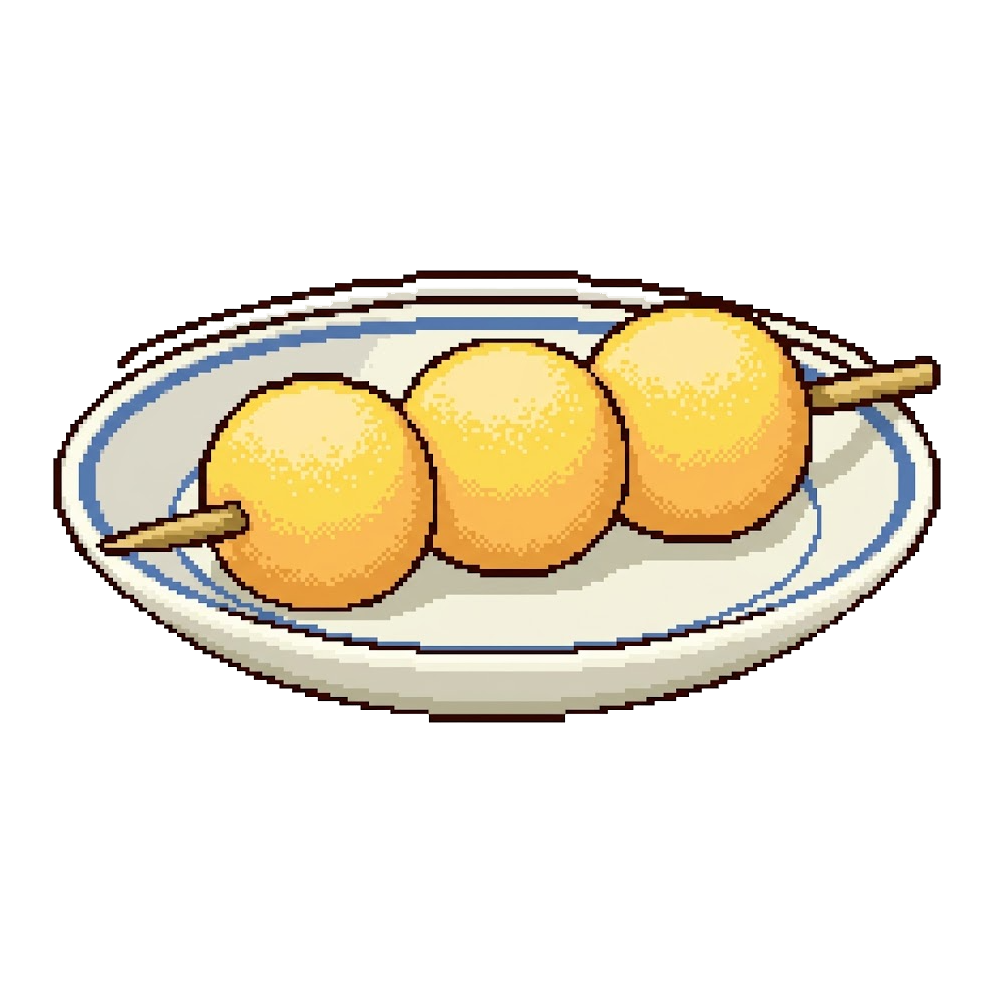
Japan, Okayama PrefectureJapanese sweetLinked to the folktale of Momotaro
Kibi dango is a soft, sweet dumpling known as a specialty of Okayama Prefecture. It is also famous as the gift in the folktale "Momotaro," given to his companions.
Key facts
| Type | Japanese sweet (a kind of dumpling) |
|---|---|
| Place | Japan, Okayama Prefecture (around the old land of "Kibi") |
| Origin of the name | Said to come from "Kibi," the old name for the Okayama area, and from the grain "kibi" (millet) |
| Start of the sweet as we know it | Often said to have gone on sale at a sweet shop in Okayama in 1856 (the 3rd year of Ansei), near the end of the Edo period. Details, such as who invented it, differ between sources, and accounts differ. |
| Main ingredients | Glutinous rice, sugar, starch syrup and so on. A common way to make it is to add millet flour to, or dust it on, soft kneaded gyuhi (a rice-cake-like dough). |
| Features | Chewy, soft and gently sweet. The taste and shape differ from shop to shop. |
| Link to the folktale | Named after the "kibi dango" in the folktale "Momotaro." Okayama is introduced as a place linked to Momotaro. |
What kind of sweet is it?
Kibi dango is a Japanese sweet (a traditional Japanese treat) famous as a specialty of Okayama Prefecture. It is a soft dumpling, rolled into bite-sized balls or cut into squares.
Most of the ones sold in shops are made mainly of "gyuhi," a rice-cake-like dough made by mixing glutinous rice, sugar and starch syrup. Millet flour is mixed in, or dusted on the surface. It is chewy in the mouth, and a gentle sweetness spreads out.
It also comes in many flavors, such as roasted soybean flour, white peach and green tea, which is part of the fun.
Where the name comes from
It is said that two meanings are layered in the name "kibi."
One is "kibi," a grain (in the same family as rice and wheat). Kibi is a millet, a small grain other than rice, that has long been grown in Japan. People ground it into flour and ate it as dumplings.
The other is the old name of the land around Okayama Prefecture, "the land of Kibi." Because it is Okayama's dumpling, it is sometimes written with characters that include the place name.
History and origins
The original dumplings are thought to have been simple ones (plain and natural, without decoration) made of millet flour. Near the end of the Edo period, they began to be sold in Okayama's castle town (a town that grew around a castle) as soft sweets made with sugar and starch syrup, like today's.
A long-established sweet shop in Okayama (a shop that has run for a long time) says it started selling kibi dango in 1856 (the 3rd year of Ansei). Sugar was very precious then. So this was a sweet made with a generous amount of it.
However, sources give different accounts of who invented it and how. So it is best to think of it as "accounts differ."
The link to Momotaro
In the folktale "Momotaro," Momotaro shares the kibi dango tied at his waist with a dog, a monkey and a pheasant, and they become his companions. The details of the story differ a little by region and by book.
In Okayama Prefecture, there is a legend that a man named Kibitsuhiko no Mikoto fought an enemy called Ura, who was known as an ogre. Some people think this was the origin of Momotaro.
However, the Momotaro story is told all over Japan, and there are local traditions about "the birthplace of Momotaro," so accounts differ. Okayama is a peach-growing area, and it also has the famous kibi dango. These are thought to help create the image of "Okayama means Momotaro."
Cultural things worth knowing
Kibi dango is popular as a travel souvenir. There is also the fun idea that "you could become Momotaro's companion," so people from children to adults enjoy it.
Some people imagine that the kibi dango in the folktale was actually a simple dumpling made of millet flour. But there are no clear sources that tell us the detailed way it was made in the story.
In Japan, dumplings made of rice flour or glutinous rice flour are enjoyed in many places, at festivals and as snacks. Kibi dango has been loved as one of them, tied to the history and stories of its land.
About this illustration
A pixel-art picture (a picture drawn by lining up tiny dots) showing the scene of making companions with kibi dango. It shows round dumplings and the folktale scene of winning over companions in a cute way. The real shape, color and look of the companions are not fixed by the real sweet or by tradition. This is an artist's own picture and differs from the real thing.
Fun facts
- Okayama Prefecture includes the area once called "the land of Kibi," which is said to be one source of the name kibi dango.
- "Kibi," the grain behind kibi dango, is in the same family as rice and wheat. It is one of the small grains.
- Most kibi dango in shops are based not only on millet flour but on gyuhi, made from glutinous rice, sugar and starch syrup.
Quick quiz
Q. What is the name of the soft dough that forms the main part of the kibi dango sold in shops in Okayama today?
Most kibi dango are made mainly of gyuhi, a soft, rice-cake-like dough made from glutinous rice, sugar and starch syrup. Millet flour is mixed in or dusted on it.
References
- 廣榮堂 (a sweet shop in Okayama), official guide (supports the 1856 start of kibi dango and the way it is made with gyuhi)
- 岡山県観光連盟「おかやま旅ネット」(https://www.okayama-kanko.jp/), introduction to the Momotaro legend and the Japan Heritage story "Okayama, the town where the Momotaro legend was born" (supports the legend of Kibitsuhiko no Mikoto and Ura, and kibi dango as an Okayama specialty)
- 『日本大百科全書(ニッポニカ)』「桃太郎」の項目 (supports the information on Momotaro as a folktale)
- 吉備津神社 official guide (supports the legend of Kibitsuhiko no Mikoto and Ura)
Accounts may differ between sources and regions, and facts or figures can change with new research or rules. This page was translated from the Japanese original.
Download the pixel art
- Free
- No registration
- Commercial use OK
- Edits OK
- Credit optional
- No usage report needed
Please read the terms of use before using it.