



World & Culture Encyclopedia No.029
Blue Oni (Blue Ogre)
Japan · FolktaleAn oni in MomotaroThe culture of oni colors
The blue oni is a blue ogre shown on Onigashima, the Island of Ogres, in the story of Momotaro. Here you can learn why oni have colors and what their horns and underpants mean, including different accounts.
Key facts
| Category | An oni (ogre) from Japanese folktales and old stories (an imaginary being) |
|---|---|
| Story it appears in | "Momotaro." A blue oni is sometimes drawn in picture books as one of the oni living on Onigashima. |
| Colors of oni | Oni are sometimes described in five colors: red, blue, yellow (or white), green and black. The red oni and the blue oni are the most famous. |
| Where the colors come from | Some say the colors are linked to the ancient Chinese idea of yin-yang and the five elements, and to Buddhist thought (accounts differ). |
| Horns and tiger-skin underpants | A widely known explanation says that the "demon gate" (the northeast, the direction from which disasters were thought to come) is called "ushitora" (ox-tiger). So oni got ox horns and tiger skin. (This is an interpretation that spread in later times.) |
| Where the story is set | Okayama Prefecture is known as the home of the Momotaro legend. Onigashima is sometimes said to be Megijima Island in Takamatsu City, Kagawa Prefecture. |
| Differences between versions | The number, colors and belongings of the oni differ by region and by picture book. |
What is it?
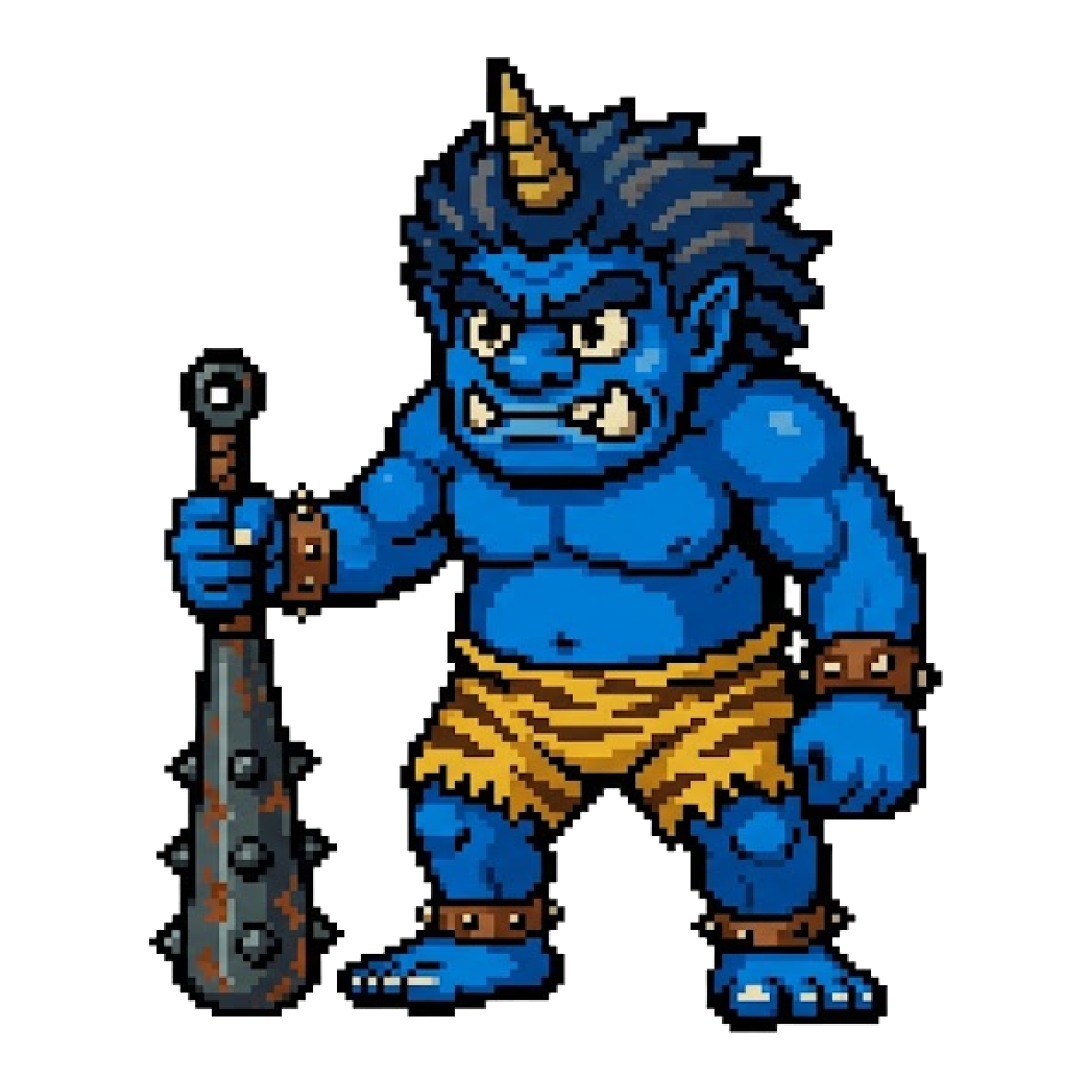
The blue oni is a blue-bodied oni that appears on Onigashima in the folktale "Momotaro." In picture books and paper theater, it is often drawn together with a red oni.
An oni is an imaginary being from Japanese folktales and old stories. It was thought to have horns and great strength. Oni are often told of as scary beings who cause trouble for people.
However, not every original version of the story says that there is a blue oni. The colors and number of the oni differ depending on the region where the story was told and on the person who made the book.
Momotaro and Onigashima
Momotaro is a boy born from a big peach that an old woman found in a river. When he grows up, Momotaro takes a dog, a monkey and a pheasant as his helpers and sets out for Onigashima. He fights the oni and brings home the treasure that the oni had.
This story has many forms depending on the region. For example, how Momotaro is born, which animals go with him, how many oni there are, and whether the oni give up all differ between the versions that people have passed down.
As for the setting, Okayama Prefecture is famous as the home of the Momotaro legend. Onigashima is sometimes introduced as Megijima Island in Takamatsu City, Kagawa Prefecture, in the Seto Inland Sea. On the island there is a cave called the "Onigashima Large Cave." It is said to have become known, linked with Momotaro's Onigashima, in the early Showa period. Both are stories based on legend, and there is no single settled answer.
Why do oni have colors?
Oni are said to come in red, blue, yellow (sometimes white), green and black. It is sometimes explained that these five colors came from mixing the ancient Chinese idea of yin-yang and the five elements (a way of thinking that sees everything in the world as made of five elements: wood, fire, earth, metal and water) with Buddhist teachings.
In Buddhism, the "five hindrances" (gogai) are five troubles that get in the way of training the mind. Some explanations match the five colors of oni to these five troubles. For example, at the Setsubun festival at Rozanji Temple in Kyoto, the red oni stands for greed, the blue oni for anger and resentment, and the black oni for foolishness. However, which color matches which trouble differs depending on the source, and there is no clear, settled answer.
It is also said that the look of Japanese oni was formed by layering many things, such as the oni of hell in Buddhist paintings and the Chinese idea of the "oni." In some regions, red and blue oni also appear in Setsubun events.
The meaning of the horns and the tiger underpants
When you think of an oni, many people picture a figure with horns on its head and tiger-skin underpants.
People long ago called the northeast direction the "demon gate" (kimon) and thought it was the direction from which disasters came in. In the twelve zodiac signs (a set of twelve animals, such as the rat, ox and tiger, used to mark directions and times), this direction is "ushitora" (ox-tiger). So a widely known explanation says that oni came to have ox horns and tiger skin.
However, this is an interpretation that spread in later times. Not every old picture shows this figure.
Cultural things worth knowing
Oni are not only drawn as simple villains. In some regions, there are events that treasure the oni as a being that protects people from disaster. At Setsubun, people say "Oni out, good luck in!" The words treat the oni as a symbol of disaster and bad things to drive away. But some shrines and regions say "Oni in!"
Also, a legend of an oni called Ura, told in the Kibi region of Okayama Prefecture, is sometimes named as a model for Momotaro's oni. In the legend, Ura shut himself in a mountain castle called Kino-jo, and Kibitsuhiko no Mikoto defeated him. This prince is said to be the model for Momotaro. This is a local legend, not a story confirmed as historical fact. In 2017, places linked to this legend in Okayama City, Soja City and other areas were chosen as "Japan Heritage" (stories of a region's history and culture that are certified by the national government).
When you see a colored oni like the blue oni, try asking, "Why is it blue?" This can bring you closer to how people long ago thought.
About this illustration
This is a pixel-art picture (a picture made by lining up small square dots) of a blue-bodied oni. It is drawn as an oni from Momotaro. The blue colors and the pixel-art style are the artist's own way of drawing, and they are not taken directly from any record of a particular folktale. It is an illustration, so it differs from real things and from the traditional stories.
Fun facts
- Oni colors are not only red and blue. They are sometimes told of in five colors, including yellow (or white), green and black.
- A widely known explanation says that the idea of calling the "ushitora" direction the demon gate linked oni with ox horns and tiger skin.
- As the setting of Momotaro, the legends of Okayama Prefecture are famous. Onigashima is sometimes said to be Megijima Island in Kagawa Prefecture.
Quick quiz
Q. Which is a well-known explanation for why oni are said to have ox horns and tiger-skin underpants?
The northeast "demon gate," the direction from which disasters were thought to come, is "ushitora" in the twelve zodiac signs. From this, a widely known explanation says oni got ox horns and tiger skin. However, this is an interpretation that spread in later times, and accounts differ.
References
- 『日本国語大辞典』(小学館): supports the meanings of words such as "oni," "kimon" and "gogyo" (five elements)
- 『世界大百科事典』(平凡社): entries on "oni" and "Momotaro"; supports the explanation of ideas about oni and folktales
- 国際日本文化研究センター「怪異・妖怪伝承データベース」(International Research Center for Japanese Studies, Database of Strange Tales and Yokai Folklore): materials on oni folklore
- 岡山県観光連盟「おかやま旅ネット」(Okayama Tourism Federation travel site): introduces Kino-jo, Ura and the Momotaro legend, and Japan Heritage
- 国土交通省 観光庁の多言語解説文データベース・高松市の観光案内 (Japan Tourism Agency multilingual description database and Takamatsu City tourist information): supports the introduction of Megijima (Onigashima Large Cave)
Accounts may differ between sources and regions, and facts or figures can change with new research or rules. This page was translated from the Japanese original.
Download the pixel art
- Free
- No registration
- Commercial use OK
- Edits OK
- Credit optional
- No usage report needed
Please read the terms of use before using it.