



Science Encyclopedia No.015
Snow crystal
WeatherIce crystalFalls from the winter sky
A snow crystal is an ice crystal that forms high in the sky when water vapor (water in the form of a gas) cools. It is based on a six-sided shape. Its form changes with the air temperature and the amount of water vapor.
Key facts
| Type | A crystal of ice (solid water). One of the wonders of the weather |
|---|---|
| How it works (in short) | High in the sky, water vapor cools around tiny bits of dust and other specks, and a grain of ice grows |
| Basic shape | A six-sided shape (a six-sided column or a six-sided plate) is the base |
| What decides the shape | Mainly the air temperature and the amount of water vapor around it |
| Familiar examples | Snow that falls in winter, and frost that forms in a freezer |
| First artificial snow | In March 1936, Ukichiro Nakaya and his team at Hokkaido University are said to have succeeded for the first time in the world. (The exact date and who was first differ depending on the source.) |
| First photos of snow crystals | Said to have been taken in 1885 by Wilson Bentley of the United States |
| Nakaya's main groups | 7 kinds, such as needle-shaped, column-shaped and plate-shaped (the way of grouping differs depending on the source) |
What is it?
A snow crystal is a tiny grain of ice made in the sky. When snow falls, the white things coming down are these ice crystals, or pieces of them stuck together.
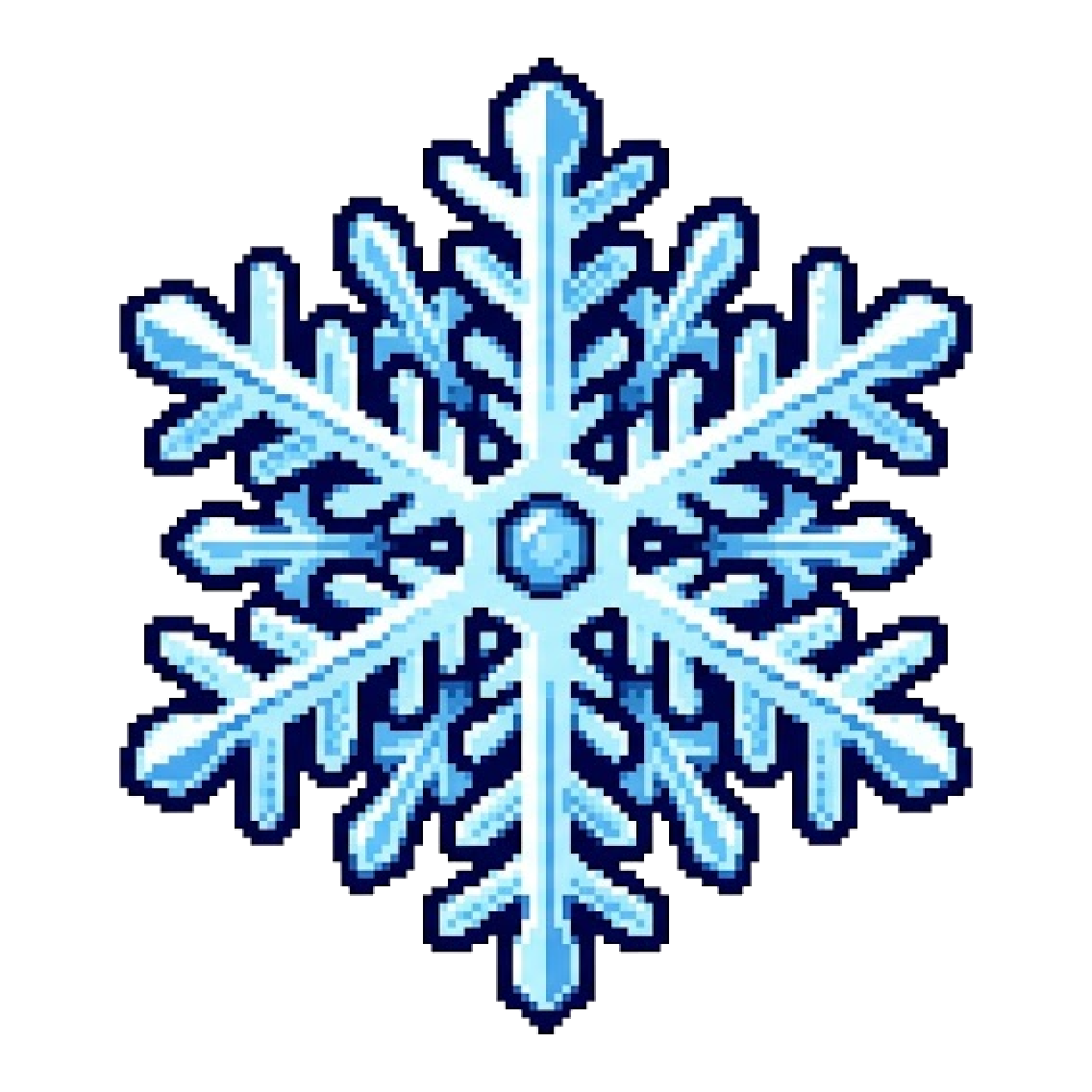
If you look closely, the shape is based on a hexagon (a six-sided shape). Some look like pointed stars, some like plates, and some like thin columns. People often say that no two are exactly alike. This is thought to be because the conditions during growth are a little different each time.
Why six sides?
The water molecules that make up ice (molecules are the very tiny pieces that make up water) line up in rings with six sides. This fixed pattern is said to show up in the crystal at a size we can see, giving a shape with six directions.
For this reason, the branches of a snow crystal usually number six. But sometimes the surrounding conditions change the shape, and it does not look like a hexagon.
How is the shape decided?
A snow crystal begins high in the sky. Water vapor cools around tiny bits of dust and turns into a grain of ice. At first it is a small six-sided column. After that, depending on the air temperature, it either spreads out like a plate or stretches out like a column.
Depending on the temperature, there are temperatures where crystals grow sideways more easily and temperatures where they grow lengthwise more easily. For example, at about minus 10°C to minus 20°C, crystals grow sideways like plates, and branching shapes form more easily, it is explained. Where the temperature ranges are divided differs a little depending on the source.
Also, the more water vapor there is, the better the corners and edges grow, and the shape becomes branched and complicated. When there is little water vapor, the shape stays simple.
The history of discovery and research
The first person to photograph snow crystals was Wilson Bentley of the United States. He is said to have taken the first pictures in 1885. He attached a camera to a microscope (a tool that makes small things look bigger).
In Japan, the physicist Ukichiro Nakaya did research at Hokkaido University. In March 1936, he is said to have succeeded for the first time in the world in making artificial snow in a laboratory. It is said that he grew crystals on a rabbit's fur. How it is written about the day of success, and about who made it first, differs depending on the source.
Nakaya studied how the shape changes with air temperature and the amount of water vapor, and he put the results into a chart. It is called the "Nakaya Diagram." He is also known for the words, "Snow is a letter sent from the heavens." It means that from the shape of a crystal, we can read what the sky was like.
How to see them in daily life
On a snowy day, use a magnifying glass to look at snow that has fallen on black cloth or a glove. When the air is cold, crystals with beautiful shapes are more likely to stay as they are.
A snow crystal is really clear ice, but when many gather, light bounces around in all directions and they look white. Also, when the temperature is close to 0°C, many crystals stick together and can make big, fluffy flakes.
About this illustration
A pixel-art picture of a six-sided snow crystal. You can use it for winter scenes. The hexagon shape is based on a feature seen in real snow crystals. The colors and the small decorations are the artist's own style, and they are different from real crystals and from research records.
Fun facts
- Snow crystal branches usually number six, but it is said that a few rare ones do not have six.
- A snow crystal is clear ice, but it looks white when many gather, because light scatters (bounces back in many directions).
- In Ukichiro Nakaya's artificial snow experiment, the rabbit's fur is thought to have worked as the "seed" (the core) of the crystal.
Quick quiz
Q. Which of these mainly decides the shape of a snow crystal?
The shape of a snow crystal changes with the air temperature and the amount of water vapor around it. Ukichiro Nakaya studied this link in experiments and put it into a chart.
References
- 北海道大学 CoSTEP『北大のここがすごい』の記事 (an article on Ukichiro Nakaya, the 1936 artificial snow, and the rabbit's fur)
- 日本気象学会『天気』 (on the grouping of snow crystals and the Nakaya Diagram)
- Guinness World Records『First photograph of a snowflake』 (on Bentley's 1885 photograph)
- Smithsonian Institution Archives『Wilson A. Bentley: Pioneering Photographer of Snowflakes』 (on Bentley's work)
Accounts may differ between sources and regions, and facts or figures can change with new research or rules. This page was translated from the Japanese original.
Download the pixel art
- Free
- No registration
- Commercial use OK
- Edits OK
- Credit optional
- No usage report needed
Please read the terms of use before using it.