



Food Encyclopedia No.019
Lettuce
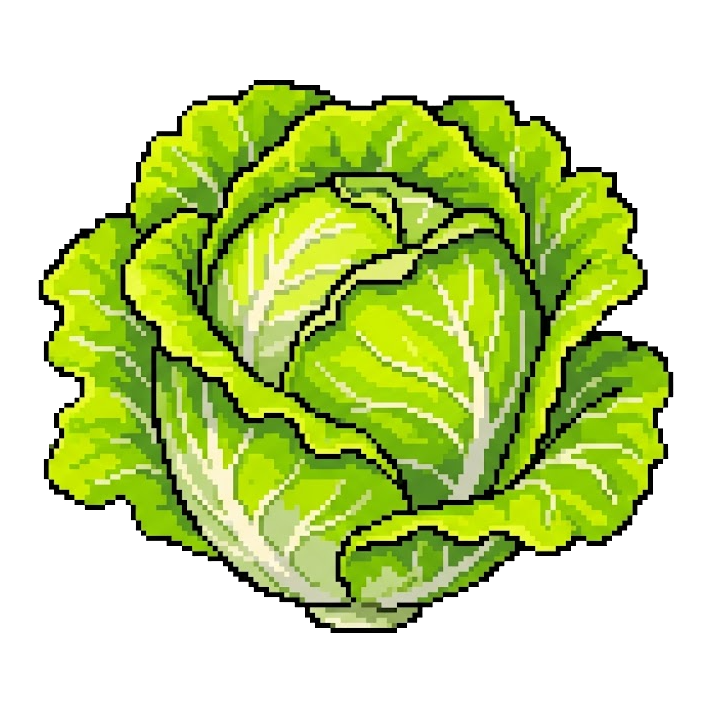
A vegetable of the daisy familyA leafy vegetableA salad favorite
Lettuce is a leafy vegetable of the daisy family. Its home is thought to be the Mediterranean coast and western Asia. In Japan, Nagano and Ibaraki Prefectures are the main growing areas. When it is cut, a white juice comes out.
Key facts
| Type | A vegetable of the daisy family, in the genus Lactuca. It is a "leaf vegetable" (a vegetable whose leaves we eat). Scientific name: Lactuca sativa |
|---|---|
| Home | Thought to be the Mediterranean coast and western Asia (explanations differ depending on the source, and accounts differ) |
| Main growing areas (Japan) | Nagano, Ibaraki, Gunma and others are the main areas. The national harvest in the 2023 crop year (Reiwa 5) was about 681,000 tons (according to the Agriculture & Livestock Industries Corporation). From summer to autumn, cool highlands such as Nagano are the center. From winter to spring, warm areas are the center |
| Value of output | In 2023 (Reiwa 5), by the value of farm output (the total money farmers earned from selling the vegetable), Nagano was first in Japan at about 22.6 billion yen, and Ibaraki was second at about 11.9 billion yen (from materials of the Kanto Regional Agricultural Administration Office. This is a different number from the harvest amount) |
| Kinds | "Head lettuce" (crisphead), whose leaves curl and overlap into a ball, and "leaf lettuce" (non-heading lettuce), which does not form a ball, and others |
| Arrival in Japan | It came by way of China in ancient times. By the Nara period, a kind called "chisha," whose leaves were picked off to eat, is said to have been known. Today's head lettuce is said to have arrived near the end of the Edo period, and to have become widely grown after World War II (the timing is explained differently depending on the source, and accounts differ) |
| How to eat | Salads, sandwiches, hamburgers, soups, stir-fries and more |
| How to store | To keep it from drying out, wrap it in plastic wrap or wet paper towels and put it in the refrigerator. Torn leaves should be eaten within one to two days, as a rule of thumb |
What kind of vegetable is it?
Lettuce is a vegetable of the daisy family. It is in the same family as sunflowers, dandelions and burdock. We eat its leaves, so it counts as a "leaf vegetable" (a vegetable whose leaves we eat).
The best-known kind is "head lettuce," whose leaves curl and overlap into a ball. There is also "leaf lettuce," whose leaves spread out without forming a ball. The colors can be green or reddish purple.
It is known for its crisp bite and mild taste. People eat it raw in salads or tucked in bread.
Home and history
The home of lettuce is thought to be the area from the shores of the Mediterranean Sea to western Asia. But the facts are not clear, and explanations differ depending on the source, so accounts differ.
It was eaten in Europe long ago, too. In ancient Greece and Rome, the kind that does not form a ball is said to have been eaten.
In Japan, it is said to have come by way of China in ancient times. By the Nara period, "kakichisha," a kind whose outer leaves were picked off to eat, is said to have been known. The name "chisha" is explained as coming from "chichikusa," meaning "milk grass," because a milky white juice comes out when it is cut.
How it spread in Japan
The head lettuce that is common today is said to have come to Japan near the end of the Edo period. It was also introduced in the Meiji period, but people were not used to eating raw vegetables, so it did not spread much. It became widely grown after World War II. One reason is explained to be that foreign-style ways of eating, such as salads, spread.
Lettuce does not like heat and prefers cool weather. So the growing areas change with the seasons: highlands such as Nagano from summer to autumn, and warm areas from winter to spring. In this way, lettuce is in the shops all year round.
Where is a lot of it grown?
According to the Agriculture & Livestock Industries Corporation, Japan's harvest in the 2023 crop year (Reiwa 5) was about 681,000 tons. The main growing areas are Nagano, Ibaraki and Gunma.
Also, according to materials from the Kanto Regional Agricultural Administration Office, in 2023 (Reiwa 5) the value of farm output (the total money farmers earned from sales) was first in Japan for Nagano at about 22.6 billion yen, and second for Ibaraki at about 11.9 billion yen. The value of output is a different number from the amount harvested.
These numbers change every year with the weather and other things. The latest numbers can be checked in the Ministry of Agriculture, Forestry and Fisheries' "Vegetable Production and Shipment Statistics."
Tips for eating well, and storing
Lettuce loses water from its cut end and wilts easily. When you store a whole head, wrap it in plastic wrap so that the cut end of the core (the hard part in the middle) is protected, and put it in the refrigerator. Torn leaves can be wrapped in wet paper towels and put in a container to keep them from drying out. Even so, it does not keep for long, so a rule of thumb is to eat it within one to two days.
The white juice that comes out when lettuce is cut is said to contain a substance that causes bitterness (lactucopicrin).
Vitamins and minerals dissolve easily in water. So it is said that if you wash lettuce first and then cut it, less of them dissolves away.
About the body and nutrition
Most of lettuce is water. It is said to contain small amounts of dietary fiber, potassium and other things. Potassium is a nutrient that helps balance the water in the body.
If you want to know detailed numbers, you can look them up in the Ministry of Education, Culture, Sports, Science and Technology's "Standard Tables of Food Composition in Japan."
Lettuce alone does not give you all the nutrition you need. It is important to eat many kinds of food together.
About this illustration
A pixel-art picture of lettuce (a picture drawn with tiny squares lined up). It is made as artwork you can use for cooking, greengrocer or farm scenes. The shape and color of the leaves and other small details are the artist's own style, and they do not copy any particular variety exactly. It is different from the real thing.
Fun facts
- Lettuce is in the same daisy family as dandelions and sunflowers.
- The old name "chisha" is said to come from "chichikusa" (milk grass), because of the milky white juice that comes out when it is cut.
- Lettuce does not like heat, so in summer much of it is grown in cool highlands such as Nagano.
Quick quiz
Q. Which cool highland area grows a lot of lettuce from summer to autumn?
Lettuce does not like heat and prefers cool weather. From summer to autumn, highlands such as Nagano are the center of growing. Nagano is also first in Japan in the value of output (2023, Reiwa 5).
References
- 独立行政法人 農畜産業振興機構(ALIC)『野菜情報』『今月の野菜:レタス』 (on Japan's harvest, main growing areas, kinds and history)
- 農林水産省『野菜生産出荷統計』 (on planted area and harvest by prefecture)
- 農林水産省 関東農政局 管内の野菜に関する資料 (on the 2023 value of farm output and the ranking of growing areas)
- 文部科学省『日本食品標準成分表(八訂)』 (on the nutrients in lettuce)
Accounts may differ between sources and regions, and facts or figures can change with new research or rules. This page was translated from the Japanese original.
Download the pixel art
- Free
- No registration
- Commercial use OK
- Edits OK
- Credit optional
- No usage report needed
Please read the terms of use before using it.