



Food Encyclopedia No.020
Macaron
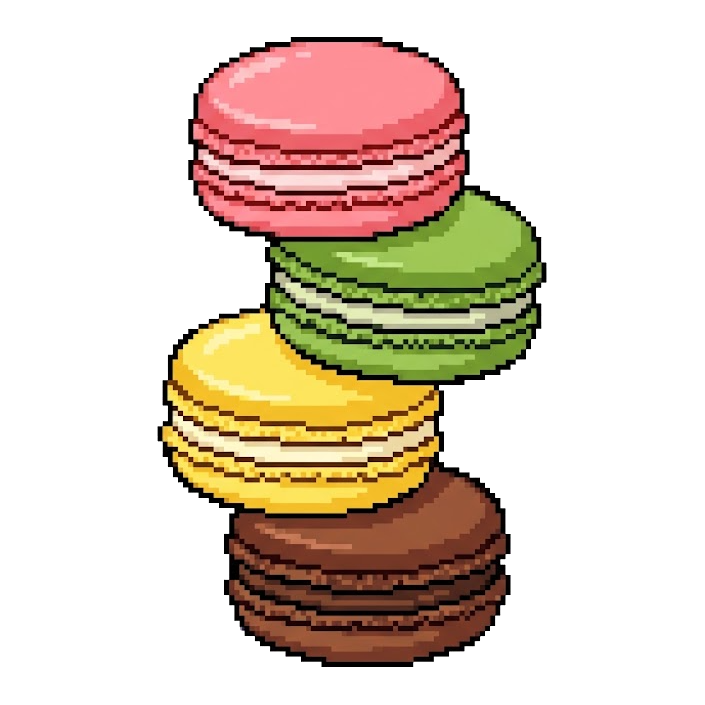
A baked sweet from FranceAlmond-based batterTwo shells with a filling between
The macaron is a famous French sweet made of two shells of almond-and-egg-white batter put together. Accounts differ on where it began. The form we know today is said to have spread in Paris in the first half of the 20th century.
Key facts
| Type | Western-style sweet (baked). A filling of cream or jam goes between shells made from ground almonds, egg whites and sugar. |
|---|---|
| Where the name comes from | It is said to be related to the Italian word "maccarone" (meaning something like kneaded dough). The word "macaron" appears in French writings from around the middle of the 16th century. |
| History and origins | Some say it began in Italy, but the origin is not clear (accounts differ). According to Ladurée, the form we know now, with cream or other filling between two shells, was made in Paris in the 1930s. Other accounts also exist. |
| Main places | France is its home. Some regions, such as Nancy, also have their own old-style macarons. |
| Season | You can enjoy it all year round. It is also a popular sweet to give as a gift. |
| Main ingredients | Mostly almonds, egg whites and sugar. The filling can be cream, jam, chocolate and more. |
| Safety note | Macarons often contain eggs, almonds and dairy, so people with allergies need to be careful. Check the product label for details. |
| How to store | Macarons do not like damp air or heat, so keep them in a cool place. Follow the shop's or the product's label for how to store them and how long they last. |
What kind of sweet is it?
A macaron is a French sweet made from ground almonds, egg whites and sugar. Usually, two small round shells are made, and cream or jam is put between them.
A puffy ring called a "pied" forms around the edge, and the top is smooth. When you bite it, it is crisp on the outside and moist inside. There are many colors and flavors, so a shop display looks very colorful.
By the way, "macaroni" is a pasta made from wheat flour. It is a different food.
Its home and its name
No one knows for sure where the macaron comes from. Sweets made with almonds seem to have existed in many parts of Europe since the Middle Ages (long ago). The name is said to be related to the Italian word "maccarone."
A famous story says that Catherine de' Medici, who came from Italy and became queen of France, brought it. But this is often treated as a legend with no firm record. The word "macaron" shows up in French writings around the middle of the 16th century. A book by the writer Rabelais (1552) is given as an example.
Regional macarons and Paris macarons
Different parts of France have handed down almond sweets. In Nancy, around the time of the French Revolution (about 1792), nuns (women who live together in a church community and pray) are said to have made and sold macarons to support their lives. This kind is not two shells. It is a single round sweet.
As for the cream-filled macaron we often see, the famous Paris pastry shop Ladurée (a shop that began in 1862) explains that it created the two-shell form in the 1930s. The name Pierre Desfontaines is given as the maker, but the name Claude Gerbet is also mentioned, so it is not clear. Some say macarons were served as two shells even earlier. The details are a matter of different accounts.
Tips for enjoying it
Some shops sell macarons chilled. The best time to eat them and how to eat them differ from shop to shop, so look at the shop's guide.
Macarons are weak against damp air. Eat them soon after opening, and if you keep some, take care that moisture does not get in. Follow the guide from the shop where you bought them for how to store them and how long they last.
About allergies
Macarons often use almonds, eggs (egg whites) and dairy (cream or butter). People with food allergies should be especially careful.
Japan has rules for food allergy labels. Eggs, milk, wheat and some other items must be shown on the label. Almonds are one of the ingredients that are recommended to be labeled (as of 2026). When you buy at a shop, look at the list of ingredients. For details or worries, ask a doctor or another expert.
About this illustration
This is a pixel-art illustration of a macaron (a picture drawn with tiny square dots). It can be used for shop or cafe scenes, menus and so on. Macarons come in many kinds, so details such as color, shape and filling are not fixed here. Pixel art itself is a style of drawing, and it is different from a real macaron.
Fun facts
- The puffy ring around the edge of a macaron is called a "pied." It means "foot" in French.
- The word "macaron" appears in French writings from around the middle of the 16th century. A 1552 book by Rabelais is given as an example.
- The famous Paris pastry shop Ladurée is said to have started as a bakery in 1862.
Quick quiz
Q. According to Ladurée, about when was the macaron we know today, with cream or other filling between two shells, made?
Ladurée explains that it created the two-shell form in the 1930s. But accounts differ about the origin, and it is not clear.
References
- Ladurée official website "History of the Macaron" (laduree.com): supports the history of the Paris-style macaron, the Rabelais text, and regional traditions such as Nancy
- Encyclopaedia Britannica "macaron" (britannica.com): supports the origin of the macaron, the Nancy nuns, and the Desfontaines account
- 消費者庁「食品表示(アレルギー表示)」(Consumer Affairs Agency of Japan, "Food Labeling (Allergen Labeling)"): supports the labeling rules for eggs, milk, wheat and others, and the items such as almonds that are recommended to be labeled
- François Rabelais, 『第四之書(Quart Livre)』 (Fourth Book), 1552: an example of the word "macaron" appearing in French writing
Accounts may differ between sources and regions, and facts or figures can change with new research or rules. This page was translated from the Japanese original.
Download the pixel art
- Free
- No registration
- Commercial use OK
- Edits OK
- Credit optional
- No usage report needed
Please read the terms of use before using it.