



Food Encyclopedia No.018
Sushi
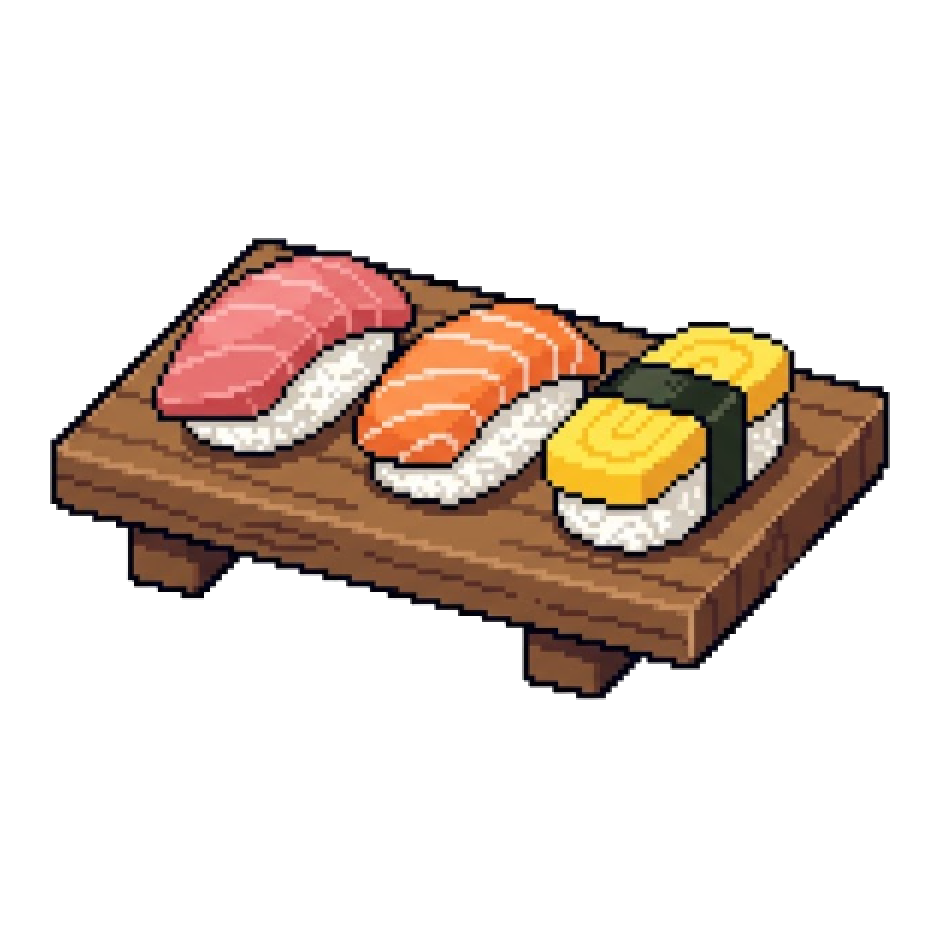
Traditional Japanese foodVinegared rice and seafoodHand-pressed sushi spread in Edo
Sushi is a Japanese food that combines vinegared rice with fish, shellfish, egg, and more. It began as a way to keep fish for a long time. Hand-pressed sushi is said to have spread in Edo in the later part of the Edo period.
Key facts
| Type | A Japanese food that uses vinegared rice (rice mixed with vinegar). It comes in many forms, such as hand-pressed, rolled, and scattered sushi. |
|---|---|
| Main ingredients | Rice, vinegar, salt, sugar, fish and shellfish, egg, seaweed (nori), vegetables, and more |
| Origin | It is said to come from "narezushi," a food made by pickling fish with salt and rice and letting it ferment (a food to keep fish for a long time). |
| Start of hand-pressed sushi | It is thought to have spread in Edo (now Tokyo) in the early 1800s (the later Edo period, the Bunsei era). A person named Hanaya Yohei is famous, but accounts differ about the exact years and stories. |
| Kinds | Hand-pressed sushi, rolled sushi, "battleship" rolls, inari sushi, scattered sushi, pressed sushi, and more |
| How to eat it | Dip it in a little soy sauce. Many people also eat "gari" (ginger pickled in sweet vinegar) to freshen the mouth. |
| Allergy notes | Shrimp, crab, and egg are "specified ingredients" that must be shown on labels under food labeling rules. Salmon, mackerel, salmon roe (ikura), and others are items that are recommended to be shown (as of 2025; the rules may change). If you are worried, be sure to ask the staff at the shop. |
| Keeping it | It uses raw fish, so eat it as soon as you can after it is made. Even when you take it home, do not leave it in a warm place, and eat it soon. |
What kind of food is it?
Sushi is a Japanese food made by combining rice mixed with vinegar (a sour seasoning) with fish, shellfish, egg, and other things. The rice part is also called "shari."
The best-known kind is "nigiri sushi," which is a topping placed on rice pressed by hand. There are many other forms too, such as rolled sushi wrapped in seaweed, scattered sushi (finely cut toppings spread over rice), and inari sushi (rice stuffed into fried tofu pouches).
There are many toppings, such as salmon, tuna, and sweet rolled omelet. The topping placed on the rice is called "neta," and the kinds differ a lot from shop to shop.
Born from a way to keep food
Sushi is said to come from a food called "narezushi." Long ago, there were no refrigerators. People pickled fish with salt and rice and let it ferment (change through the work of tiny living things called microbes) so that it would last a long time.
At first, the rice was only there to help the fermenting, and it is said to have been thrown away without being eaten. Later, people began to eat the rice together with the fish. Then people started using vinegar and did not wait for fermenting.
Foods close to narezushi are thought to have existed already in the Nara period. Fermenting is one of the wise ideas people long ago used to keep food for a long time.
Hand-pressed sushi spreads in Edo
The hand-pressed sushi that many people picture today is thought to have spread in Edo (now Tokyo) in the later part of the Edo period, in the early 1800s.
An Edo-period book, "Morisada Mankō," tells that Edo had become full of hand-pressed sushi, and that Yohei's sushi shop (Hanaya Yohei) in Higashi-Ryōgoku was a well-known place. Hanaya Yohei is famous as the person who thought up hand-pressed sushi with kohada (a fish) cured in vinegar. But many of these are stories passed down, and the exact years and details differ by source.
At that time, hand-pressed sushi was an easy food eaten at stalls (small shops opened by the roadside) and similar places. The pictures in "Morisada Mankō" show sweet rolled omelet, shirauo (icefish), tuna, kohada, and sweet-simmered conger eel. It is said that the fish caught in the sea of Edo were used, so it was also called "Edomae."
Sushi in Japanese food culture
In 2013, "washoku" (Japanese food culture) was added to UNESCO's list of Intangible Cultural Heritage. UNESCO is the United Nations organization for education, science, and culture. Intangible cultural heritage means important culture that has no physical shape. What was added was not only sushi. It was the whole Japanese food culture that values the gifts of nature.
Sushi is one of the foods that stand for Japanese food, and today it is eaten in many countries around the world too.
Staying safe when you eat
Many kinds of sushi use raw fish or shellfish. So do not eat sushi that was made a long time ago or left in a warm place. Even when you take it home, it is safer to eat it soon.
You also need to be careful about allergies. Shrimp, crab, and egg are "specified ingredients" that must be shown on labels under food labeling rules. Salmon, mackerel, salmon roe, and others are items that are recommended to be shown (as of 2025). The rules may be reviewed, so you can check the latest information with the Consumer Affairs Agency.
If you have an allergy, ask the staff about the ingredients before you eat. Seasonings such as vinegared rice and soy sauce may also contain other ingredients.
About this illustration
A pixel-art picture (a picture made of tiny squares) of sushi lined up on a wooden board. You can see salmon, egg, and tuna sushi. The colors, shapes, and the look of the board are the artist's style and are different from the real thing.
Fun facts
- In narezushi, the rice is said to have been thrown away without being eaten at first. The way rice was treated was very different from today's sushi.
- The pictures in the Edo-period book "Morisada Mankō" show sushi toppings such as sweet rolled omelet, shirauo (icefish), tuna, kohada, and sweet-simmered conger eel.
- What was added to the Intangible Cultural Heritage list in 2013 was the whole food culture called "washoku," not only sushi.
Quick quiz
Q. Which food for keeping fish is said to be the origin of sushi?
Sushi is said to come from "narezushi," in which fish is pickled with salt and rice and fermented so that it lasts a long time.
References
- Ministry of Agriculture, Forestry and Fisheries "うちの郷土料理" (Local dishes of our home): supports narezushi and the food culture of keeping food by fermenting
- Agency for Cultural Affairs, pages on "和食" (washoku) and the explanation of the 2013 UNESCO Intangible Cultural Heritage listing: supports the washoku listing
- "守貞謾稿" (Morisada Mankō) by Kitagawa Morisada (a late Edo-period book on everyday customs): supports the descriptions of Edo sushi and toppings
- Consumer Affairs Agency, material on allergen labeling under the Food Labeling Act ("食品表示法に基づくアレルゲン表示"): supports the specified ingredients and the items recommended for labeling
- nippon.com "寿司は江戸の昔からお手軽ファストフードだった:『守貞漫稿』(その3)" (Sushi was easy fast food from the Edo days: Morisada Mankō, part 3): supports how sushi was in the Edo period
Accounts may differ between sources and regions, and facts or figures can change with new research or rules. This page was translated from the Japanese original.
Download the pixel art
- Free
- No registration
- Commercial use OK
- Edits OK
- Credit optional
- No usage report needed
Please read the terms of use before using it.