



Food Encyclopedia No.016
Pudding (Custard pudding)
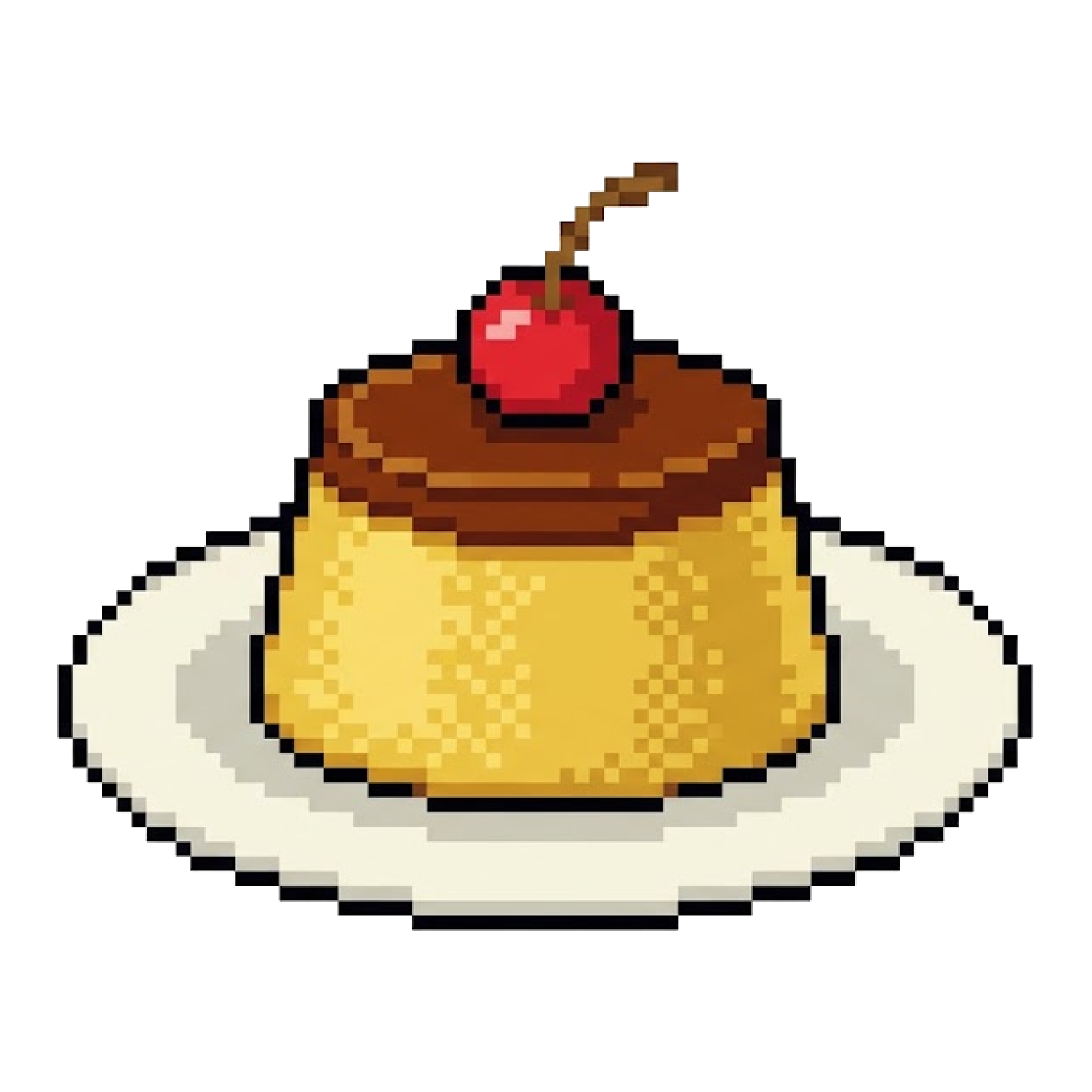
Western-style sweetA dessert of eggs and milkA classic favorite in Japan
A dessert made by mixing eggs, milk and sugar, then steaming or baking it until it sets. It began as the British "pudding." It is said to have reached Japan around the end of the Edo period and the Meiji era, and today it is a classic snack.
Key facts
| Type | A dessert in the Western-style sweets group. Its proper name is "custard pudding." |
|---|---|
| Main ingredients | Eggs, milk and sugar. Vanilla is often used for scent. It often comes with caramel on top (a slightly bitter sauce made by browning sugar). |
| Where the name comes from | The English word "pudding." One idea is that the sound was hard to hear in Japanese and changed into "purin" (accounts differ). |
| History and origin | It began as a steamed dish called pudding in Britain (said to have been loved by about the 16th century). In the past, many puddings were not sweet and were meant for meals. Custard pudding as we know it is said to have reached Japan around the end of the Edo period and the Meiji era (the exact time and the first person to make it are not known). |
| How it sets | It uses the way protein in eggs (a nutrient that helps build the body) hardens with heat. |
| How to eat it | Eat it plain, or add fruit or whipped cream. It can also become a dessert topped with ice cream or fruit. |
| Allergy warning | It often contains eggs and milk. People with allergies should read the food label carefully. |
| How to store it | After making it, chill it in the refrigerator and eat it soon. For store-bought pudding, follow the storage method and date shown on the label. |
What kind of food is it?
Pudding (called "purin" in Japan) is a dessert made by mixing eggs, milk and sugar and setting it with heat. It is usually called "custard pudding." It is soft in the mouth and has a smooth, jiggly feel.
The caramel on top is made by heating sugar until it browns. It has a slightly bitter taste that goes well with the gentle sweetness of the pudding.
Some puddings are turned out of their dish onto a plate. Others are eaten straight from the cup.
Why does it set?
Pudding sets thanks to the eggs. The protein in eggs hardens when heated. It is the same way a boiled egg gets hard.
In pudding, the eggs are mixed with milk and sugar and heated slowly, so it does not get too hard and ends up soft. If the heat is too strong, tiny holes (called "su") can form inside. So it is said that heating slowly at a low temperature makes a smooth pudding more easily.
History and origin
Pudding began as a dish called "pudding" in English. In Britain, it was loved as a steamed dish (it is said to have spread by about the 16th century). At first, many puddings were not sweet and were meant for meals.
Over many years it changed, and the sweet dessert pudding made with eggs and milk spread.
It is said to have reached Japan around the end of the Edo period and the Meiji era, as one of the Western-style sweets. Some think that Dutch people made it in the early Edo period, but this is not clear. It is also not known when or who first made it. One idea is that the name "purin" came from the sound "pudding" being hard to hear in Japanese and changing, but accounts differ.
How it spread in Japan
At first, it is said to have been a slightly special dessert served at Western-style restaurants and hotels.
In the middle of the Showa era, "pudding mix" (a powder you can make with water or milk) went on sale, so people could make it easily at home. After that, pudding in cups appeared in stores, and it became a familiar snack.
Later, lively desserts were also born, with ice cream and fruit on top of pudding. They are loved as a fun way to enjoy it that is special to Japan.
What to know for safety
Pudding often uses eggs and milk. These foods can cause food allergies. In Japan, there are rules that require food labels to show whether they are used. People with allergies should always check the package label before eating.
Also, homemade pudding uses eggs and milk, so it spoils easily. After making it, chill it in the refrigerator and try to eat it soon.
As for nutrition, it is said to contain protein and other nutrients from the eggs and milk. But sugar is used too, so be careful not to eat too much.
About this illustration
This is a pixel-art illustration (a picture drawn with tiny square dots) of pudding. It can be used for scenes of shops and cafes, menus and the like. The fine details, such as the color and shape of the caramel and the decorations, are the illustrator's design. They are not a fixed look of the real food. It is an illustration, different from the real thing.
Fun facts
- Pudding was originally a general name for steamed dishes in Britain, and there were many that were not sweet.
- The protein in eggs hardens with heat. This is why pudding sets.
- The caramel on top of pudding is a slightly bitter sauce made by browning sugar.
Quick quiz
Q. What is the main reason pudding sets?
Pudding is made using the way protein in eggs hardens when heat is added.
References
- 『日本国語大辞典』 (Nihon Kokugo Daijiten, Shogakukan): the meaning of the words "purin" and "pudding"
- 『世界大百科事典』 (Sekai Daihyakka Jiten, Heibonsha): the history of "pudding" and how it began in Britain
- Gendai Business (Kodansha) article "日本で『はじめてプリンをつくった』人は誰だったのか? 幕末・明治の状況が示すこと" (an excerpt from Kikujiro Yoshida's 『日本人が愛したお菓子たち』): why the time pudding came to Japan and the first maker are not clear
- Consumer Affairs Agency (消費者庁), "食品表示(アレルギー表示)" (Food Labeling, Allergy Labeling) explanation: eggs and milk are covered by the labeling rules
Accounts may differ between sources and regions, and facts or figures can change with new research or rules. This page was translated from the Japanese original.
Download the pixel art
- Free
- No registration
- Commercial use OK
- Edits OK
- Credit optional
- No usage report needed
Please read the terms of use before using it.