



Food Encyclopedia No.006
Strawberry Parfait
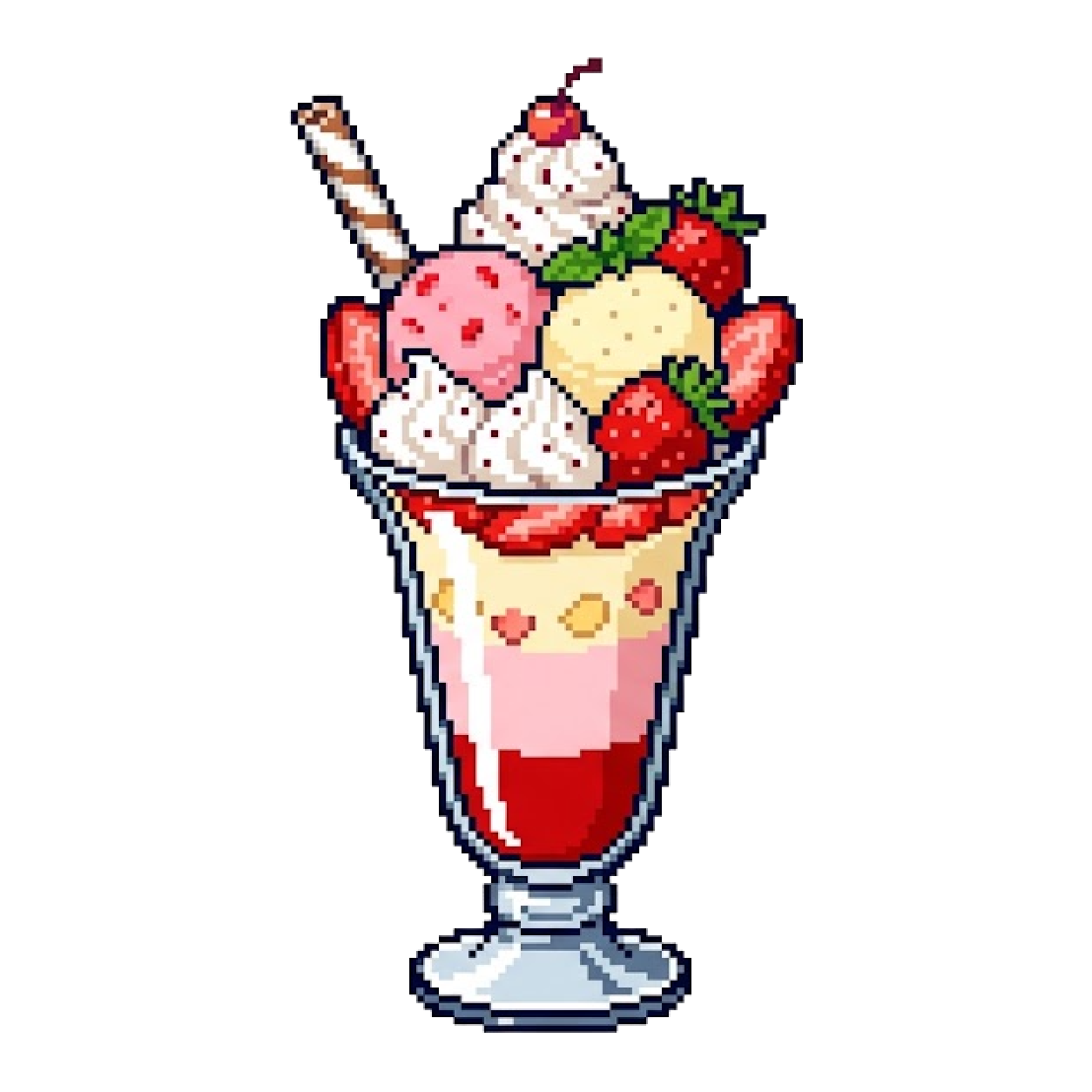
A cold dessertA Western-style sweet made with strawberriesA popular menu item at cafés and fruit parlors
A dessert made by layering strawberries, ice cream, whipped cream and more in a tall glass. Its name comes from a French word meaning "perfect." Some experts think it developed in its own way in Japan.
Key facts
| Classification | A dessert (a cold, sweet, Western-style treat). Ice cream, fruit, cream and more are layered in a tall glass. |
|---|---|
| Origin of the name | It comes from the French word parfait (pronounced "par-feh"), which means "perfect" or "complete." According to an English dictionary (Online Etymology Dictionary), the word was used as the name of a frozen dessert in 1894. |
| The original sweet | The French parfait is described as a cold sweet made by mixing egg yolks, sugar, fresh cream and so on, pouring it into a mold, and chilling it until firm. (Accounts differ on how it is explained.) |
| Features of the Japanese parfait | Layers are stacked in a tall glass. Some experts think it developed in its own way in Japan, based on French and American desserts. |
| Main ingredients | Strawberries, vanilla ice cream, whipped cream, cornflakes, sponge cake, strawberry sauce and so on (this differs from shop to shop). |
| Main strawberry growing area (Japan) | Tochigi Prefecture ranks first in Japan. The nationwide harvest for the 2024 harvest (Reiwa 6) was 156,600 tons, and Tochigi Prefecture has been first for 57 years in a row since the 1968 harvest (Showa 43). This changes from year to year. |
| Strawberry season | Usually from winter to spring. Growing in greenhouses has spread, and in Tochigi Prefecture strawberries are shipped from around late October to around early June (from materials on the 2021 harvest, Reiwa 3; this differs by year and variety). |
| Things to be careful about when eating | Milk, eggs, wheat and other ingredients are often used, and the ingredients differ a lot from shop to shop. If you have an allergy, check the shop's labels or ask the staff before you eat. |
What kind of food is it?
A strawberry parfait is a dessert made by layering strawberries, ice cream and more in a tall glass. The top is often decorated with whipped cream and strawberries.
At the bottom of the glass, there may be cornflakes (crunchy snacks made from corn), jelly, strawberry sauce and other things. As you eat from the top to the bottom, the taste and texture (how food feels in your mouth) change little by little, and that is part of the fun.
There is no rule about what to layer, and it differs from shop to shop. Here, we have introduced a form you often see.
The secret of the name
The name "parfait" comes from the French word parfait (pronounced "par-feh"). It means "perfect" or "complete." It is explained as having the same word origin (the source of a word) as the English word "perfect."
An English dictionary says that in 1894 the word was used as the name of a frozen dessert.
The French parfait is sometimes explained as a sweet made by mixing egg yolks with sugar and fresh cream, pouring it into a mold, and chilling it until firm. However, sources explain how the original sweet came about in different ways, so some parts are not clear.
Japanese parfaits and desserts from other countries
A discussion article from Keio University says that if you order a "parfait" at a French restaurant, you will not get a parfait like the ones in Japan. It says the French dessert closest to the Japanese parfait is called a "coupe."
Also, in the United States there is a dessert called a "sundae," which is ice cream topped with sauce and other things. The Japanese parfait is known for its layers stacked in a tall glass.
One of the people in this article thinks the Japanese parfait was born when desserts from other countries gained a care for the seasons that is special to Japan. Making seasonal fruit the star, like in a strawberry parfait, fits that idea.
Note that the sources we checked this time did not tell us when and where the first parfait was served in Japan.
Fruit and parlor culture
In Japan, "fruit parlors," shops that serve fruit in tasty ways, have been open since the Taisho period. The one that Ginza Sembikiya opened in 1913 (Taisho 2) is said to be the first fruit parlor in Japan. The fruit parlor of Shinjuku Takano (the Takano shop was founded in 1885) is said to have started in 1926 (Taisho 15).
In shops like these, people have enjoyed desserts made with seasonal fruit. The parfait is thought to have become a favorite as part of this trend. However, we could not confirm clear records of how the parfait itself began.
About strawberries
The strawberry, the star of the parfait, had a nationwide harvest of 156,600 tons for the 2024 harvest (Reiwa 6), according to materials from Tochigi Prefecture based on a survey by the Ministry of Agriculture, Forestry and Fisheries. Tochigi Prefecture has had the largest harvest in Japan for 57 years in a row since the 1968 harvest (Showa 43).
Strawberries are usually in season from winter to spring. Growing in greenhouses has spread, and in Tochigi Prefecture strawberries are shipped from around late October to around early June (materials on the 2021 harvest, Reiwa 3; this differs by year and variety).
Note that the Standard Tables of Food Composition in Japan list vitamin C in strawberries. However, the nutrition of food also changes with how much you eat and how you eat it. If you want to know the numbers, you can check the food composition database of the Ministry of Education, Culture, Sports, Science and Technology.
Things to be careful about when eating
A parfait may contain many ingredients made with milk, eggs, wheat and so on. This is because the ingredients differ depending on what is layered, such as cream, ice cream, sponge cake, cornflakes and sauce.
If you have a food allergy, look at the shop's allergen labels (a chart of ingredients that can cause allergies) or ask the staff, and check before you order.
Also, because it is a cold dessert, take your time and enjoy it slowly.
About this illustration
This is a pixel-art picture of a strawberry parfait topped with strawberries and ice cream (a picture drawn by lining up small squares). The red strawberries and the whitish ice cream catch the eye. The color combination, the shape of the glass and the placement of the decorations are special to this illustration. They do not show a real parfait recipe or a fixed form. They are an illustrator's way of drawing and differ from the real dessert.
Fun facts
- The word "parfait" comes from a French word meaning "perfect," and it is explained as having the same word origin as the English word "perfect."
- Japan's "Parfait Day" is June 28. It is said to be connected to the first perfect game (a game in which the other team gets no one on base) in Japanese professional baseball, which happened on June 28, 1950. It is a play on the word "perfect."
- It is said that if you order a parfait at a French restaurant, you will not get a parfait like the ones in Japan.
Quick quiz
Q. What does the French word parfait, the source of the name "parfait," mean?
In French, parfait means "perfect" or "complete," and it is explained as having the same word origin as the English word "perfect."
References
- Online Etymology Dictionary, "parfait" (supports the origin of the English word parfait and its use in 1894)
- Keio University, 『三田評論』 web edition, roundtable talk by the Three-Member Committee (November 2021) (supports the differences between French and Japanese parfaits, and the tall glass)
- Tochigi Prefecture, 「いちご全国生産状況」 (Strawberry production in Japan) (supports the nationwide harvest for the 2024 harvest and Tochigi being first for 57 years in a row)
- Agriculture & Livestock Industries Corporation (ALIC), 「野菜情報」 December 2022 issue, strawberry article (supports the main shipping period for the 2021 harvest)
- Ministry of Education, Culture, Sports, Science and Technology, 『日本食品標準成分表』 (Standard Tables of Food Composition in Japan) (an official source on the components of strawberries)
- Histories of Ginza Sembikiya and Shinjuku Takano (support the opening years of the fruit parlors)
Accounts may differ between sources and regions, and facts or figures can change with new research or rules. This page was translated from the Japanese original.
Download the pixel art
- Free
- No registration
- Commercial use OK
- Edits OK
- Credit optional
- No usage report needed
Please read the terms of use before using it.