



Food Encyclopedia No.007
Bone-in meat
Meat dishesCooked with the bone still inCooking it through is important
Bone-in meat is a dish made by grilling or simmering beef, pork, chicken and other meat with the bone still attached. In Japan, an order to hold back from eating meat is said to have been issued around the year 675. Around 1872 (Meiji 5), the start of the spread of meat eating is said to have begun.
Key facts
| Category | A name for dishes made by cooking beef, pork, chicken and other meat with the bone left in. It is not the name of one fixed food. |
|---|---|
| Main kinds | Chicken wing tips, chicken drumettes, bone-in chicken thighs, pork spare ribs (meat around the rib bones), bone-in lamb loin, and more. |
| Guide for safe cooking | As a guide, meat should be heated at the center to 75°C for 1 minute or more (Ministry of Health, Labour and Welfare; Ministry of Agriculture, Forestry and Fisheries). Other combinations are said to work equally well, such as 70°C for 3 minutes or 65°C for 15 minutes. |
| History in Japan | Around 675 (some sources say 676), an imperial edict (an order from the emperor) is said to have been issued telling people not to eat the meat of cattle, horses, dogs, monkeys and chickens. Around 1872 (Meiji 5), the start of the spread of meat eating is said to have begun (explanations differ depending on the source). |
| Ways to eat it | Oven-roasted, grilled, stewed, deep-fried, as soup stock, and more. |
| How to store it | Put it in the refrigerator as soon as you can after buying it. To freeze it, wrap it in plastic wrap and put it in a freezer bag. |
| Things to watch out for | The area around the bone can be slow to heat through, so cook it well. Raw or half-cooked chicken can cause food poisoning (an illness where food makes your stomach sick). |
What kind of food is it?
"Bone-in meat" is a name for dishes where meat is cooked with the bone still attached. It is not the name of one particular part of one particular animal. It includes many things, such as chicken wing tips, pork spare ribs (meat around the rib bones) and bone-in lamb loin.
With the bone attached, you can pick it up and bite right into it, and it looks impressive. It is popular as a dish for parties and celebrations.
Bones are also said to give off a rich, tasty flavor, so they are used in stews and in soup stock.
History in Japan
In Japan, under the influence of the Buddhist teaching not to take the lives of living things needlessly, there was a long period when people held back from eating meat. It is explained that in 675 (some sources say 676), Emperor Tenmu ordered people not to eat the meat of cattle, horses, dogs, monkeys and chickens. At that time, wild boar and deer are said not to have been included.
Similar orders were issued several more times after that. But there were exceptions, and it is thought that meat did not completely disappear from people's meals.
Around 1872 (Meiji 5), in the Meiji period, the start of the spread of meat eating is said to have begun. It is said that more contact with other countries was part of the background. Eating beef became a symbol of "bunmei kaika" (taking in new Western culture), and dishes such as gyunabe (a beef hot pot, one of the dishes that led to sukiyaki) became widespread.
Tips for eating it tasty and safe
Before grilling, wiping the water off the surface of the meat with a paper towel is said to help prevent burning and strong smells. It is also said that letting the meat sit at room temperature for a little while, rather than cooking it right out of the refrigerator, helps it cook more evenly.
The area around the bone can be slow to heat through. The guide shown by the Ministry of Health, Labour and Welfare and the Ministry of Agriculture, Forestry and Fisheries is to make the center reach 75°C for 1 minute or more. A meat thermometer makes this easier to check.
Chicken can carry Campylobacter (a bacteria that causes food poisoning). You cannot say "it is fresh, so raw is fine," so cook it all the way through.
Care when storing and cooking
If juice from raw meat touches other food, bacteria can spread. Wash the cutting board and knife you used for raw meat well before using them for vegetables and other foods. Wash your hands well after touching the meat, too.
To freeze meat, wrapping it tightly in plastic wrap and putting it in a freezer bag is said to keep air away from it.
Bacteria that cause food poisoning are said to grow easily at warm temperatures. When you wait for meat to thaw, do not leave it out in the kitchen for a long time.
Body and nutrition
Meat is said to contain a lot of protein. Protein is one of the materials that build your body. The amount of fat and the nutrition differ depending on the part of the animal.
With bone-in meat, it is easier to keep a good balance if you take care not to eat too much and eat it together with vegetables, rice and other foods.
About this illustration
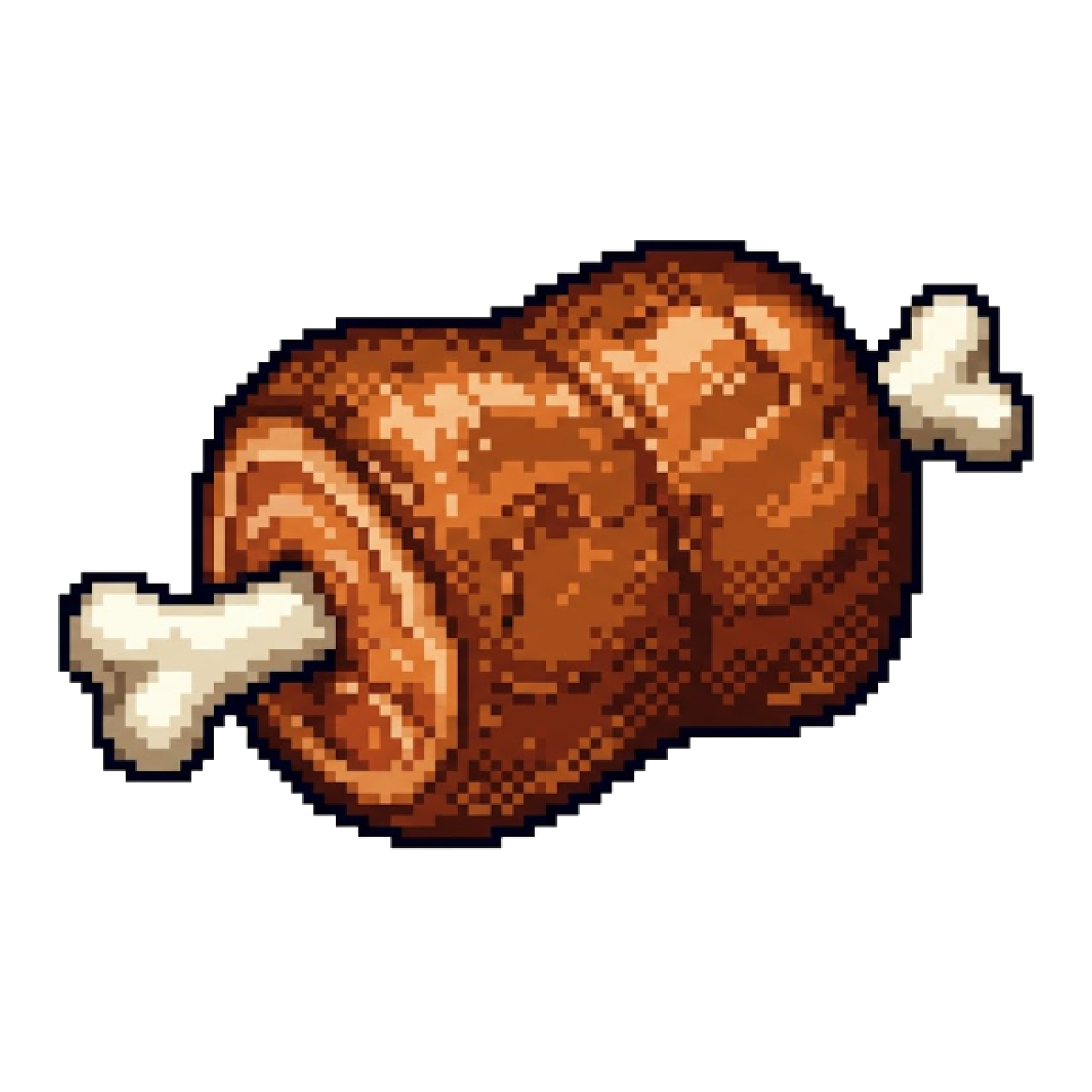
This is a pixel-art picture of golden-brown roasted meat with a bone in it. It is drawn to look like a feast. The look, like a treat or a recovery item, is an expression made for the picture and is different from the real food.
Fun facts
- The order to hold back from eating meat in Japan is said to have been issued around 675, but some sources say 676.
- From around 1872 (Meiji 5), eating beef was seen as a symbol of "bunmei kaika" (taking in new Western culture).
- Chicken cannot be called safe raw just because it is fresh. As a guide, heat it to 75°C for 1 minute or more at the center.
Quick quiz
Q. Which is the correct guide for cooking meat safely?
The Ministry of Health, Labour and Welfare and the Ministry of Agriculture, Forestry and Fisheries give heating the center to 75°C for 1 minute or more as a guide. The area around the bone is slow to heat through, so take special care.
References
- 農林水産省「鶏肉の食中毒予防(カンピロバクター)」リーフレット・案内ページ (Ministry of Agriculture, Forestry and Fisheries leaflet and guide page; supports the heating guide for chicken)
- 厚生労働省「食肉の加熱条件に関するQ&A」 (Ministry of Health, Labour and Welfare Q&A; supports heating conditions equal to 75°C for 1 minute)
- 長崎市の歴史紹介ページ『発見!長崎』 (Nagasaki City history page; supports the 675 edict against eating meat and later bans)
- nippon.com「日本の肉食の歴史」の特集記事 (nippon.com feature on the history of meat eating in Japan; supports the lifting of the ban and bunmei kaika)
- 厚生労働省「カンピロバクター食中毒予防について」 (Ministry of Health, Labour and Welfare page on Campylobacter food poisoning; supports the link between chicken and food poisoning)
Accounts may differ between sources and regions, and facts or figures can change with new research or rules. This page was translated from the Japanese original.
Download the pixel art
- Free
- No registration
- Commercial use OK
- Edits OK
- Credit optional
- No usage report needed
Please read the terms of use before using it.