



Food Encyclopedia No.008
Eggplant
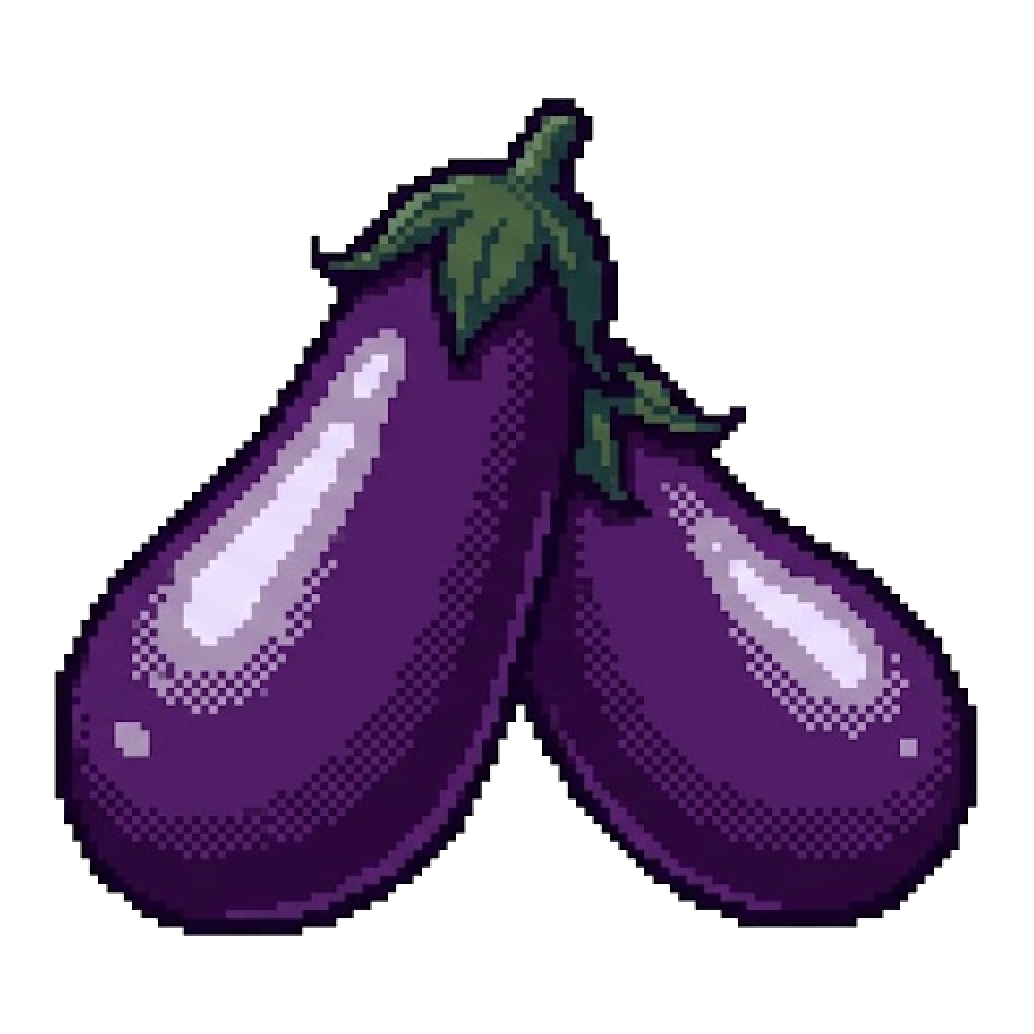
A vegetable in the nightshade familyA "fruit vegetable" (we eat the fruit)Grown in Japan since long ago
The eggplant is a vegetable in the nightshade family. It is said to come from the area around India. People think it reached Japan through China around the 7th to 8th century. In winter and spring, it is grown mostly in places like Kochi and Kumamoto Prefectures.
Key facts
| Type | A vegetable in the nightshade family (genus Solanum). We eat its fruit, so it is called a "fruit vegetable" (scientific name: Solanum melongena). It is related to tomatoes, green peppers and potatoes, which are also in the nightshade family. |
|---|---|
| Home | The area around India. (Some sources say "from India to Southeast Asia.") It is a plant that likes hot weather. |
| Arrival in Japan | It is thought to have come through China around the 7th to 8th century. (The date varies depending on the source.) It seems to have been grown by the Nara period. |
| Main growing areas (Japan) | "Winter-spring eggplants," shipped from winter to spring, are grown widely in warm areas such as Kochi and Kumamoto Prefectures, using facilities like plastic greenhouses. "Summer-autumn eggplants," shipped from summer to autumn, come mainly from Gunma, Ibaraki and Tochigi Prefectures. Kochi Prefecture has the largest harvest, followed by Kumamoto, Gunma and others. (This changes from year to year.) |
| Season | Summer to autumn is said to be the best season. Thanks to greenhouse growing and other methods, it is in shops all year round. |
| Main nutrition | Most of it is water. It is said to contain potassium, dietary fiber, folate and more. The purple color of the skin comes from a kind of polyphenol (an anthocyanin pigment called nasunin). |
| Different shapes | There are egg-shaped eggplants, long and slender ones, very long ones, round ones and more. Different regions have different shapes. |
| How to store it | It does not like cold or dryness. Wrap it in newspaper, put it in a plastic bag, and keep it in the vegetable drawer of the fridge. If it gets too cold, it can spoil, so eat it soon. |
What kind of vegetable is it?
The eggplant is a vegetable that grows as the fruit of a plant in the nightshade family. In summer, beautiful purple flowers bloom, and after the flowers, the fruit swells. It is related to tomatoes, green peppers and potatoes.
The shiny, deep purple skin is the most famous. But there are also green, whitish and striped ones. The shapes vary too: round, egg-shaped and long and slender.
It is more often eaten cooked, or with flavor soaked in, than eaten raw. People grill, simmer, fry or pickle it.
Home and history
The eggplant is said to come from the area around India. From there it spread through China and other places. People think it reached Japan around the 7th to 8th century. The date differs depending on the source, so the exact year is not known.
It is said that an old record from the Nara period has a line that can be read as offering eggplants to the court (a gift called kenjō). So they seem to have been grown by then. They are also said to appear in the Engishiki, a book of rules from the Heian period.
There is also a story that in the Edo period, eggplants grown early in Sunpu (now Shizuoka Prefecture) with a greenhouse-like method were sent to Edo. There is an old saying, "First Mt. Fuji, second the hawk, third the eggplant." So this was a vegetable people have loved since long ago.
Different eggplants in Japan
In Japan, eggplants of different shapes have been grown in different regions. There are egg-shaped ones, long slender ones and very long ones. It is said that the shape grown most depends on the local climate and the way people eat it.
Seasoning and cooking have also been adapted to each shape. It is said that small ones suit pickles, while bigger ones suit simmered dishes and grilled eggplant.
Where is it grown the most?
Eggplants are divided into two main groups by the time they are shipped. "Winter-spring eggplants," shipped from winter to spring, are grown with facilities like plastic greenhouses in places that stay warm even in winter, such as Kochi and Kumamoto Prefectures. "Summer-autumn eggplants," shipped from summer to autumn, come mainly from Gunma, Ibaraki and Tochigi Prefectures.
According to material from the Agriculture & Livestock Industries Corporation, Kochi Prefecture is first in harvest and Gunma Prefecture is third, and Kumamoto Prefecture is also a top area. Rankings and amounts change every year. You can check the latest numbers in the Ministry of Agriculture, Forestry and Fisheries' "Vegetable Production and Shipment Statistics."
Tips for tasty eggplant, and storing it
When you cut an eggplant, the cut surface turns brown in the air. This is said to be caused by the work of substances that make it taste harsh (polyphenols such as chlorogenic acid). Soaking it in water makes it easier to stop the color change. But if you soak it too long, it is also said that some of its substances wash out. Keep it short.
The purple color of the skin is a pigment called nasunin. If you cook the eggplant with its skin on, you get this pigment too.
Eggplants are weak against cold. It is said that if they get too cold, brown marks can appear on the skin and they can spoil more easily. Wrap them in newspaper or paper towels, put them in a plastic bag, and keep them in the vegetable drawer of the fridge. In summer, they spoil quickly at room temperature, so eat them soon.
About the body and nutrition
Most of an eggplant is water. It is also said to contain potassium, dietary fiber, folate and more. Nasunin, the pigment in the skin, is being studied as a substance with an antioxidant effect (a effect that helps slow down "rusting"). But eating it does not cure any illness.
It is important to eat a good balance of many kinds of vegetables.
About this illustration
This is a pixel-art illustration (a picture drawn with small square dots) of an eggplant. It was made as material that can be used in scenes such as a greengrocer's shop, a field or cooking. The colors and shapes described here are the illustrator's simple way of showing the real vegetable. Some parts differ from the real thing.
Fun facts
- The eggplant is in the nightshade family, like tomatoes, green peppers and potatoes.
- "First Mt. Fuji, second the hawk, third the eggplant" is a saying about the first dream of the new year. Dreaming of these is said to bring good luck.
- In Japan, eggplants of different shapes, such as egg-shaped, long and very long ones, have been grown in different regions.
Quick quiz
Q. Which of these is the pigment that gives the eggplant's skin its purple color?
The purple color of the eggplant's skin comes from nasunin, an anthocyanin pigment that is a kind of polyphenol. If you cook the eggplant with its skin on, you get this pigment too.
References
- Agriculture & Livestock Industries Corporation (ALIC), magazine『野菜情報』"今月のやさい:なす" (supports origin, arrival in Japan, growing areas, nutrition and the Sunpu eggplants. https://www.alic.go.jp/koho/kikaku03_001671.html)
- 農林水産省 (Ministry of Agriculture, Forestry and Fisheries), 「野菜生産出荷統計」 (Vegetable Production and Shipment Statistics; supports harvest by prefecture and the winter-spring / summer-autumn groups)
- 文部科学省『日本食品標準成分表(八訂)増補2023年』 (Ministry of Education, Standard Tables of Food Composition in Japan; supports the water, potassium and fiber content)
- 『延喜式』 (Engishiki, a Heian-period book of laws; said to mention eggplants)
Accounts may differ between sources and regions, and facts or figures can change with new research or rules. This page was translated from the Japanese original.
Download the pixel art
- Free
- No registration
- Commercial use OK
- Edits OK
- Credit optional
- No usage report needed
Please read the terms of use before using it.