



Periodic Table Encyclopedia No.013
Aluminium (Aluminum)
MetalGroup 13, Period 3Most common metal in Earth's crust
Atomic number 13, symbol Al. It is a light, silvery-white metal that does not rust easily. It is used in drink cans, aluminum foil and the 1-yen coin. In Earth's crust, it is the most plentiful metal.
Key facts
| Atomic number / Symbol | 13 / Al |
|---|---|
| Type | Metal (a light metal, which means a metal with low weight) |
| Place in the periodic table | Group 13, Period 3 |
| State at room temperature | Solid (silvery-white) |
| Atomic weight | About 26.98 (IUPAC standard atomic weight, as of the 2020s) |
| Density (weight for the same volume) | About 2.70 g/cm³ (about one-third of iron) |
| Melting point (the temperature where it melts) | About 660°C |
| Discovery | Around 1825, Ørsted of Denmark separated a small amount. In 1827, Wöhler of Germany used an improved method and got purer metal. Accounts differ on who was first. |
| Origin of the name | From alum (alumen in Latin). The name comes from a substance in alum (alumina). Davy of Britain had a part in the naming. |
What kind of element is it?
Aluminium is an element with the symbol Al and atomic number 13. It is a shiny silver metal, and it is very light. For the same size, it weighs only about one-third as much as iron.
It is also soft, so it is easy to stretch and bend. That is why it can be made into very thin sheets or into hard parts.
In Earth's crust (the layer of rock near the surface of the ground), it is the most plentiful metal. By weight, it makes up about 8%.
The story of its discovery
In ore (rock that contains metal), aluminium is tightly joined to oxygen. So it was a very hard element to get out as a metal.
Around 1825, the Danish physicist Ørsted separated a small amount of aluminium metal. In 1827, the German chemist Wöhler improved the method and got purer metal. Researchers have talked about who was first (accounts differ).
At that time, aluminium was very expensive. Around 1859, it is said to have cost about as much as silver. Then, in 1886, Hall of the United States and Héroult of France each found a way to get it out using electricity. They did not know about each other, and they found it in the same year. This method is called the Hall–Héroult process, and it is still the base of making aluminium today. Because of it, aluminium became much cheaper to make.
Everyday uses
The most familiar uses are aluminum cans and aluminum foil. Aluminium is light, shiny and can be stretched thin, so it is perfect for drink containers and kitchen goods.
The 1-yen coin is also made of pure aluminium.
It is also used in window frames, train and airplane parts, and the outer cases of smartphones and computers. If a little of another metal is mixed in to make an alloy (a mix of metals), it stays light but becomes stronger.
Also, aluminium can be collected, melted and used again. This needs far less electricity than making new aluminium, so recycling is common.
The secret of its nature
When aluminium touches air, a thin oxide film (a very thin layer made when it joins with oxygen) quickly forms on the surface. This film protects the metal inside, so aluminium does not rust easily. Unlike iron, it does not get red rust that keeps spreading.
It also carries heat and electricity well.
However, getting the metal out of aluminium ore takes a lot of electricity. That is why it is thought to be important to collect used cans and use the metal again.
Aluminium on Earth and in nature
In nature, it is not found as pure metal. It is found joined with oxygen and other things.
The main ore is bauxite, a reddish-brown rock. Its name is said to come from the Les Baux area of France. Alumina (aluminium oxide) is taken out of bauxite, and then electricity is used to split it and get aluminium metal.
In Japan, on January 11, 1934, aluminium made in Japan was first produced from bauxite using electricity. For this reason, the Japan Aluminium Association calls January 11 "Aluminum Day" (the association set this in recent years).
About this illustration
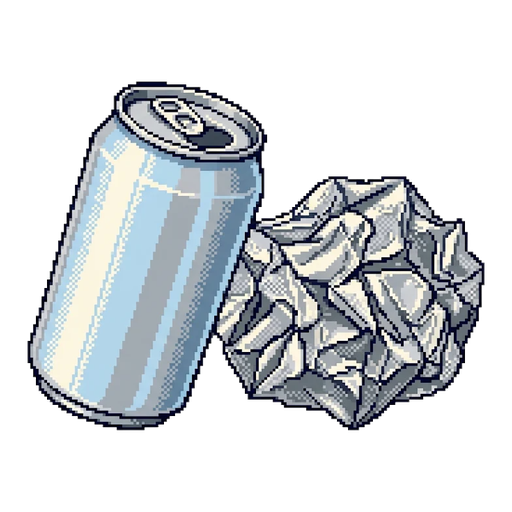
A picture of a silver aluminum can next to a crumpled sheet of aluminum foil. It shows the shine of metal and how it reflects light. The background, layout and lighting are an artist's idea and differ from the real thing.
Fun facts
- The 1-yen coin is made of pure aluminium.
- Until Hall and Héroult found the electric method in 1886, aluminium was very expensive. Around 1859, it is said to have cost about as much as silver.
- In Japan, January 11, the day aluminium made in Japan was first produced, is called "Aluminum Day."
Quick quiz
Q. Why does aluminium not rust easily?
When aluminium touches air, a very thin oxide film forms on its surface. This film protects the metal inside, so it does not rust easily.
References
- American Chemical Society, "Production of Aluminum: The Hall-Héroult Process" (supports the Hall–Héroult process and the 1886 patent history)
- Materials from the Japan Aluminium Association (supports Aluminum Day on January 11, and the history and uses of aluminium made in Japan)
- Science History Institute, Distillations, "Aluminum: Common Metal, Uncommon Past" (supports the history of its discovery and its costly days)
- IUPAC CIAAW, "Standard Atomic Weights" (supports the atomic weight)
- Elementymology & Elements Multidict (supports the origin of the name aluminium)
- 国立天文台編『理科年表』 (Chronological Scientific Tables, National Astronomical Observatory of Japan; supports the physical property values of the element)
Accounts may differ between sources and regions, and facts or figures can change with new research or rules. This page was translated from the Japanese original.
Download the pixel art
- Free
- No registration
- Commercial use OK
- Edits OK
- Credit optional
- No usage report needed
Please read the terms of use before using it.