



Society Encyclopedia No.001
Sailing ship
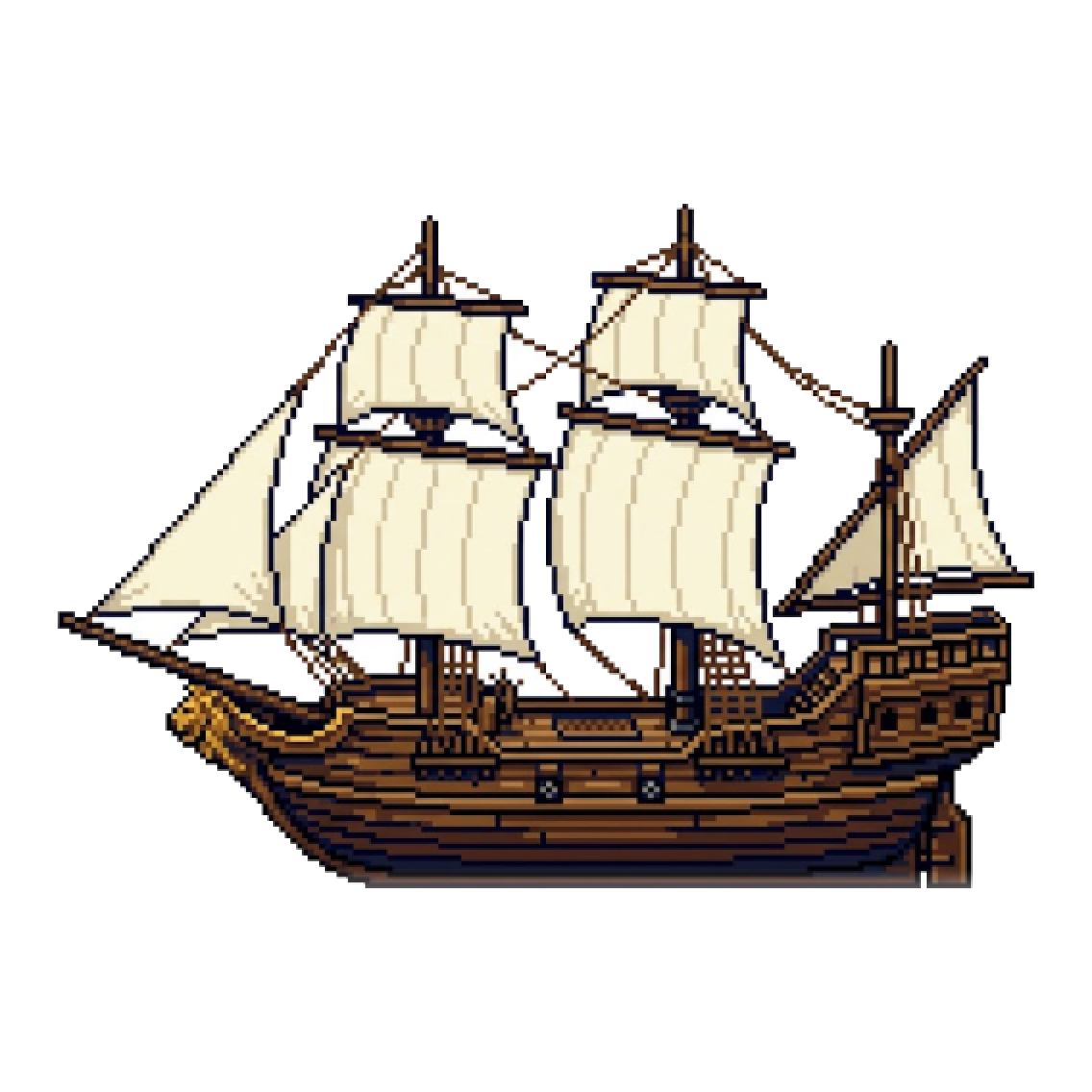
VehicleShipMoves by the power of wind
A sailing ship moves by catching the wind in its sails (large pieces of cloth that catch wind). Since ancient times it has crossed the seas of the world. In the Age of Discovery, it played a big part in linking faraway countries.
Key facts
| Type | A kind of ship (a vehicle that moves by wind power) |
|---|---|
| How it works | Sails are set on masts (the poles that hold up the sails) and catch the wind to move the ship. |
| Kinds of sails | There are square sails ("yokoho") and triangular or similar fore-and-aft sails ("tateho"). |
| Beginning and history | Pictures on ancient Egyptian pottery suggest that ships with square sails existed around 3000 BCE (or even earlier). The dates differ a little by source. |
| Age of Discovery | From around the 15th century, European ships sailed out to distant seas. The Portuguese caravel was active from the middle of the 15th century. |
| End of the sailing-ship age | Steam-powered ships spread and could move without relying on wind, so sailing ships declined. |
| In daily life today | Sailing ships are still used today for training ships, tourism and sport yachts. |
What is it?
A sailing ship is a ship that moves by the power of wind. The pole standing up on the ship is called a "mast." A large cloth called a "sail" is set on it. When the sail catches the wind, the ship is pushed forward.
It can move without an engine, so there is no worry about fuel. In return, it is important to have the skill to handle the sails well for the direction and strength of the wind.
Kinds of sails and how they work
Sails can be roughly divided into two types.
The first is the "square sail" (yokoho). A square piece of cloth hangs from a crossbar attached to the mast. It is good at catching a strong wind from behind (a tailwind).
The second is the "fore-and-aft sail" (tateho). It is set from the front of the ship to the back, and many are triangular. It is said to make it easier to zigzag forward, changing direction, even when the wind comes from the side or from slightly ahead.
Big sailing ships often used both types together, with many masts.
History
Ships that use sails are very old. Pictures of ships with square sails remain on ancient Egyptian pottery. Their date is said to be around 3000 BCE, or a little earlier, and sources disagree. Square sails of that time are thought to have been used mainly to move with a tailwind.
Later, the triangular "lateen sail" spread around the Mediterranean Sea. It is said to have helped ships sail against the wind. But researchers disagree about how well it worked (accounts differ).
In China, ships called "junks" developed. They had sails based on the fore-and-aft type. A special feature was that the inside of the ship was divided by boards, to prepare for water coming in.
Sailing ships in the Age of Discovery
In the 15th century, in the time of Prince Henry the Navigator of Portugal, voyages to distant seas became popular in Europe. This period is called the Age of Discovery.
The "caravel" was active then. It is said to have developed from Portuguese fishing boats, and it was used for exploring from the middle of the 15th century. It was a fairly small ship of about 50 to 160 tons, with two or three masts and lateen sails (triangular sails). Its size and shape differ by source. Later, bigger ships such as the "carrack," which could carry more cargo, also appeared.
The age when sailing ships were at the center of world trade and travel is also called the "Age of Sail." It reached its peak (its most active time) around the 18th and 19th centuries.
Sailing ships today
When steam-powered ships spread, they could move without relying on wind, so sailing ships became fewer.
Even so, sailing ships are used today as training ships (ships where people learn to be sailors). In Japan, there is a large training sailing ship called "Nippon Maru," which has 29 sails. Its "full sail unfurling" (opening all the sails) is shown to the public. Many volunteers open the sails by hand. (In the 2026 guide, the sail work is done in the time just before noon. Please check the official guide for dates and times.)
Yachts, which use the power of sails, are also enjoyed all over the world.
About this illustration
This is a pixel-art illustration of a wooden sailing ship with white sails. It has a gentle feel that suits a sea adventure scene. The number of sails, the number of masts, the colors of the ship and the small decorations do not copy any particular real ship. They are the illustrator's own style and differ from the real thing.
Fun facts
- The bigger the area of the opened sails, the more wind a sailing ship can catch. Big sailing ships have dozens of sails.
- The caravel was used from before the time of Columbus. It was also used on the 1488 voyage when Bartolomeu Dias sailed around the Cape of Good Hope (the southern tip of the African continent).
- The large Japanese training sailing ship "Nippon Maru" has 29 sails, and all are opened by hand. It is said that about 100 volunteers take part each time (depending on the source).
Quick quiz
Q. Which power does a sailing ship use to move forward?
A sailing ship moves by catching the wind in its sails. A big feature is that it can move without an engine.
References
- コトバンク『帆船』 (Kotobank, entry "Sailing ship" from works such as Shogakukan's Nihon Daihyakka Zensho): supports how sailing ships work and their history
- ブリタニカ百科事典 “Ship: Sailing ships” / “Lateen sail” (Encyclopaedia Britannica): supports the development of square sails and lateen sails
- World History Encyclopedia “Caravel” (worldhistory.org): supports the features of the caravel
- 公益財団法人 帆船日本丸記念財団 公式サイト (Official site of the Nippon Maru Memorial Park foundation): supports the full sail unfurling and the number of sails
- 横浜市観光情報サイト Yokohama Official Visitors' Guide『帆船日本丸 総帆展帆』 (Yokohama Official Visitors' Guide, "Nippon Maru Full Sail Unfurling"): supports the time of day and the hand work by volunteers
Accounts may differ between sources and regions, and facts or figures can change with new research or rules. This page was translated from the Japanese original.
Download the pixel art
- Free
- No registration
- Commercial use OK
- Edits OK
- Credit optional
- No usage report needed
Please read the terms of use before using it.