



Society Encyclopedia No.003
Hospital
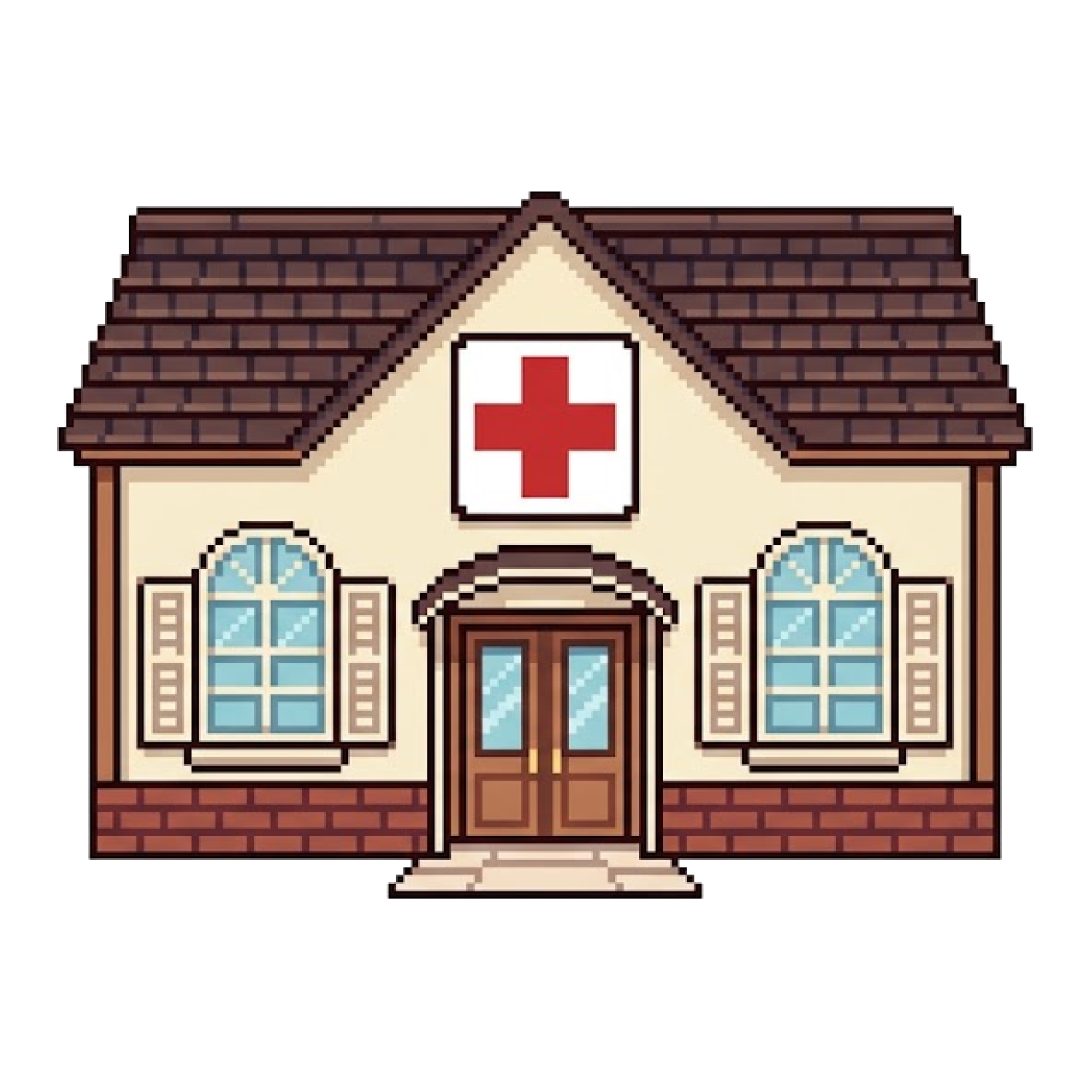
A place for medical care20 or more beds for staying overnightSet by the Medical Care Act
A hospital is a place where doctors, nurses and other staff care for people who are sick or hurt. People can also stay there overnight. Under the law, a place with 20 or more beds for patients who stay is called a "hospital."
Key facts
| Category | A place that provides medical care. The Medical Care Act (the law that sets the rules for medical care) divides these places into "hospitals" and "clinics." |
|---|---|
| Rule for hospitals | A hospital is a facility for admitting 20 or more patients (20 or more beds for staying patients, called "hospital beds"). A place with 19 or fewer, or with no facility for staying patients, is a clinic (Medical Care Act). |
| Role | Checkups, tests, surgery, care during a hospital stay, and more. When a regular clinic has trouble handling a case, a hospital does detailed tests or admits the patient. |
| Kinds of beds | Beds are divided into general beds, long-term care beds, psychiatric beds, infectious disease beds, tuberculosis beds and others (Medical Care Act). |
| People who work there | Many kinds of workers: doctors, nurses, pharmacists, technicians who handle tests and medical images, rehabilitation specialists, office staff and more. |
| History | It is said that in the Nara period, Empress Komyo set up a Seyakuin (a place that handed out medicine to help sick people). In the Edo period, in the 7th year of the Kyoho era (the end of 1722 to the start of 1723 in the Western calendar), the shogunate is said to have opened the Koishikawa Yojosho. |
| Everyday situations | When you feel unwell, when you get hurt, for health checkups, for having a baby, for visiting someone, and so on. |
| Numbers and rules | The number of hospitals and beds changes every year. The latest numbers can be found in the Ministry of Health, Labour and Welfare's "Survey of Medical Institutions" (as of 2026). |
What is it?
A hospital is a place that looks after people who are sick or hurt and helps them get better. Not only doctors but also nurses, pharmacists, technicians who run tests and many other workers join forces.
The biggest feature of a hospital is that you can stay there. When you stay, you rest in a bed and the staff check on you day by day. If needed, you can also have detailed tests or surgery.
The difference between a hospital and a clinic
In Japan, a law called the Medical Care Act separates hospitals from clinics. A place with a facility for admitting 20 or more patients (20 or more hospital beds) is a "hospital." A place with 19 or fewer beds, or with no facility for staying patients, is called a "clinic."
The local doctor's offices and clinics you know are often clinics in the legal sense. In everyday talk, some people also call a clinic a "hospital." But under the law, there is a difference. A hospital has more detailed rules than a clinic about its buildings, equipment, number of staff and more.
How a hospital is organized
A hospital has many departments, such as internal medicine, surgery and pediatrics. A department is a way of dividing care by kind of illness or part of the body. A hospital also has rooms for tests, operating rooms, a pharmacy department that prepares and hands out medicine, places for rehabilitation, and more.
Beds are also divided by kind of illness and purpose. For example, there are general beds, long-term care beds for people who need to rest and recover over a long time, and psychiatric beds for illnesses of the mind. This way of dividing is set by the Medical Care Act.
The law also has other types, such as "advanced treatment hospitals," which provide especially difficult medical care, and "regional medical care support hospitals," which support medical care in their area. There is also a path where your regular clinic refers you to a large hospital.
History
In Japan, it is said that Empress Komyo of the Nara period (701 to 760) set up the Seyakuin (a place that handed out medicine) and the Hiden'in (a place that helped people in trouble) to help sick and poor people. This is said to be one of the roots of hospitals in Japan. But some details are unclear, and accounts differ.
In the Edo period, a town doctor named Ogawa Shosen put a letter in a suggestion box (called the Meyasubako) and asked for a facility for poor sick people. In response, the shogunate is said to have opened the Koishikawa Yojosho in the 7th year of the Kyoho era (in the Western calendar, from the end of 1722 to the start of 1723). It was a place where poor sick people could get treatment without paying. It was closed in the first year of the Meiji era (1868).
In the Meiji period, hospitals attached to medical schools, and hospitals run by the national government and by prefectures, appeared in many places. Today's hospitals come from this long path.
How to use one, and things to keep in mind
When you suddenly feel very unwell, or when you have a serious injury, you go to a hospital to be seen by a doctor. For small, everyday problems, many people first go to a nearby clinic. At large hospitals, you may need a referral letter (a letter from another doctor).
In a hospital, other patients are resting. Try not to shout or run. If you have a cough, wear a mask, and wash your hands. It is also important to take care not to pass illness to others.
If you need help quickly, or want to know what to do about an illness or injury, please check with public offices such as the Ministry of Health, Labour and Welfare, your local public health center, or the fire department.
About this illustration
This is a pixel-art illustration (a picture made by putting together small square dots) of a hospital building. The colors, shapes and surrounding decorations are the artist's own style. Real hospitals look different depending on the area and their size, and they are not the same as this picture.
Fun facts
- Under Japan's Medical Care Act, a place with 20 or more beds is a "hospital," and a place with 19 or fewer is a "clinic."
- The Edo-period Koishikawa Yojosho is said to have been built inside a medicinal herb garden on the site of today's Koishikawa Botanical Garden (a facility of the University of Tokyo) in Bunkyo Ward, Tokyo.
- Hospital beds come in kinds that fit their purpose, such as general beds and long-term care beds.
Quick quiz
Q. Under Japan's Medical Care Act, a place is called a "hospital" if it has how many beds for staying patients?
The Medical Care Act says a facility for admitting 20 or more patients (20 or more hospital beds) is a hospital. A place with 19 or fewer, or with no facility for staying patients, is a clinic.
References
- 『医療法』 (the Medical Care Act, Article 1-5; definitions of hospital and clinic; e-Gov Law Search)
- 厚生労働省『厚生労働白書』 (Ministry of Health, Labour and Welfare white paper; explains the difference between hospitals and clinics and the medical care system)
- 厚生労働省『医療施設調査・病院報告』 (Ministry of Health, Labour and Welfare survey; statistics such as the number of hospitals and beds, and explanations of terms)
- 東京大学大学院理学系研究科附属植物園(小石川植物園)の解説 (Explanation from the Koishikawa Botanical Garden, University of Tokyo; history of the Koishikawa Yojosho)
- 『日本医史学雑誌』 (Journal of the Japanese Society for the History of Medicine; scholarly material on the history of medicine and hospitals in Japan)
Accounts may differ between sources and regions, and facts or figures can change with new research or rules. This page was translated from the Japanese original.
Download the pixel art
- Free
- No registration
- Commercial use OK
- Edits OK
- Credit optional
- No usage report needed
Please read the terms of use before using it.