



Science Encyclopedia No.011
Rain cloud
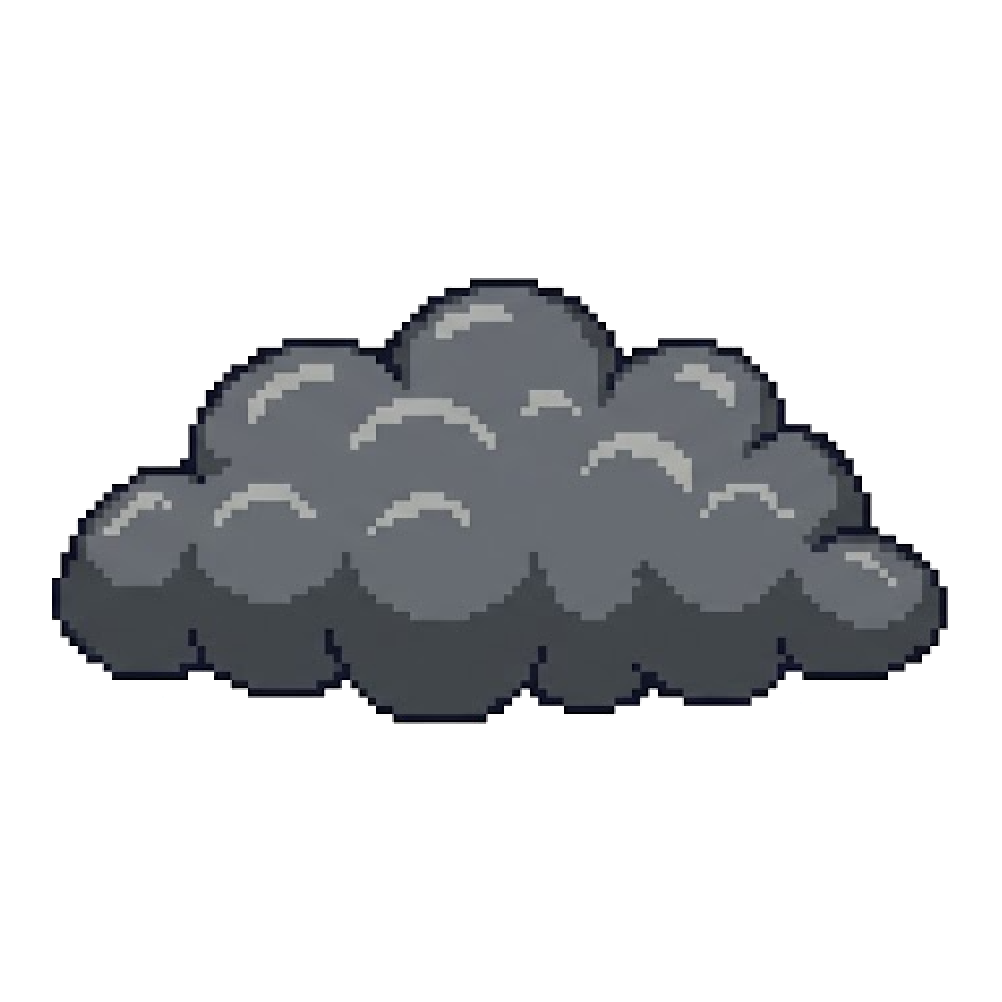
WeatherCloudsClouds that bring rain
"Rain cloud" is a everyday name for clouds that bring rain. The two main kinds are the nimbostratus, which covers the whole sky, and the cumulonimbus, which towers up high. They make rain in different ways.
Key facts
| Type | A common name for clouds that bring rain (the main ones are nimbostratus and cumulonimbus). It is not an official cloud name used by the Japan Meteorological Agency |
|---|---|
| How it works (in a nutshell) | Tiny water drops (cloud droplets) grow bigger and heavier, and then fall |
| Everyday examples | A gray sky that drizzles all day long, and the tall summer clouds that bring sudden evening showers |
| The names "nimbostratus" and "cumulonimbus" | "Stratus" means a cloud that spreads out sideways. "Cumulus" means a cloud that piles up in heaps. "Nimbus" means it brings rain |
| Size of raindrops | A normal raindrop is about 1 to 2 millimeters across (big ones can be a few millimeters) |
| Rain from a cumulonimbus | Rain from a single cumulonimbus cloud is said to last about 30 minutes to 1 hour |
| Rain from a nimbostratus | Often a light rain that lasts for a long time |
What kind of cloud is it?
"Rain cloud" is a word for any cloud that brings rain. It is not an official cloud name used by the Japan Meteorological Agency. It is a name people use in daily life.
There are two main kinds. One is the nimbostratus. It covers the whole sky in dark gray and brings a long, gentle rain or snow. The other is the cumulonimbus. It is also called a thunderhead. It piles up high in the sky and brings strong rain. The "nimbus" part of the name means that the cloud brings rain.
How rain is made
A cloud forms when air rises and cools. The water vapor (water in the form of a gas) in the air then turns into tiny water drops. These drops are called cloud droplets. They are so small that they just float in the sky.
When cloud droplets bump into each other and join together, they slowly get bigger and heavier, and they start to fall. These are raindrops. A normal raindrop is about 1 to 2 millimeters across.
There is another path. It is very cold high in the sky, so cloud droplets can turn into ice crystals (tiny bits of ice). When the ice grows bigger and falls, it melts in air that is warmer than 0 degrees. Then it becomes a raindrop.
Rain from a nimbostratus
A nimbostratus is a thick cloud that spreads from the low part of the sky to the middle. It often covers the whole sky when a front is coming. A front is the place where warm air and cold air meet. Because the cloud is thick, raindrops have plenty of time to grow inside it.
So it often rains for many hours, but not very hard.
Rain from a cumulonimbus
A cumulonimbus forms when warm, damp air rushes upward. It can be taller than 10 kilometers. High in the sky, bits of ice mix in near the top of the cloud.
Besides strong rain, it can bring thunder and sudden strong winds. The rain from a single cumulonimbus is said to last about 30 minutes to 1 hour, and it covers only a small area. The rain may be strong, but it often stops after a short time in that place.
However, when many cumulonimbus clouds form one after another and line up, strong rain can fall on the same place for a long time. Check the weather forecast and radar images that show rain clouds, and get ready early.
The color of the sky, and how it is drawn
Rain clouds look dark because they are thick, and sunlight has trouble reaching the ground. They look much darker gray than thin clouds.
In weather pictures, "rain" is often shown as a dark gray cloud with raindrops added. If the sky suddenly turns dark or a cold wind starts to blow, it is one sign that a rain cloud is coming.
About this illustration
This is a pixel-art picture (a picture drawn with tiny squares) of a dark gray cloud. It is made so it can be used in weather displays. The fine details of the cloud's shape and color do not copy a real rain cloud exactly. They are the artist's own style, different from the real thing.
Fun facts
- The "nimbus" in a cloud's name means "brings rain." Both nimbostratus and cumulonimbus have it.
- A normal raindrop is about 1 to 2 millimeters across. A big raindrop is said to get flattened as it falls, because the air pushes up on it from below.
- The Japan Meteorological Agency sorts clouds into ten kinds (the ten cloud forms) when it observes them. The nimbostratus is counted as a middle-level cloud, and the cumulonimbus is counted as a low-level cloud.
Quick quiz
Q. Which rain cloud often brings gentle rain for a long time?
A nimbostratus spreads thick across the whole sky and brings light rain for a long time. A cumulonimbus often brings strong rain for a short time.
References
- 気象庁『積乱雲ってどんな雲?』 (Japan Meteorological Agency, a page on weather warnings; supports the height of cumulonimbus clouds and how long and how widely their effects last)
- 気象庁 気象台の解説ページ『雲形(十種雲形)』 (Japan Meteorological Agency weather station page; supports the ten cloud forms and where nimbostratus and cumulonimbus fit)
- 気象庁 札幌管区気象台『いろいろな雲』 (Sapporo Regional Headquarters, Japan Meteorological Agency; supports what nimbostratus and cumulonimbus look like)
- 気象庁 仙台管区気象台『雨』の解説資料 (Sendai Regional Headquarters, Japan Meteorological Agency; supports how rain is made)
Accounts may differ between sources and regions, and facts or figures can change with new research or rules. This page was translated from the Japanese original.
Download the pixel art
- Free
- No registration
- Commercial use OK
- Edits OK
- Credit optional
- No usage report needed
Please read the terms of use before using it.