



Science Encyclopedia No.018
Weather balloon (radiosonde)
Weather observationUpper-air observationRubber balloon
A big rubber balloon lifts a small measuring device, called a radiosonde, high into the sky to check the temperature, wind and more up there. It is an important observation that supports weather forecasts.
Key facts
| Type | A tool for upper-air observation (observing the weather high up in the sky) |
|---|---|
| How it works (in short) | A balloon lifts the device, and the device sends its measurements to the ground by radio waves. |
| What it measures | Air pressure, temperature, humidity, wind direction, wind speed and more |
| Height of observation | From the ground up to about 30 km high (Japan Meteorological Agency) |
| Observation times | Twice a day, at 9:00 and 21:00 Japan time. The balloon is released about 30 minutes before. |
| Weight of the device | It differs by model, from about 38 g to 80 g (Japan Meteorological Agency material) |
| Size of the balloon | About 1.5 m across when released. It swells as it rises and bursts at about 6 to 8 m (U.S. National Weather Service material) |
| Observation sites | In Japan, 16 weather stations across the country and Syowa Station in Antarctica. In the world, more than 800 sites (U.S. National Weather Service material) |
What is it?
A weather balloon is a big balloon sent high into the sky to study the weather. It is made of rubber, and filled with hydrogen or helium, which are gases lighter than air.
A small device called a "radiosonde" hangs below the balloon. It measures air pressure (the force of the air pushing), temperature, humidity (how damp the air is), and the direction and speed of the wind. Its weight differs by model, from about 38 g to 80 g.
How it works in more detail
The balloon is lighter than air, so it keeps rising higher and higher. As the radiosonde rises, it measures the temperature and more, and sends the data by radio waves to a machine on the ground.
At the U.S. National Weather Service, the radiosonde hangs about 25 to 35 m below the balloon. This is so that the heat from the balloon does not affect the temperature reading. The wind direction and speed are found by following which way and how far the balloon is carried. The U.S. National Weather Service radiosondes also use GPS (a system that finds position using satellites).
What happens to the balloon in the sky?
The higher you go, the thinner the surrounding air becomes. Then the balloon slowly swells bigger. It is about 1.5 m across when released, but according to the U.S. National Weather Service, it bursts when it reaches about 6 to 8 m, because the rubber has stretched as far as it can.
After the balloon bursts, the radiosonde slowly falls with a small parachute. An observation can take more than 2 hours. The wind can carry the radiosonde more than 300 km away from where it was released.
When and where is it released?
The Japan Meteorological Agency makes observations at 9:00 and 21:00 Japan time. The balloon is released about 30 minutes before that. This is done at 16 weather stations across the country and at Syowa Station in Antarctica.
Observations at the same times are also made at more than 800 sites around the world. By measuring at the same time all over the world, we can see the state of the sky over the whole Earth. When a typhoon is approaching, or when there is worry about heavy rain from a linear rainband (a line of rain clouds that drops strong rain for a long time on a narrow area), extra observations are sometimes made at 3:00 and 15:00.
What is it useful for?
The data collected is the basis of weather forecasts. For "numerical forecasting," which uses computers to calculate the future weather, information about the temperature and wind high in the sky is essential.
It is also used for information that helps airplanes fly safely, and for research on changes in the climate. It is an important way to learn about the high sky that we cannot see from the ground.
About this illustration
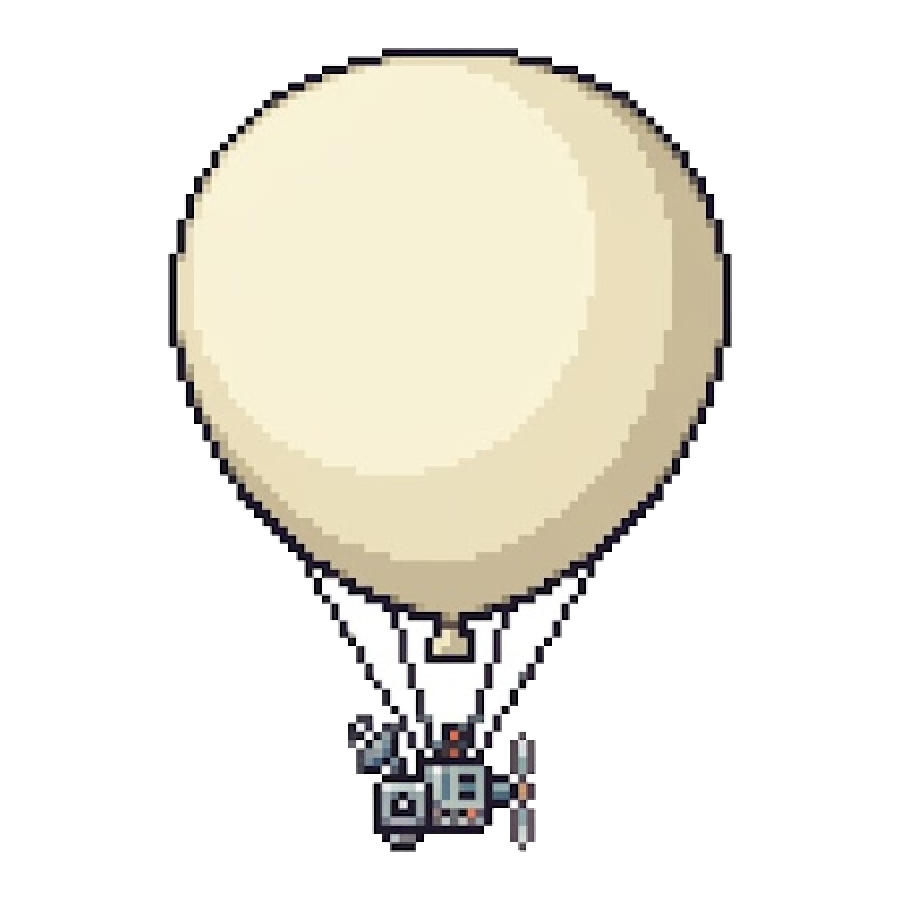
This is a pixel-art picture of a white balloon with a small machine hanging below it. It shows a round balloon with a square machine tied to it by a string. In real life, the device hangs 25 to 35 m below the balloon, the balloon is made of rubber, and it swells as it rises high. In the picture, the balloon and the machine are drawn close together, but this is an artwork and not the same as the real thing.
Fun facts
- As the air around it gets thinner, the balloon slowly swells bigger.
- The balloon is released about 30 minutes before the observation time, and in Japan observations are made at 9:00 and 21:00.
- After the balloon bursts, the radiosonde falls slowly with a parachute.
Quick quiz
Q. Which statement about a weather balloon is correct?
The radiosonde under the balloon measures temperature, air pressure, humidity, wind and more. The balloon swells as it rises, and in Japan observations are made twice a day, at 9:00 and 21:00.
References
- Japan Meteorological Agency (気象庁) 『ラジオゾンデによる高層気象観測について』 explanation page (observation height of about 30 km, 9:00 and 21:00, 16 stations and Syowa Station, rubber balloon)
- Japan Meteorological Agency, Kagoshima Local Meteorological Observatory and Fukuoka District Meteorological Observatory observation introduction materials (release around 8:30 and 20:30, extra observations in bad weather, weight of the sonde)
- U.S. National Weather Service (NWS) "Upper Air Factsheet" (balloon size, bursting size, how the device is hung, parachute, number of observation sites)
Accounts may differ between sources and regions, and facts or figures can change with new research or rules. This page was translated from the Japanese original.
Download the pixel art
- Free
- No registration
- Commercial use OK
- Edits OK
- Credit optional
- No usage report needed
Please read the terms of use before using it.