



Science Encyclopedia No.008
Sapphire
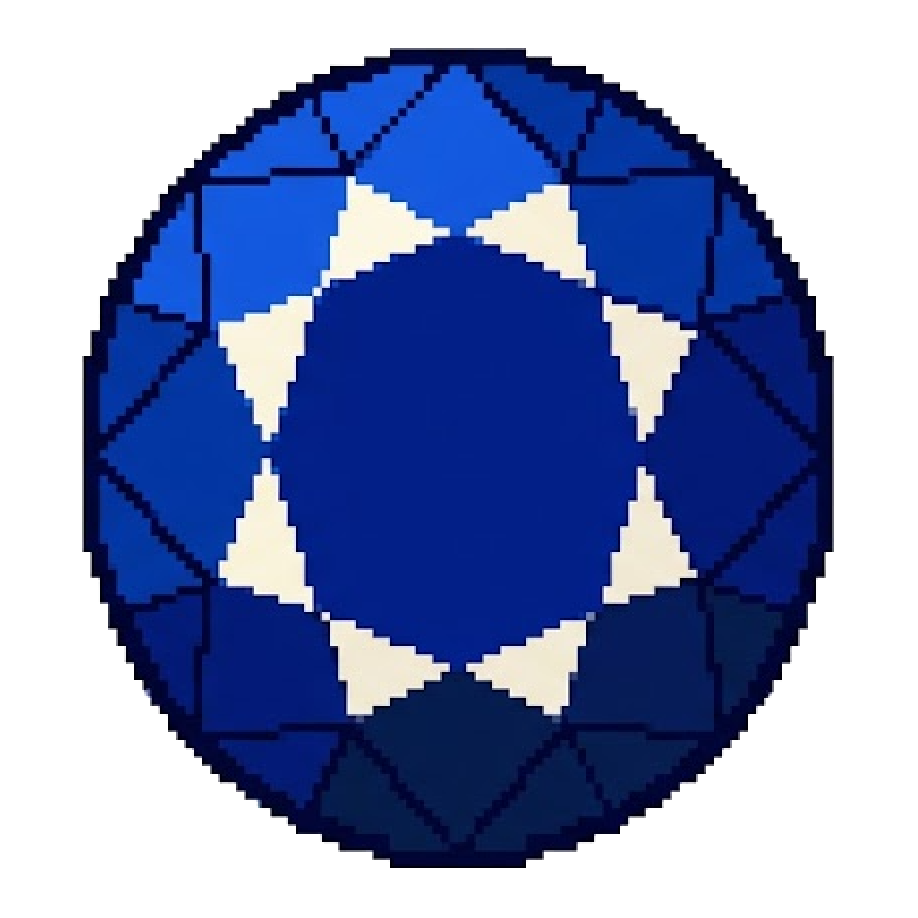
GemstoneMineral (a kind of corundum)September birthstone
Corundum is a mineral. Corundum in any color except red is called sapphire. Sapphire is famous as a blue gem. It is very hard, and it is the birthstone for September.
Key facts
| Category | A gemstone. As a mineral, it is corundum (aluminum oxide). |
|---|---|
| How it works (in a nutshell) | A crystal of aluminum oxide gets its color when a tiny amount of another element is mixed in. |
| Chemical formula | Al₂O₃ (made of aluminum and oxygen) |
| Hardness | Mohs hardness 9 (second only to diamond, which is 10) |
| Color | Every color except red. Red corundum is called ruby. |
| Refractive index (how much it bends light) | About 1.762 to 1.770 (basic data from GIA; it differs a little depending on the source and the stone) |
| Specific gravity (weight compared with water) | About 4.00 (basic data from GIA; it differs a little depending on the source and the stone) |
| Birthstone | The birthstone for September |
| Everyday examples | Jewelry such as rings, and watch crystals (the glass on the face of a watch) |
What kind of gem is it?
Sapphire is known as a blue gem. It is very popular and is used in rings, necklaces and other jewelry.
As a mineral (something found in nature that has a fixed makeup and crystal structure), its name is "corundum." Corundum is made of aluminum oxide, which is aluminum joined with oxygen. Red corundum is called "ruby." Corundum of any other color is called "sapphire." So ruby and sapphire are the same mineral in different colors.
Why is it blue?
Pure corundum has no color. When just a little iron or titanium gets in, it is thought to turn blue. When electrons move back and forth between the iron and the titanium, some of the light is absorbed, and the stone looks blue.
Red ruby is said to get its color from an element called chromium. Besides blue, sapphires also come in yellow, pink, green, purple and more. There is also a rare pinkish-orange sapphire called "padparadscha."
A very hard stone
Sapphire has a Mohs hardness of 9. The Mohs scale compares how hard it is to scratch a material, and 10 is the highest number. Diamond is 10, and sapphire is the next hardest.
However, being hard is not the same as being hard to break. A strong hit can chip it, so people handle gems carefully.
Sapphires that shine like stars
Some sapphires show a star-shaped pattern of lines floating on the surface when light shines on them. These are called "star sapphires." Inside the stone, thin, needle-like tiny crystals (called inclusions) line up in the same direction. Light reflects off them and looks like lines.
To show this star, the stone is usually polished into a round dome shape (called a cabochon).
In people's lives
Sapphire is the birthstone for September. It is also said to be the gem for the 5th and 45th wedding anniversaries (according to GIA's guide).
Crystals with the same makeup as sapphire can also be made by people. In 1902, Verneuil of France published a way to make them. Today, because they are very hard and hard to scratch, they are also used for things like the glass on wristwatches. Natural gems and man-made crystals are treated as different things.
About this illustration
This is a pixel-art illustration of a sapphire. You can use it as a treasure, an ore, or a shop item in a game. It uses small square dots to show a gem's sparkle. The color mix, the way the shine is added, and the shape are pixel-art style, so they differ from a real sapphire. Real stones come in many colors, not only blue.
Fun facts
- Ruby and sapphire are the same mineral, corundum. If it is red, it is ruby. If it is any other color, it is sapphire.
- Sapphire has a Mohs hardness of 9, second only to diamond's 10.
- A sapphire that shows a star-shaped pattern of lines in light is called a "star sapphire."
Quick quiz
Q. Which statement about ruby and sapphire is correct?
Both ruby and sapphire are corundum, a mineral made of aluminum oxide. Red ones are called ruby, and ones of any other color are called sapphire.
References
- GIA (Gemological Institute of America), 『Sapphire Gem Overview』 and 『サファイア』 (supports: it is corundum, Al₂O₃, Mohs hardness 9, refractive index and specific gravity, colors, birthstone, 5th and 45th anniversaries)
- GIA, 『Sapphire Description(サファイアの特徴)』 (supports: every color except red, blue color from iron and titanium, padparadscha, needle-like inclusions in star sapphires)
- GIA, 『Sapphire Quality Factors(サファイアの品質要素)』 (supports: how quality is judged, such as color depth and vividness)
- Encyclopaedia Britannica, 『Verneuil process(ベルヌイユ法)』 (supports: how man-made corundum is produced)
Accounts may differ between sources and regions, and facts or figures can change with new research or rules. This page was translated from the Japanese original.
Download the pixel art
- Free
- No registration
- Commercial use OK
- Edits OK
- Credit optional
- No usage report needed
Please read the terms of use before using it.