



Monster Encyclopedia No.006
Tengu
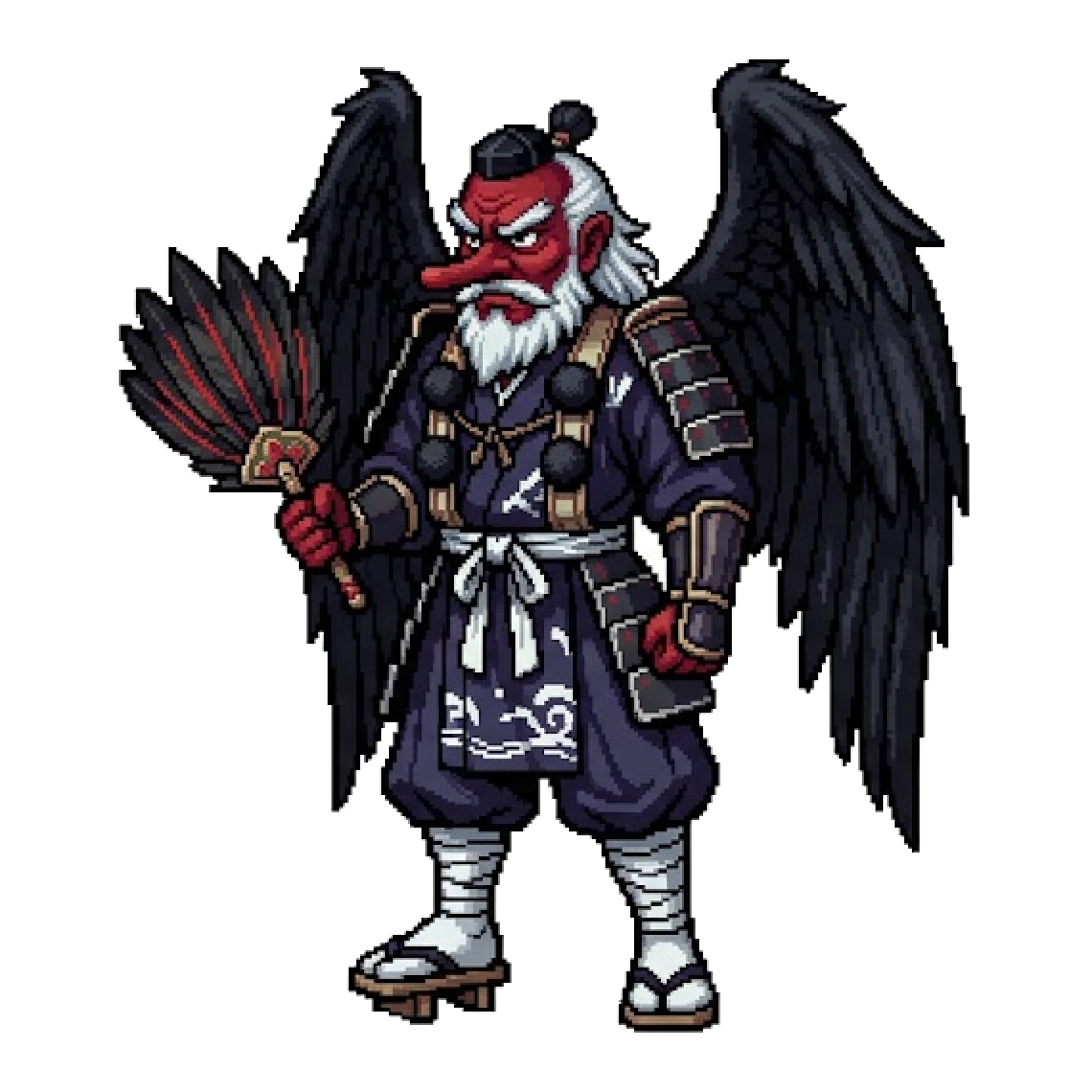
JapanJapanese yokai (spirit-creature) and mountain spiritLink to Shugendo (the yamabushi mountain monks)
The tengu is said to live in Japan's mountains and fly through the sky. It is both a yokai (a strange creature) and a spirit. The word first meant a shooting star in China. Later it became linked with birds and with yamabushi (mountain monks). This is said to be how the tengu got its present look.
Key facts
| Type | A Japanese yokai and mountain spirit. It was seen as a mountain demon, but people also believed it was a guardian. |
|---|---|
| Region and culture | All over Japan. Stories are told most often about mountains where Shugendo (a religion of training in the mountains) is strong. |
| Earliest record | An entry in the Nihon Shoki for the 9th year of Emperor Jomei (year 637). A big star crossed the sky with a sound like thunder. The monk Min said, "It is not a shooting star. It is a tengu." |
| Origin of the name | In China, "tengu" was a word for strange things that appear in the sky, such as shooting stars and meteorites. In later times, a reading, "amatsukitsune" (heavenly fox), was added to copies of the Nihon Shoki. |
| Appearance | It changes with the age. In the Konjaku Monogatari-shu, put together in the late Heian period (the first half of the 12th century), some stories show a tengu in the form of a bird such as a kite. The long-nosed face, the wings and the yamabushi clothes are said to have taken shape and spread between the medieval period and the Edo period. |
| Kinds | A high-ranking tengu is called a "daitengu" (great tengu). Two forms are often drawn: the long-nosed "hanataka tengu" and the "karasu tengu" (crow tengu), which has a beak and wings. |
| Famous tengu | Sojobo of Mount Kurama in Kyoto (Kurama Tengu), Tarobo of Mount Atago, Jirobo of Mount Hira, and others. The great tengu of sacred mountains in many provinces are grouped as the "Eight Tengu." Tarobo of Mount Atago is said to be the leader. |
It was once a star in the sky
In China, the word tengu first meant things that happen in the sky, such as a shooting star racing across it or a meteorite falling. They come with a loud noise and light, so people are said to have taken them as a sign of bad things to come.
Japan's Nihon Shoki also has an entry about a tengu appearing in 637. A big star flew from east to west with a sound like thunder. The monk Min had studied in China. He said, "This is not a shooting star. It is a tengu, and its howl sounds like thunder." At about the same time there was a revolt by the Emishi in eastern Japan. Some people think the entry was meant as a warning of that. But accounts differ on how to read this entry.
From a bird shape to a yamabushi shape
In Japan, the tengu as a shooting star did not really take root. Instead, from the middle of the Heian period (around the 10th century), it is said to have been told about as a yokai that tricks people and carries them away.
The Konjaku Monogatari-shu, said to have been put together in the first half of the 12th century, has many tengu stories. A tengu that flies in the sky sometimes appears as a bird such as a kite. In some stories, it takes the form of the Buddha to trick a monk.
Later, the tengu became more closely tied to the yamabushi, the monks who train in the mountains (practitioners of Shugendo). This is said to be because some people saw mountain gods and mountain spirits as tengu. The tengu's present look is thought to have taken shape slowly over a long time.
Myth and legend 1: Sojobo of Mount Kurama and Ushiwakamaru
The great tengu Sojobo is said to live on Mount Kurama in Kyoto. The boy Ushiwakamaru, who later became Minamoto no Yoshitsune, was left in the care of Kurama Temple. A legend says that at a place called Sojogadani, a tengu taught him swordsmanship.
This story became famous through the Noh play (a classical stage art) "Kurama Tengu." In the play, the great tengu teaches Ushiwakamaru the art of war and promises to protect his future. It is a legend, not a historical fact.
Myth and legend 2: A guardian of Shugendo
The tengu is not only a frightening being. In Shugendo and in local beliefs, people sometimes believed that tengu protect those who train and the sacred places.
On the other hand, mountain spirits are also said to have a wild side. Stories grew up about bad tengu who carry people off or get in the way of training. A guardian and a demon: the tengu has these two faces.
It is told that each sacred mountain in Japan has its own famous tengu. Around the Edo period, works such as the Tengu-kyo gathered them as the "Forty-Eight Tengu." Among them, Tarobo of Mount Atago is said to be the leader.
How tengu are usually shown in stories and games
In stories and games, the tengu often appears as a Japanese-style enemy or friend. It flies with its wings and stirs up wind with a fan. It may also be a teacher who is skilled in swordsmanship and magic.
The fan is sometimes drawn as a "hauchiwa" (feather fan), which is an item a tengu carries. But how it is drawn changes a lot with the age and the work.
About this illustration
This is a pixel-art picture (a picture made of tiny squares) of a tengu with spread black wings, holding a fan. Wings and a fan are common features in tengu pictures. But the colors, the small decorations and the pose are this illustration's own ideas. They are not based on any particular legend or source. It is an artist's expression and differs from the real thing.
Fun facts
- The character for "gu" in "tengu" means dog. But the Japanese tengu is not a dog yokai. In China, the word first meant things that appear in the sky, such as shooting stars.
- The reading "amatsukitsune" (heavenly fox) added to "tengu" in the Nihon Shoki was not from the time it was written. It is thought to be a reading added later, around the Heian period.
- The long-nosed tengu look is said to have spread between the medieval period and the Edo period.
Quick quiz
Q. What did the word "tengu" first mean?
The word tengu first meant things like shooting stars in China. Later, in Japan, it was told as a mountain spirit and yokai. It became linked with the yamabushi and is said to have taken its present form.
References
- 『日本書紀』舒明天皇9年条 (Nihon Shoki, entry for the 9th year of Emperor Jomei: the first record of a tengu, with the words of the monk Min)
- 『今昔物語集』 (Konjaku Monogatari-shu, compiled around the first half of the 12th century: stories of tengu in the form of kites and other birds, and of tengu that trick people)
- 『日本大百科全書』『世界大百科事典』の「天狗」の項 (the "Tengu" entries in two Japanese encyclopedias, posted on Kotobank: the origin of tengu and how their look changed)
- nippon.com「天狗」についての解説記事 (https://www.nippon.com/ja/japan-topics/b02507/ : an article on tengu, from the shooting star in China to the yokai in Japan)
- 謡曲『鞍馬天狗』 (the Noh play Kurama Tengu: the story of the great tengu of Mount Kurama and Ushiwakamaru; the names of the Eight Tengu also appear)
Accounts may differ between sources and regions, and facts or figures can change with new research or rules. This page was translated from the Japanese original.
Download the pixel art
- Free
- No registration
- Commercial use OK
- Edits OK
- Credit optional
- No usage report needed
Please read the terms of use before using it.