



Monster Encyclopedia No.003
Dragon
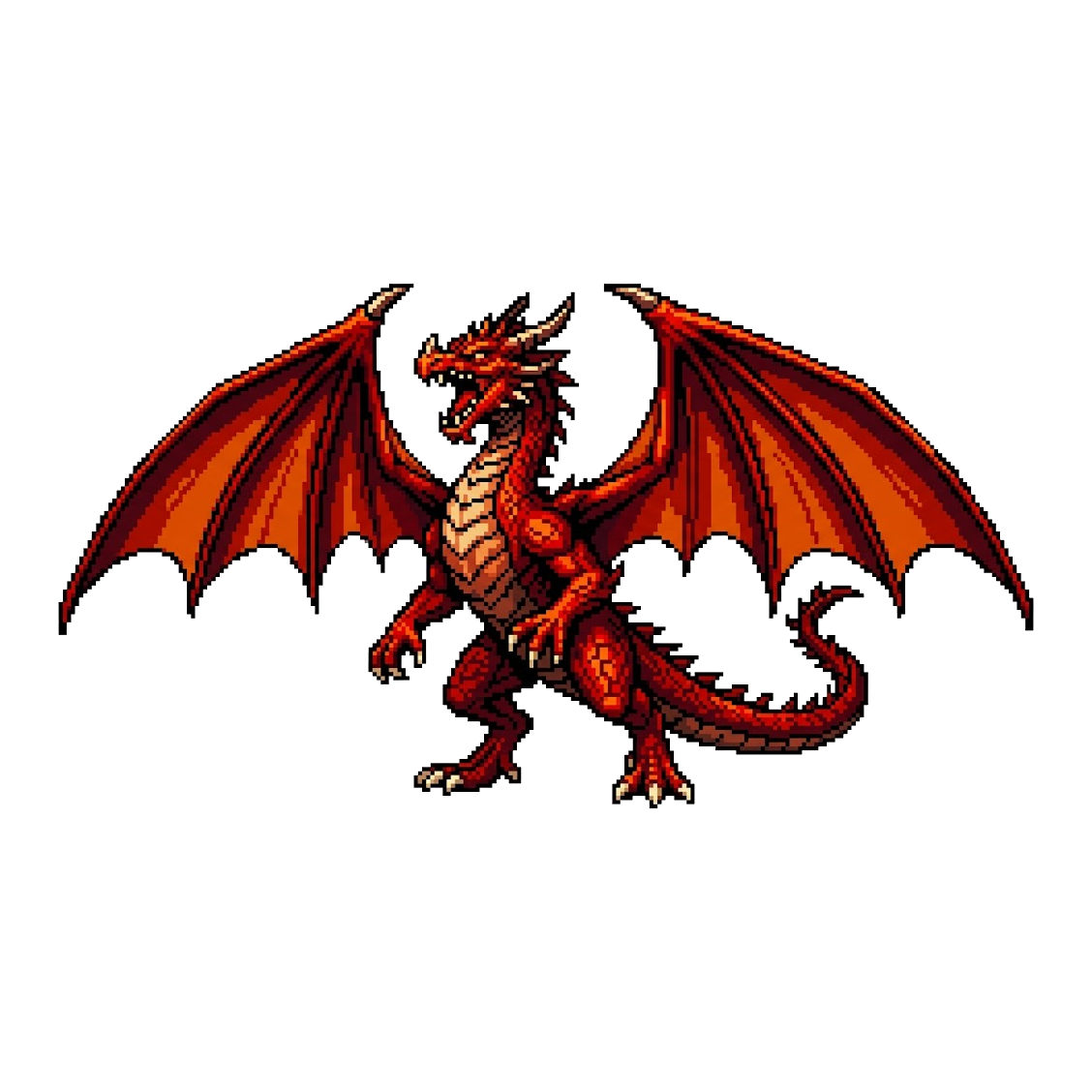
EuropeMedieval tales and heraldryDragon (a monster that guards treasure)
A great dragon from European folk tales. It is told to hurt people with fire and poison and to guard treasure. It is famous as a foe that heroes and saints defeat. It was also used on coats of arms and flags.
Key facts
| Type | A dragon (monster) from European folk tales and stories |
|---|---|
| Where and which cultures | From ancient Greece and Rome to medieval Europe (England, Wales and other places) |
| Earliest sources | The word "dragon" comes from ancient Greek. The best-known story of a winged fire-breathing dragon is the Old English epic poem "Beowulf" (the manuscript dates to about the year 1000; accounts differ on when the poem was composed). |
| Origin of the name | It comes from the ancient Greek "drakon" and the Latin "draco." At first the word meant a large snake. Some say it is linked to a verb meaning "to see," giving the sense "sharp-eyed one" (this is not certain, and accounts differ). |
| Appearance | It differs by source and period. Many stories share some points: it breathes fire or poison and guards treasure. Dragons with wings and four legs are often drawn in art from the Middle Ages onward. |
| Famous tales | The dragon in "Beowulf," Saint George's dragon-slaying, and the red dragon of Wales |
| Coats of arms and flags | The Roman army (mainly its cavalry) used dragon-shaped battle standards called "draco." Later, a red dragon was also used on the flag of Wales. |
It Started as a "Large Snake"
The English word "dragon" comes from the Latin "draco" (it reached English through French). Latin took the word from the ancient Greek "drakon." Its first meaning was not a winged monster but a large snake.
In Old English, words related to "worm" meant a snake, and "draca" meant a dragon. In Germanic tales, a dragon was close to a snake. As time went on, art began to show dragons with wings and legs.
Myth and Legend 1: The Fire Dragon in "Beowulf"
In the Old English epic poem "Beowulf" (the manuscript dates to about the year 1000), a dragon is the hero Beowulf's last enemy.
The dragon slept in an old tomb, guarding treasure. Then a runaway slave (a fugitive) stole a golden cup. The angry dragon flew out every night and burned the land with fire.
Beowulf was an old king who had ruled for about 50 years. He faced the dragon. Most of his men ran away. Only a young warrior named Wiglaf came to help. The two of them killed the dragon, but Beowulf died from his wounds.
Myth and Legend 2: Saint George Slays the Dragon
The story of Saint George (a soldier saint) defeat a dragon spread through the "Golden Legend," a book of saints' lives collected in the 13th century by Jacobus de Voragine.
A dragon lived in a pond near a town and troubled people with its poisonous breath. To keep the dragon calm, the townspeople had to hand someone over to it each day, and at last it was the turn of the king's daughter. Then George appeared. He is said to have held the dragon down and led it to the town. He promised to defeat it if the people would be baptized as Christians, and then he killed it.
In older records, the dragon fight took place in Cappadocia (in present-day Turkey), where George is said to have been born. The "Golden Legend" moves the story to a town called "Silene" in Libya, in North Africa. Silene is thought not to be a real town.
In England, around 1348, King Edward III founded the Order of the Garter in honor of George. Accounts differ on when George became firmly established as England's patron saint.
Myth and Legend 3: The Red Dragon of Wales
In Wales, the red dragon is a symbol of the country. A famous story from it comes from a history book of about the 9th century, "The History of the Britons" (once thought to be written by Nennius).
King Vortigern tried to build a castle, but its walls kept falling down. When people looked into it, they found a red dragon and a white dragon fighting in a pool under the ground. In this book, a boy (Ambrosius) explains that the red dragon stands for the Britons and the white dragon for the invading Saxons. Later, in the 12th century, Geoffrey of Monmouth retold the story and made the boy the wizard Merlin.
Dragon-shaped flags are even older. The Roman army used a dragon-shaped battle standard called a "draco." The red dragon flag of Wales is also known for being raised by Henry (later Henry VII) at the Battle of Bosworth in 1485.
How Dragons Are Usually Shown in Games and Stories
In stories and games, dragons often appear as strong bosses or as guards of treasure. The usual picture is a dragon with big spread wings that breathes fire.
This is thought to rest on European folk tales, such as the fire dragon in "Beowulf" and the stories of saints who slay dragons. But the detailed powers and settings were made up by each work. They are not written that way in the old tales.
About this illustration
This is a pixel-art picture of a red dragon with its wings spread. It is drawn as a powerful figure that could serve as a boss monster. The red body and spread wings are the artist's own style, not something fixed by the old tales. It does not copy the dragon of "Beowulf" or the red dragon of Wales exactly. It is an artist's drawing, different from the real thing.
Fun facts
- The English word "dragon" comes from an ancient Greek word that first meant "large snake."
- In the oldest records, Saint George's dragon fight took place in Cappadocia. In the "Golden Legend," it takes place in a town in Libya.
- The Roman army had a battle standard called a "draco," with a dragon's head on it. It is said that when wind blew through the mouth of the head, the cloth body behind it swelled.
Quick quiz
Q. In "Beowulf," what made the dragon angry and start burning the land?
A fugitive stole a golden cup from the tomb where the dragon guarded its treasure. The angry dragon flew out every night and burned the land, as the story goes.
References
- "Beowulf" (Old English epic poem; British Library manuscript Cotton Vitellius A.xv; supports the plot of the dragon fight)
- Jacobus de Voragine, "Legenda Aurea" (Golden Legend), the entry on Saint George (supports the dragon-slaying tale; William Caxton's English translation is also famous)
- "Historia Brittonum" (The History of the Britons; about the 9th century; supports the story of the red and white dragons)
- Fordham University, "Internet Medieval Sourcebook" (supports the free online English translation of the Golden Legend)
- "Oxford English Dictionary" (supports the word origin of "dragon")
Accounts may differ between sources and regions, and facts or figures can change with new research or rules. This page was translated from the Japanese original.
Download the pixel art
- Free
- No registration
- Commercial use OK
- Edits OK
- Credit optional
- No usage report needed
Please read the terms of use before using it.