



Living Things Encyclopedia No.009
Owl (Ural owl)
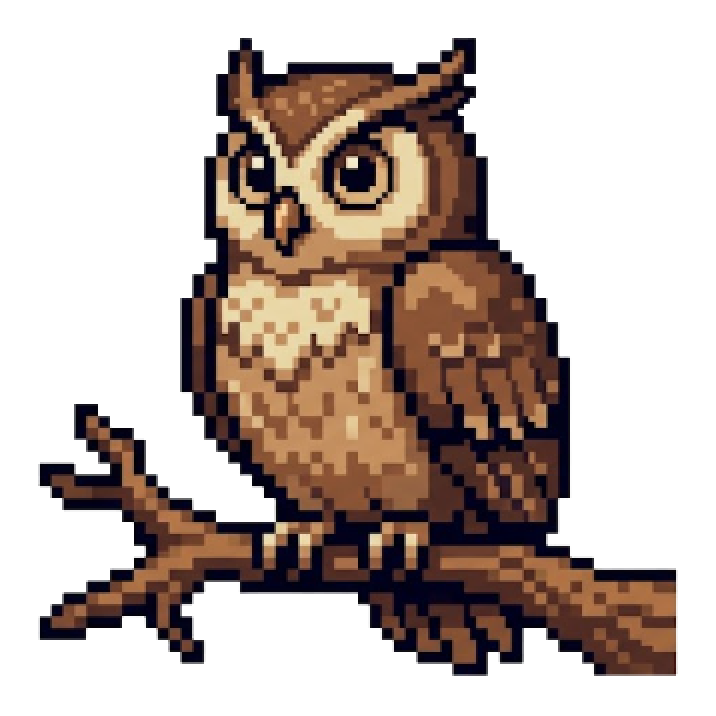
Birds · Order Strigiformes (owls)A night-active bird of prey (a bird that catches and eats other animals)
A bird with big eyes and a round face that lives in forests at night. It flies without a sound and finds prey with its excellent hearing and sight. In Japan, it lives in forests from Hokkaido to Kyushu.
Key facts
| Classification | Kingdom Animalia, phylum Chordata, class Aves (birds), order Strigiformes (owls), family Strigidae (true owls), genus Strix (scientific name: Strix uralensis). In Japan, this species is the one called "fukuro" (owl). |
|---|---|
| Size | Body length is about 50–60 cm. With its wings spread, it measures about 95–130 cm. Females tend to be larger. The ranges differ depending on the source and the subspecies (regional groups within the same species). |
| Habitat and range | Widespread across northern Eurasia. In Japan, it can be seen all year round in forests and woods from Hokkaido to Kyushu (it likes places with big old trees). Subspecies are said to include the Hokkaido owl (Ezo-fukuro) in Hokkaido and the Kyushu owl (Kyushu-fukuro) in southern Honshu to Kyushu. |
| Food | Mainly small mammals such as mice. It also eats small birds, frogs and insects (it is a meat-eater). |
| Active time | Mostly from evening to night (nocturnal). During the day, it often sits still on a branch or in a tree hollow. |
| Features | A disc-shaped ring of feathers on the face (the facial disc), big forward-facing eyes, feathers that make little sound, and a neck that can turn a long way. |
| Nest | It uses places such as tree hollows (big holes in a trunk). It sometimes uses nest boxes too. |
| Difference from "horned owls" (mimizuku) | Owls with ear-like tufts of feathers on the head (feather tufts) are often called "mimizuku" in Japanese, or eared owls. However, this is not a clear scientific division. |
What kind of animal is it?
The owl is a bird in the order Strigiformes. It belongs to a different group from eagles and hawks. But like them, it catches and eats other animals, so it is sometimes called a bird of prey.
The "fukuro" that lives in Japan is the same species as the Ural owl, which is found widely across Eurasia. You can see it in forests from Hokkaido to Kyushu. But it often stays still during the day, so it is a hard bird to spot.
By the way, there are said to be more than 200 kinds of owls in the world. In Japan, too, you can see several kinds, such as the brown hawk-owl (Aoba-zuku) and the Oriental scops owl (Konoha-zuku).
Body and features
An owl's face is shaped like a disc. This part is called the facial disc (a dish-shaped group of feathers on the face). It is thought to work like an antenna that gathers sound.
Some kinds of owls are said to have ears that sit at slightly different heights or have different sizes on the left and right. This lets them tell exactly where a sound comes from. Owls are known as birds that can find their prey by sound alone, even in the dark.
Their eyes are big and face forward, and they see well in dim light. But the eyeballs are shaped like tubes and cannot move much. Instead, owls turn their necks a long way. A common explanation says the neck can turn up to about 270 degrees without moving the body.
Another feature is that the edges of their feathers are soft, so they make very little sound when they fly. This makes it harder for prey to notice them.
How it lives
Owls are active from evening into the night. An owl sits on a branch and watches quietly. When it spots a mouse or similar prey, it comes close without a sound and catches it.
Parts of the food that are hard to digest, such as fur and bones, are formed into a lump and coughed up through the mouth. This lump is called a pellet. By studying pellets, we can learn what the owl ate, so they are used in research.
Around spring, owls build a nest in a place such as a tree hollow (a big hole in a trunk) and lay eggs. The chicks grow up by being fed by their parents. The exact numbers and days differ from place to place.
Owls and people
In Japan, owls have long been loved as lucky birds because of wordplay. The word "fukuro" sounds like "fuku-rō" (meaning good luck is coming) and "fu-kurō" (meaning no hardship). Owls often appear on ornaments and lucky charms.
In Europe, a small owl (the little owl) was linked with Athena, the goddess of wisdom in ancient Greece. Because of this, the owl is still known today as a "sign of wisdom."
On the other hand, the old forests where owls live are getting smaller. When big tree hollows disappear, owls lose places to nest. So some people put up nest boxes to help them. If you see an owl, do not get too close to the nest or the chicks. Watch quietly from far away.
About this illustration
A pixel-art picture of a brown owl sitting on a tree branch. It fits a forest or night scene. The brown colors and round shape are a way of showing what an owl is like. The picture does not copy the fine patterns and colors of a real owl's feathers.
Fun facts
- An owl's eyes are shaped like tubes and cannot move much. Instead, it turns its neck a long way.
- An owl has soft feather edges, so it makes very little sound when it flies.
- The lump of fur and bones that an owl coughs up, called a pellet, gives clues about what the owl eats.
Quick quiz
Q. An owl cannot move its eyes much. What does it turn a long way instead to look around?
An owl's eyeballs are shaped like tubes and are hard to move, so it turns its neck a long way. A common explanation says the neck can turn up to about 270 degrees without moving the body.
References
- 『日本鳥類目録』(Ornithological Society of Japan): for the kinds, names and classification of Japanese birds
- Handbook of the Birds of the World (Lynx Edicions): for the Ural owl's size, range, food and more
- Wild bird field guides such as 『日本の野鳥』: for the owl's looks, habitat and way of life
- 京都府レッドデータブック2015「フクロウ」(Kyoto Prefecture Red Data Book 2015, "Owl"): for range and size in Japan
- 大分県レッドデータブック (Oita Prefecture Red Data Book): for the owl subspecies (Kyushu owl) and its range
- 札幌市円山動物園の解説 (Sapporo Maruyama Zoo explanation): for the Hokkaido subspecies, the Ezo owl
Accounts may differ between sources and regions, and facts or figures can change with new research or rules. This page was translated from the Japanese original.
Download the pixel art
- Free
- No registration
- Commercial use OK
- Edits OK
- Credit optional
- No usage report needed
Please read the terms of use before using it.