



Food Encyclopedia No.002
Tomato
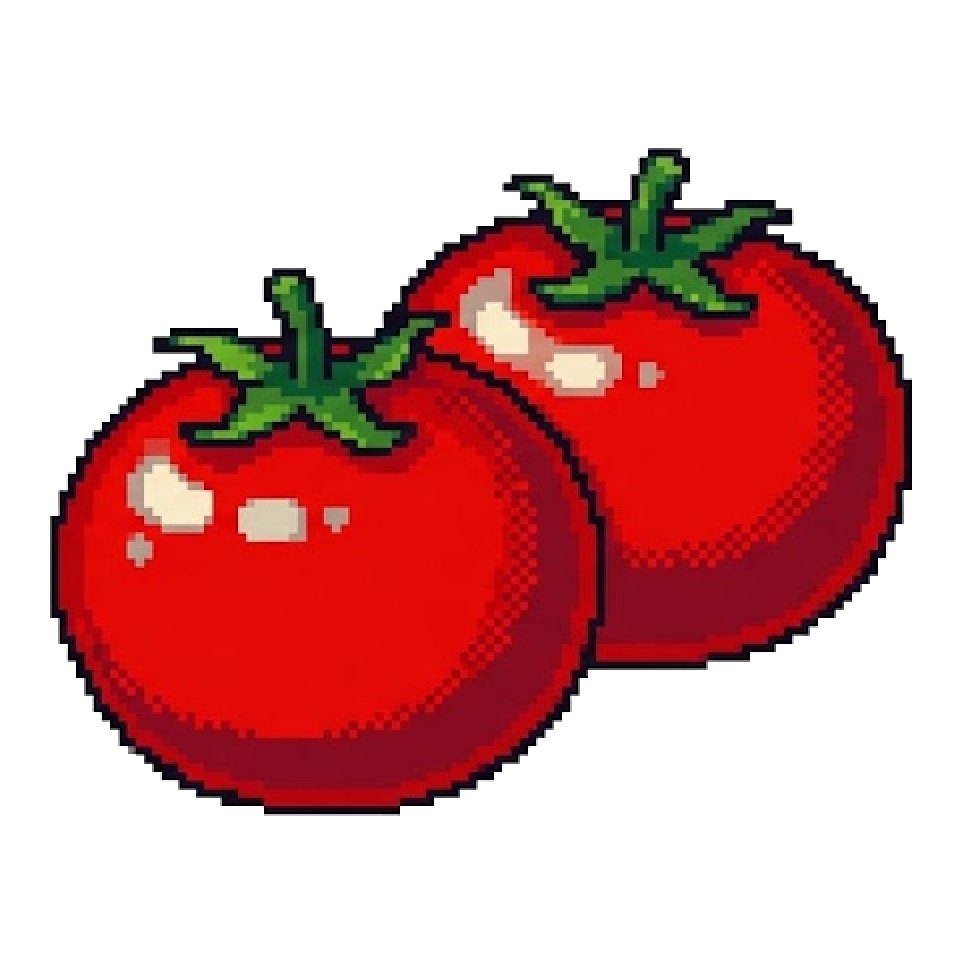
A vegetable in the nightshade familyNative to the Andes region of South AmericaSold all year round
The tomato is a vegetable in the nightshade family. It comes from the Andes region of South America. It reached Europe in the 16th century and Japan in the Edo period, where it was first grown just to look at. Kumamoto Prefecture is the main growing area.
Key facts
| Classification | Nightshade family, genus Solanum. It is a relative of the potato and the eggplant (scientific name: Solanum lycopersicum). It is originally a perennial (a plant that lives for many years), but in Japan it is often grown as an annual (a plant that finishes its life in one year). |
|---|---|
| Homeland | The area around the Andes Mountains in South America. The kids' page of Japan's Ministry of Agriculture, Forestry and Fisheries gives Peru and Ecuador as the place of origin. Sources word this a little differently. |
| Journey to Europe | Said to have arrived around the 16th century. |
| Arrival in Japan | It came in the Edo period, but sources give different times, from the mid-17th century to the late 18th century. At first it was ornamental (grown to look at). It is said that people began eating it as a vegetable in the Meiji period or later. |
| Main growing areas (Japan) | Kumamoto, Hokkaido and Kochi Prefectures are among the main areas. The national harvest in 2023 (Reiwa 5) was about 681,000 tons (Agriculture & Livestock Industries Corporation). Kumamoto shipped (sent out from the fields) about 128,000 tons. This was the most in Japan, about one fifth of the national total (this changes from year to year). |
| Season | You can buy tomatoes all year. This is thanks to greenhouse growing (growing in a space covered with vinyl or similar material) and switching between growing areas. Tomatoes grown outdoors in open fields are usually harvested in summer. |
| Main nutrients | Tomatoes are said to contain lycopene (which gives the red color), beta-carotene and potassium. Most of a tomato is water. |
| Ways to eat | Raw, in salads, soups, stews, baked dishes, sauces, juice and more. |
| Storage | Keep tomatoes that still look a little green at room temperature. When they turn red, put them in a plastic bag and store them in the vegetable drawer of the fridge. If they get too cold, the taste can get worse. |
What kind of food is it?
The tomato is a vegetable with a round red fruit. It belongs to the nightshade family. It is a relative of the eggplant, the bell pepper and the potato.
In the field, yellow flowers open on the growing stems. Then green fruits form. The fruits grow bigger little by little and turn red when they ripen. Some kinds ripen to yellow or orange, and some stay green.
Tomatoes come in many shapes and sizes. There are big ones, bite-sized cherry tomatoes, and long thin ones for cooking. They are easy to use both raw and cooked.
The homeland and a trip around the world
The tomato's homeland is thought to be the area around the Andes Mountains in South America. Wild relatives of the tomato grow widely from Ecuador and Peru to northern Chile.
It is not clear where people first began to grow tomatoes as a crop (this is called domestication). For a long time, many people knew the idea that it was Mexico. But a genetic study published in 2022 reported a more complicated path, going back and forth between the Peru and Ecuador area and Mexico. New discoveries may change the explanation.
Tomatoes reached Europe around the 16th century. It is said that people first thought they were poisonous, so in many countries they were only looked at and not eaten. Later, they were used in cooking and spread all over the world.
Tomatoes in Japan
Tomatoes came to Japan in the Edo period. But sources give different times. Some say the early Edo period, some say the mid-17th century, and some say the late 18th century.
At first, people enjoyed the red fruit just to look at. The smell and taste were new to them, so tomatoes did not spread as food. It is said that people began eating them as a vegetable in the Meiji period.
Even so, tomatoes did not become a common part of meals until much later. Today, the tomato is a vegetable that often appears in daily meals, in salads, soups, sauces and more.
Where are lots of tomatoes grown?
According to the Agriculture & Livestock Industries Corporation, Japan's tomato harvest in 2023 (Reiwa 5) was about 681,000 tons. The main growing areas are Kumamoto, Hokkaido and Kochi Prefectures, among others.
According to Kumamoto Prefecture's materials, its shipments in 2023 were about 128,000 tons. That is about one fifth (20.6%) of the national total, and the most in Japan. The materials also say it passed 100,000 tons for 13 years in a row, starting in 2011 (Heisei 23).
These numbers change every year, depending on the weather and how much was planted (put into the fields). You can check the newest numbers in the statistics of the Ministry of Agriculture, Forestry and Fisheries.
Your body and nutrition
The red color of the tomato comes from a substance called lycopene. Lycopene is sometimes described as having an antioxidant effect (a effect that slows changes like rusting). Tomatoes are also said to contain beta-carotene, potassium and more.
But eating tomatoes does not cure illnesses. It is important to eat many kinds of foods in a balanced way, together with rice, bread and main dishes.
It is also sometimes said that color substances like lycopene are easier to take in when eaten with oil. Stir-frying tomatoes or adding olive oil are well-known ways to eat them.
Tips for tasty tomatoes and storage
Tomatoes that still look a little green will ripen and turn red if you leave them in a well-aired place at room temperature. Once they are red, it is safe to put them in a plastic bag and keep them in the vegetable drawer of the fridge.
If they get too cold, the taste and texture can get worse. Take them out a little before eating and let them come back to room temperature. Then the sweetness is easier to notice.
When you cut a tomato, use a sharp knife and cut out the stem part first. It makes cutting easier. If you give a whole tomato to a small child, cut it into small pieces so it does not get stuck in their throat.
Rarely, some people have an allergic reaction to tomatoes, such as an itchy mouth. If you notice any worrying signs, please talk to a medical clinic.
About this illustration
This is pixel art of a tomato. Pixel art is a picture made by lining up tiny squares. It was made as material for use in an encyclopedia, such as in cooking scenes, vegetable shops and fields. The real shape and color are made simpler to be easy to understand. The fine colors and shapes are different from the real thing. That is how illustrations are drawn.
Fun facts
- The tomato is in the nightshade family, a relative of the potato and the eggplant.
- When tomatoes first came to Japan, they were not food. People grew them to look at.
- The main tomato-growing areas in Japan are Kumamoto, Hokkaido and Kochi Prefectures, among others. In 2023 (Reiwa 5), Kumamoto shipped the most.
Quick quiz
Q. How were tomatoes first used when they came to Japan?
Tomatoes came to Japan in the Edo period, but at first they were grown to look at. It is said that people began eating them as a vegetable in the Meiji period or later.
References
- Agriculture & Livestock Industries Corporation (ALIC) magazine『今月のやさい:トマト』 (supports: place of origin, arrival in Japan, 2023 national harvest, nutrients)
- Ministry of Agriculture, Forestry and Fisheries (MAFF) kids' page「ふるさとの食べ物」, tomato entry (supports: place of origin, time of arrival in Japan)
- Kumamoto Prefecture published materials (based on MAFF『令和5年産野菜生産出荷統計』) (supports: Kumamoto's tomato shipments and its share of the national total)
- MAFF『作況調査(野菜)』and『野菜生産出荷統計』 (supports: tomato harvest and shipment statistics)
- Blanca et al. (2022), "Haplotype analyses reveal novel insights into tomato history and domestication driven by long-distance migrations and latitudinal adaptations," Horticulture Research (by the Polytechnic University of Valencia, the University of Georgia and others; supports: the complicated path of domestication)
Accounts may differ between sources and regions, and facts or figures can change with new research or rules. This page was translated from the Japanese original.
Download the pixel art
- Free
- No registration
- Commercial use OK
- Edits OK
- Credit optional
- No usage report needed
Please read the terms of use before using it.