



Food Encyclopedia No.011
Carrot
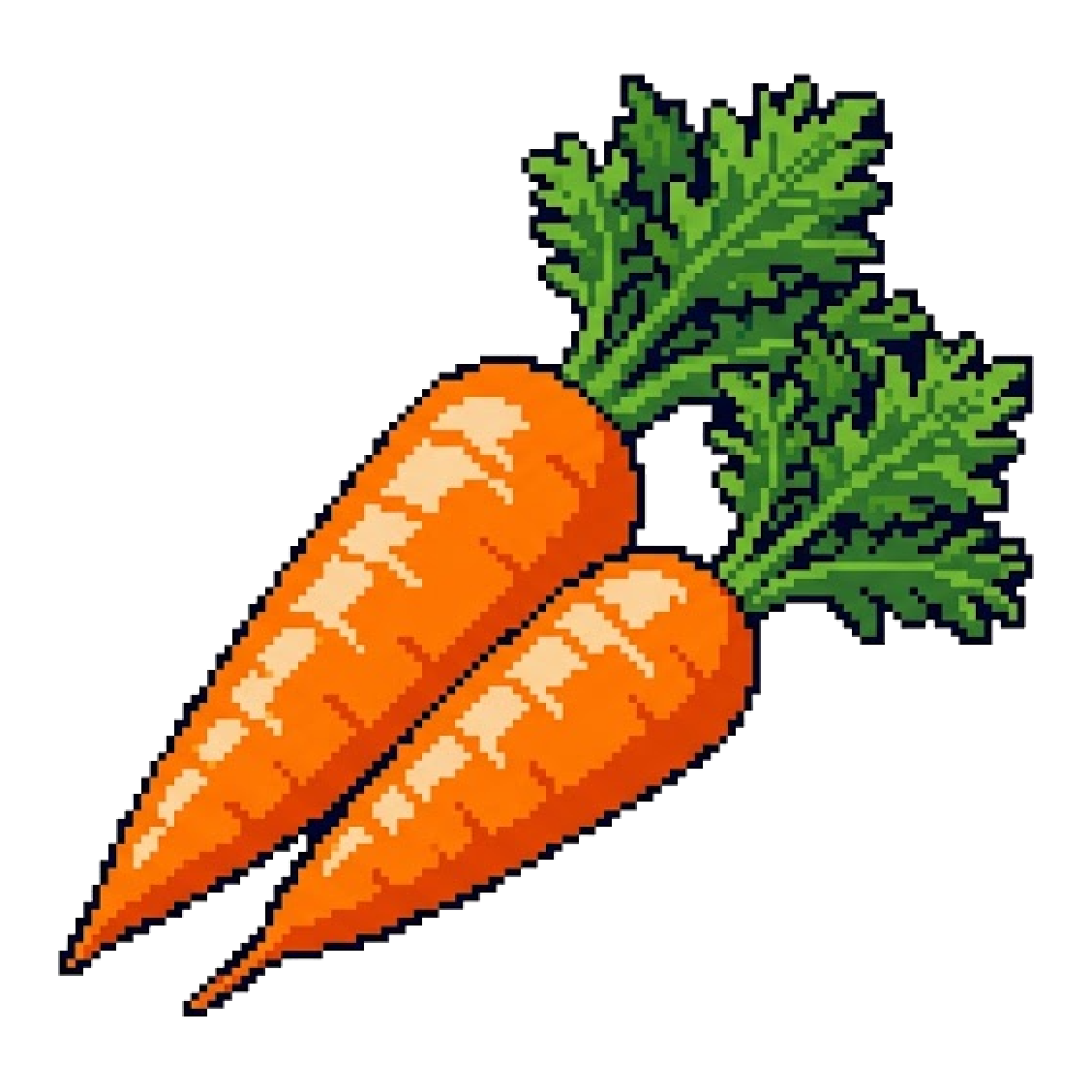
A vegetable of the parsley familyA root vegetableOrange is the best-known color
The carrot belongs to the parsley family (Apiaceae). We eat its root, which swells underground. It is said to come from around Afghanistan and northern Iran. It reached Japan in the Edo period. Most carrots in Japanese shops today are the Western type.
Key facts
| Classification | A vegetable of the genus Daucus in the parsley family. We eat the swollen root underground (the taproot). Scientific name: Daucus carota. |
|---|---|
| Where it comes from | Said to come from around Afghanistan and northern Iran. It is said to have spread both east and west from there. |
| Arrival in Japan | The Eastern type is said to have come from China in the early Edo period. The Western type came from Europe between the middle of the Edo period and the Meiji era. (Sources differ on the timing, so accounts differ.) |
| Main growing areas (Japan) | In Reiwa 6 (2024), shipments came to about 480,000 tons nationwide (from a document of the Agriculture & Livestock Industries Corporation, based on statistics from the Ministry of Agriculture, Forestry and Fisheries). Hokkaido was the largest at about 164,000 tons. Chiba Prefecture shipped about 77,000 tons and Tokushima Prefecture about 39,000 tons. These numbers change from year to year. |
| Season | Carrots are on sale all year, because the main growing area changes through the year. Chiba is the main source in winter, Tokushima from spring to summer, and Hokkaido from summer to autumn. (The exact dates differ a little between sources.) |
| Main nutrition | Said to be a green-and-yellow vegetable (a deeply colored vegetable) rich in carotene. Most of it is water. |
| Types | The Western type (short, orange roots, the main type today) and the Eastern type (such as Kintoki carrots; they can also be red, yellow or purple). |
| Ways to eat | Raw in salads, simmered dishes, stir-fries, soups, kinpira (a stir-fried side dish), juice, and more. |
What kind of vegetable is it?
The carrot is a vegetable of the parsley family. It is related to parsley, celery and mitsuba (a Japanese herb). We eat the root that swells underground (the taproot).
Orange carrots are the best known. But there are also red, yellow and purple varieties (different kinds within the same vegetable). The leaves are finely cut and look like lace.
Carrots are used in everyday meals, such as curry, stew, salads and lunchbox side dishes.
Where it came from and how it reached Japan
The carrot's homeland (its place of origin) is said to be around Afghanistan and northern Iran. From there it spread across the world along two routes, east and west.
The Ministry of Agriculture, Forestry and Fisheries explains on its page for children that the Eastern type came to Japan from China in the early Edo period. Later, from the middle of the Edo period to the Meiji era, the Western type came from Europe. Some sources give slightly different timing, so accounts differ.
Most carrots in Japanese shops today are the Western type.
Eastern type and Western type
Eastern carrots are long. They can be red, yellow or purple. The "Kintoki carrot," often seen in the Kansai region, is one of them.
Western carrots have shorter roots and are orange. They are short and easy to harvest, and they have a lot of carotene, so they are the main type today. The length of Western carrots is sometimes given in "sun," an old Japanese unit of length. One sun is about 3 centimeters. A document from Chiba City says that carrots of the size called "5 sun" are the usual ones sold in shops.
Where are they grown the most?
According to a document of the Agriculture & Livestock Industries Corporation (based on statistics from the Ministry of Agriculture, Forestry and Fisheries), nationwide shipments in Reiwa 6 (2024) were about 480,000 tons. Shipments are the amount sent from the fields to markets and other places. Hokkaido shipped about 164,000 tons, the most in the country. Next came Chiba Prefecture with about 77,000 tons and Tokushima Prefecture with about 39,000 tons.
The main growing area changes with the season. Chiba is the main source in winter, Tokushima from spring to summer, and Hokkaido from summer to autumn. By passing the job from one area to the next (a "relay of growing areas"), we can buy carrots in shops all year. The exact dates differ a little between sources.
The numbers change every year with the weather and other things. You can check the latest numbers in the statistics of the Ministry of Agriculture, Forestry and Fisheries.
About the body and nutrition
The carrot is said to be a green-and-yellow vegetable (a deeply colored vegetable) with a lot of carotene. Carotene is said to be easier for the body to take in when eaten with oil. That is why carrots go well with stir-fries and other dishes made with oil.
There are also "snow carrots," which are left to spend the winter under the snow. They are known in growing areas such as Hokkaido and Niigata Prefecture. They are said to become sweeter over the winter.
Food allergies are different for each person. If a food does not agree with you, talk to a medical clinic.
About this illustration
A pixel-art picture of an orange carrot. Pixel art is a picture made by lining up tiny squares. It can be used for cooking scenes, vegetable shops and fields. It shows the real color and shape in a gentle way, but it may not match every small detail of the real vegetable.
Fun facts
- The carrot belongs to the same parsley family as parsley and celery.
- Most carrots seen in Japanese shops are the Western type of the size called "5 sun." One sun is about 3 centimeters.
- There are "snow carrots" that spend the winter under the snow. They are said to become sweeter.
Quick quiz
Q. Which type are most of the carrots in Japanese shops today?
The Ministry of Agriculture, Forestry and Fisheries explains on its page for children that most carrots in Japanese shops today are Western carrots.
References
- 農林水産省「ねっこの野菜」(こども向けページ) — supports: where it comes from, its arrival in Japan, and that most carrots today are the Western type (a page for children from the Ministry of Agriculture, Forestry and Fisheries)
- 独立行政法人 農畜産業振興機構(ALIC)野菜情報・にんじん関連資料 — supports: the Reiwa 6 (2024) shipments, main growing areas, Eastern and Western types, and the relay of growing areas (vegetable information from the Agriculture & Livestock Industries Corporation)
- 千葉市「授業資料」 — supports: that 5-sun Western carrots are the usual ones, and that 1 sun is about 3 cm (a class document from Chiba City)
- 農林水産省 野菜生産出荷統計 — supports: the original data for shipment amounts (vegetable production and shipment statistics from the Ministry of Agriculture, Forestry and Fisheries)
Accounts may differ between sources and regions, and facts or figures can change with new research or rules. This page was translated from the Japanese original.
Download the pixel art
- Free
- No registration
- Commercial use OK
- Edits OK
- Credit optional
- No usage report needed
Please read the terms of use before using it.