



Periodic Table Encyclopedia No.021
Scandium
Transition metal (Group 3)Light metalGroup 3, Period 4
Atomic number 21, symbol Sc. It is a silvery-white light metal that gets stronger when a little is mixed into aluminum. Its name comes from Scandinavia in northern Europe.
Key facts
| Atomic number / symbol | 21 / Sc |
|---|---|
| Type | A metal. It is a transition metal (a metal placed in the middle of the periodic table) in Group 3 of the periodic table |
| Place in the periodic table | Group 3, Period 4 |
| State at room temperature | Solid (a silvery-white metal) |
| Atomic weight | About 44.956 (IUPAC standard atomic weight, as of the 2020s) |
| Density | About 2.99 g/cm³ (slightly heavier than aluminum at about 2.7, and much lighter than iron at about 7.9) |
| Melting point (the temperature at which a solid becomes a liquid) | About 1541 °C (the way the number is written differs a little by source) |
| Discovery | In 1879, Nilson of Sweden found it in two minerals, euxenite and gadolinite |
| Origin of the name | Scandinavia in northern Europe (Scandia in Latin). The minerals where it was found were known at the time only on the Scandinavian Peninsula |
What kind of element is it?
Scandium is a metal with the symbol Sc and atomic number 21. It is silvery-white. Its density (weight for the same size) is close to that of aluminum, so it counts as a light metal.
In the periodic table it is in Group 3 and is classed as a "transition metal" (a metal placed in the middle of the periodic table). It is sometimes counted as a rare earth element.
It is mostly traded as scandium oxide (a powder made of scandium joined with oxygen) or as a "master alloy" with aluminum (the base used to make an alloy). It can also be made into lumps of metal, but not in large amounts.
The history of its discovery
After Mendeleev made the periodic table, he thought there was a still-undiscovered element between calcium and titanium. He called it "eka-boron."
In 1879, Nilson and his team in Sweden were searching for rare earth elements. Using spectroscopy (a way to study elements by splitting light), they found a new element in euxenite and gadolinite. It is said that about 2 grams of a very pure oxide were obtained from about 10 kilograms of euxenite.
Cleve, also of Sweden, noticed that this new element matched the eka-boron Mendeleev had predicted, and announced it in August of the same year. This is known as an event that showed the power of the periodic table to predict the properties of elements. The pure metal is said to have first been made around 1937. How the name of the person who made it is written differs by source, and accounts differ.
Everyday uses
Scandium is mostly used as an element added in small amounts to aluminum alloys (aluminum mixed with other metals). Mixing it in makes an alloy that stays light but is strong. It is used in parts for aerospace, such as aircraft, and also in sports equipment.
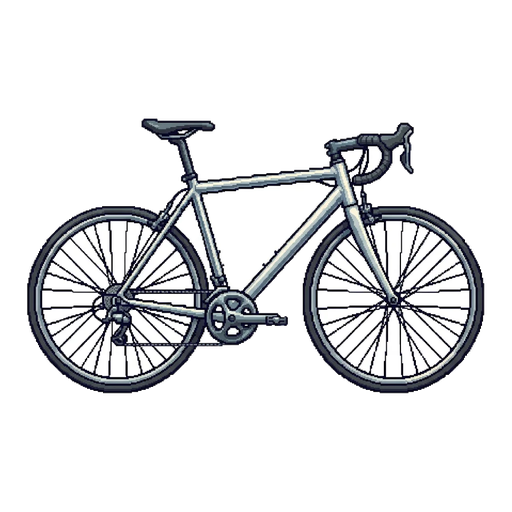
Examples include high-end bicycle frames (the body structure) and baseball bats, but these are special products made in small numbers.
According to the United States Geological Survey (USGS), as of 2024 the main uses were alloys with aluminum and solid oxide fuel cells (SOFC, devices that make electricity from hydrogen and similar fuels). It is also used in small amounts in ceramics, electronic parts, lasers and lighting.
Secrets of its properties
Scandium is light, yet it has a high melting point (the temperature at which it melts) of about 1541 °C. This mix of lightness and heat resistance is thought to be useful in fields like aircraft.
It is said that adding just a little to aluminum makes the grains inside the alloy finer and raises its strength. However, only small amounts of scandium can be obtained, and only small amounts are traded. So it is expensive and hard to use widely.
Scandium oxide is a compound (a substance made when different elements join together) of scandium and oxygen, and it is the form most often used.
In the Earth and in space
Scandium is found in the Earth's crust (the surface part of the ground), but it rarely gathers into large mines. It is contained in small amounts in rare minerals such as euxenite and gadolinite. It is also often obtained as a by-product (something you get along the way while making something else) when other metals are extracted.
The northern European land that gave the element its name is still kept in the element's name today.
When handling it, such as metal powder, you need to follow general safety rules. For details, please check with official bodies (the USGS and safety information from each country).
About this illustration
This is a picture of a sports bicycle made of a light metal. It shows a thin metal frame (the body structure) and two wheels, and it shows how light, strong metal is used in sports equipment. The colors, shapes and background are the illustration's own way of showing things, not how the real thing looks. It does not show real bicycle parts or how much scandium they contain.
Fun facts
- The "eka-boron" that Mendeleev predicted when he made the periodic table is thought to have been scandium. The atomic weight he predicted was about 44, and the real value was about 45.
- The name scandium comes from Scandinavia in northern Europe, and the minerals where it was found came from the Scandinavian Peninsula.
- It is said that about 2 grams of scandium oxide were obtained from about 10 kilograms of euxenite.
Quick quiz
Q. What is the name scandium based on?
When it was found in 1879, the minerals containing the element were known at the time only on the Scandinavian Peninsula, so it was named after that place.
References
- USGS "Mineral Commodity Summaries 2025," scandium section (for main uses, as of 2024)
- Royal Society of Chemistry "Chemistry in its element: scandium" and the scandium entry on its periodic table site (for the history of discovery, the origin of the name and uses)
- IUPAC (International Union of Pure and Applied Chemistry) table of standard atomic weights (for atomic weight)
- Rika Nenpyo (Chronological Scientific Tables), edited by the National Astronomical Observatory of Japan, elements section (for atomic weight and basic physical data)
- New World Encyclopedia "Scandium" (for the story of discovery, Nilson and Cleve, and the making of the metal in 1937)
Accounts may differ between sources and regions, and facts or figures can change with new research or rules. This page was translated from the Japanese original.
Download the pixel art
- Free
- No registration
- Commercial use OK
- Edits OK
- Credit optional
- No usage report needed
Please read the terms of use before using it.