



Periodic Table Encyclopedia No.011
Sodium
Alkali metalMetalGroup 1, Period 3
Atomic number 11, symbol Na. It is a very soft, silvery-white metal that reacts strongly with water. It is found in the sea and on dining tables as part of table salt (sodium chloride).
Key facts
| Atomic number / symbol | 11 / Na |
|---|---|
| Type | Alkali metal (a family of metals) |
| Place on the periodic table | Group 1, Period 3 |
| State at room temperature | Solid (silvery-white and very soft) |
| Atomic weight | About 22.990 (IUPAC standard atomic weight: 22.98976928, the same value since 2005) |
| Melting point (the temperature at which a solid becomes a liquid) | About 98°C (around 97.8°C). Quite low for a metal |
| Density (weight for the same size) | About 0.97 g/cm³ (a little lighter than water) |
| Discovery | In 1807, Davy of Britain split sodium hydroxide with electricity and got the pure metal |
| Origin of the name | The symbol Na comes from the Latin word natrium (named after natron, a natural salt). The English word sodium comes from soda (such as caustic soda) |
What kind of element is it?
Sodium is the element with the symbol Na and atomic number 11. It is an alkali metal in Group 1 of the periodic table. Lithium and potassium are in the same family.
The pure element (a substance made of only that one element) is a silvery-white metal. It is so soft that you can cut it with a knife. The cut surface shines brightly, but it quickly turns dull when it touches air.
Because it reacts so easily, it is not found by itself in nature. It exists as compounds (substances made when several elements join together) with other elements.
History of its discovery
People have used sodium compounds since ancient times. Natron, a natural salt, is said to have been known even in ancient Egypt.
But the pure metal was first taken out in 1807 by the British chemist Humphry Davy. He melted sodium hydroxide (caustic soda) at a high temperature and used electrolysis (splitting a substance using electricity) to get a silvery metal. This followed his success with potassium, which he had taken out in the same year.
The details of the experiment are described a little differently depending on the source.
Where the name and symbol come from
The symbol Na is the first two letters of the Latin word natrium. This word is said to come from natron, a natural salt. The Swedish chemist Berzelius is known as the person who set up the system of chemical symbols.
The English word sodium, on the other hand, is named after soda. This is because Davy took it out of caustic soda.
The Japanese name is close to the Latin word.
Everyday uses
The sodium compound we know best is table salt (sodium chloride). It is made of sodium and chlorine joined together, and it is used to season food. It forms small white crystals (grains that have set into a neat shape).
There are also compounds used to make glass and soap. Baking soda (sodium bicarbonate) is seen in cooking and cleaning.
Sodium is also one of the things the human body needs. But it is important not to take in too much. For details, please check information from public health agencies.
Secrets of its properties
Sodium is a metal that reacts violently with water. For this reason, it is carefully stored in special ways in school labs and factories. The pure metal should be handled only by people with expert knowledge, who follow the rules.
Its density (weight for the same size) is about 0.97 g/cm³, so it is a metal that is slightly lighter than water. Its melting point is about 98°C, which is low for a metal.
Also, when a substance that contains sodium is put in a flame, the flame glows bright yellow. This is used as one way to check whether a substance contains sodium.
Sodium on Earth and in space
Sodium is a common element in Earth's crust (the layer of rock that makes up Earth's surface). It differs a little by source, but it is about 2.3 to 2.8% by weight, which is quite a lot for a metal.
A lot of it is also dissolved in seawater. The sea tastes salty mainly because sodium chloride and similar substances are dissolved in it. Also, where old seas or lakes have dried up, it can be found as rock salt (big lumps of salt).
About this illustration
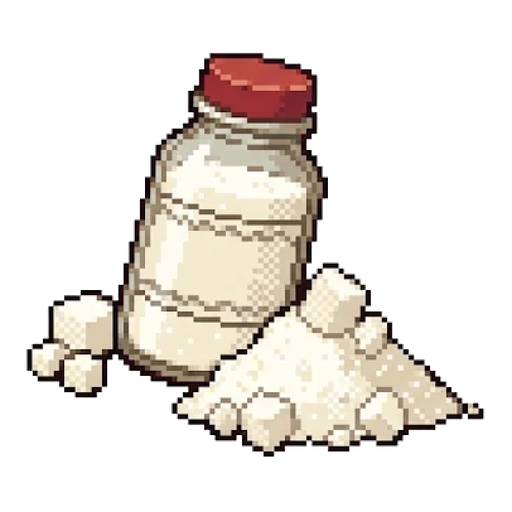
This is an illustration of a salt shaker and white salt crystals. The shaker is meant to look like a salt container used on a dining table, and the salt crystals are drawn as small white grains. The metal sodium itself is not drawn in the picture. The shape and color of the shaker and the arrangement of the crystals are part of the artwork and differ from the real thing.
Fun facts
- The symbol for sodium is Na because it comes from the Latin word natrium, not from the English word sodium.
- Sodium is a metal so soft that you can cut it with a knife.
- When a substance that contains sodium is put in a flame, it glows yellow.
Quick quiz
Q. Table salt (sodium chloride) is made of sodium joined with which element?
The proper name of table salt is sodium chloride. It is made of sodium and chlorine joined together.
References
- Encyclopaedia Britannica, "Sodium (Na)" (supports the history of discovery, the origin of the name, and the amount in Earth's crust)
- Royal Society of Chemistry, "Periodic Table: Sodium" (supports basic data such as melting point and density)
- Jefferson Lab, "It's Elemental: Sodium" (supports basic data such as density)
- IUPAC Commission on Isotopic Abundances and Atomic Weights (CIAAW), standard atomic weights table (supports the atomic weight of sodium)
- 国立天文台編『理科年表』(丸善出版) (National Astronomical Observatory of Japan, Chronological Scientific Tables; supports basic data on element properties and atomic weights)
- Elementymology & Elements Multidict, "Natrium (Sodium)" (supports the origin of the element name)
Accounts may differ between sources and regions, and facts or figures can change with new research or rules. This page was translated from the Japanese original.
Download the pixel art
- Free
- No registration
- Commercial use OK
- Edits OK
- Credit optional
- No usage report needed
Please read the terms of use before using it.