



Periodic Table Encyclopedia No.027
Cobalt
Transition metalMetalGroup 9, Period 4
Atomic number 27, symbol Co. It is a silvery-white metal that gives a blue color and is used in batteries and strong magnets. It is also found at the center of vitamin B12.
Key facts
| Atomic number / Symbol | 27 / Co |
|---|---|
| Type | Transition metal (a kind of metal) |
| Place in the periodic table | Group 9, Period 4 |
| State at room temperature | Solid (a silvery-white metal with a bluish tint) |
| Atomic weight | About 58.933 (IUPAC standard atomic weight, as of the 2020s) |
| Melting point (the temperature at which it melts) | About 1495 °C (some sources give 1490 °C) |
| Stable isotope | Only cobalt-59 (isotopes are versions of the same element with slightly different weights. Natural cobalt is almost entirely this one.) |
| Discovery | In the 1730s, Brandt of Sweden found a new metal as the cause of the blue color in glass. The year is often given as 1735, but some sources say 1732 or 1742, so accounts differ. |
| Origin of the name | From the German word Kobold. It means a goblin or sprite that people believed lived in mines. |
What kind of element is it?
Cobalt is a metal with the symbol Co and atomic number 27. It is silvery white with a bluish tint, and it is hard and strong.
It belongs to the same group of materials as iron and nickel. It is one of the few metals that stick to magnets (this property is called ferromagnetism).
Some cobalt compounds (substances where cobalt is joined with other elements) are a bright blue. People have long used them to color pottery and glass blue.
History of its discovery
Ores that contain cobalt were used to color glass and pottery blue long before people knew it was a metal.
In the 1730s, the Swedish chemist Brandt studied the true cause of this blue color. At the time, people thought a metal called bismuth was responsible. Brandt believed that a new metal was at work.
The year of discovery is often given as 1735, but sources differ, with some saying 1732 or 1742. Accounts differ.
Brandt used the name "Kobold," which miners were already using, as the name of the new metal.
The mystery of the name
The name cobalt comes from the German word "Kobold." A Kobold is a mischievous sprite or goblin that lived in mines.
Long ago, miners dug up ore hoping to get silver or copper. Sometimes they could not get the metal they wanted, and the ore even gave off poisonous smoke (smoke containing arsenic). They thought, "This is the Kobold's doing!" and called that ore the Kobold's ore.
It is said that the new element got its name from this story.
Everyday uses
One of cobalt's big jobs today is as a material for rechargeable batteries (lithium-ion batteries). It is used in the electrode, the part where electricity goes in and out, and it helps power smartphones and electric cars.
It is also used to make heat-resistant alloys (metals made by mixing two or more metals), strong tools, and strong magnets.
Cobalt has also been used as a blue pigment (a colored powder). The blue called "cobalt blue" is loved in paints, pottery and glass.
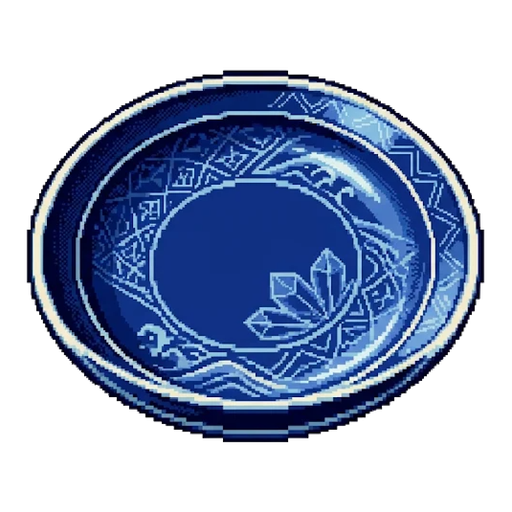
The deep blue dish in the illustration is an example of how some objects are colored with cobalt compounds.
Cobalt in the body
Cobalt is the element at the center of vitamin B12. Vitamin B12 is one of the important nutrients for the human body.
But the amount of cobalt in the body is very small. Some sources say about 1 milligram (about one thousandth of a gram), but the number differs from source to source.
Breathing in a lot of cobalt powder or compounds, or touching them for a long time, can be bad for the body. That is why factories and laboratories handle them by following rules. For details, check information from public agencies.
Cobalt on Earth
Cobalt is often found underground mixed into ores of other metals, such as copper and nickel. There are not many mines that hold mostly cobalt.
It comes from only a limited number of places. The Democratic Republic of the Congo in Africa is said to dig up the most cobalt in the world (a report says about 70 percent of the world's supply, as of the 2020s).
Because more and more people and companies want cobalt for batteries and other uses, efforts are also growing to take cobalt out of used batteries and use it again and again.
About this illustration
An illustration of a pottery dish dyed a deep blue (cobalt blue). The blue color of the dish shows an example of how cobalt compounds have been used for coloring. The shape, pattern and background of the dish are the artist's own ideas and differ from any real object. The metal cobalt itself is not blue. It is silvery white.
Fun facts
- The metal cobalt itself is silvery white, not blue. The blue comes from the color of cobalt compounds.
- Cobalt, together with iron and nickel, is a well-known metal that sticks to magnets.
- Vitamin B12 is an unusual vitamin because it contains the metal element cobalt.
Quick quiz
Q. What is the name cobalt said to come from?
The German word "Kobold" means a mine sprite or goblin. It is said that long ago, miners used this word for ores that did not give the metal they wanted, and that this is where the name comes from.
References
- Encyclopaedia Britannica, "cobalt" (supports the discovery story, the origin of the name and the melting point)
- IUPAC CIAAW (Commission on Isotopic Abundances and Atomic Weights), standard atomic weights table (supports the atomic weight)
- WebElements, "Cobalt: historical information" (University of Sheffield; supports discovery and history)
- Science Friday, "The Origin Of The Word 'Cobalt'" (supports the origin of the name)
- Linus Pauling Institute, Oregon State University, "Vitamin B12" (supports vitamin B12 and cobalt)
- USGS, "Mineral Commodity Summaries: Cobalt" (supports the countries that produce cobalt)
- National Astronomical Observatory of Japan (ed.), 『理科年表』 (Chronological Scientific Tables; supports the numbers on element properties)
Accounts may differ between sources and regions, and facts or figures can change with new research or rules. This page was translated from the Japanese original.
Download the pixel art
- Free
- No registration
- Commercial use OK
- Edits OK
- Credit optional
- No usage report needed
Please read the terms of use before using it.